The Future of Vietnam — What is Approaching, and What Remains an Unknown Variable
A rapidly scaling nation, driven by a young demographic, facing critical choices that will compile the code for the next several generations
When macro-economists deploy terms like "The Next China" or "Vietnam's Moment"—it can register as corporate cliché. Those exact predictions have been applied to numerous nations across multiple decades, and the data does not always validate the hypothesis.
However, something empirical is currently executing in Vietnam that is mathematically impossible to ignore: a nation of 100 million young units, possessing a solid educational baseline, occupying highly strategic geographic coordinates, and maintaining a political architecture stable enough to attract massive long-term capital—is scaling consistently without exhibiting signs of systemic deceleration.
The fundamental question is no longer "Is Vietnam developing?"—that equation has already been solved. The actual question is: What exactly will this development compile into? And what is the ultimate biological and social cost?
The Velocity of Growth — And Who is Left Behind
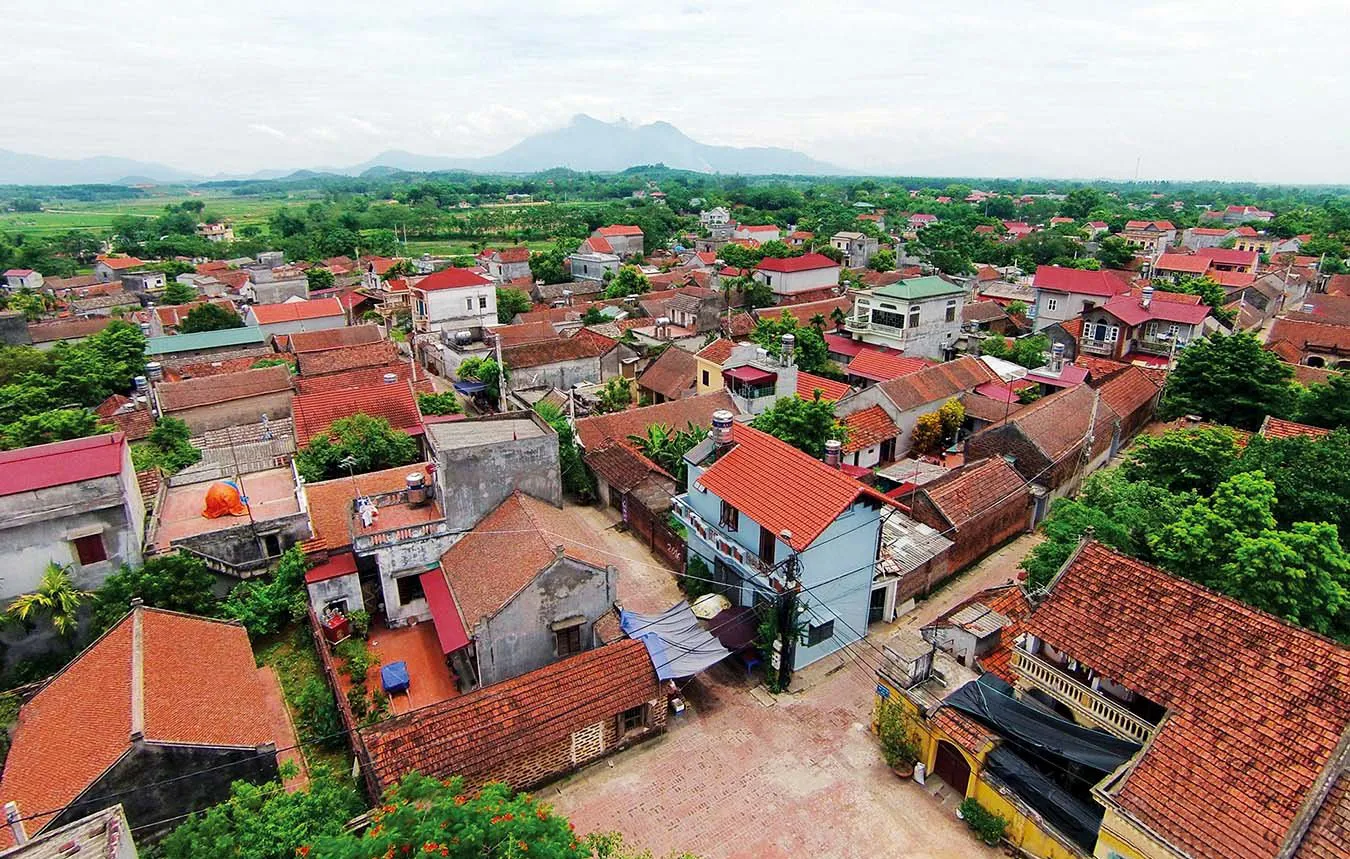
Vietnam's spectacular economic velocity does not distribute evenly across the matrix. The urban sectors are accumulating capital vastly faster than the rural zones. Demographics possessing advanced education and technical skills are extracting exponentially higher value than those lacking them. The coastal provinces and major deltas are scaling aggressively, while the arid central regions and mountainous sectors lag behind.
The wealth gap is widening—not because the lowest bracket is becoming absolutely poorer (in absolute terms, the vast majority of Vietnamese live vastly better than they did 30 years ago), but because the apex bracket is accumulating wealth at a terrifying speed.
The Mekong Delta—the biological breadbasket for both the nation and multiple international clients—is confronting a catastrophic climate timeline: rising sea levels, severe saline intrusion, and structural land subsidence. If massive, systemic countermeasures are not deployed, millions of individuals in that sector may be forced to migrate by 2050.
This is not an unavoidable terminal failure—but it requires an allocation of resources and focus that the government and the international community have not yet fully initialized.
The Decisions That Will Compile the Future

Vietnam is currently staring down several highly critical operational choices:
The Energy Transition: Vietnam's power grid is heavily dependent on coal and hydroelectricity. Transitioning to renewable energy (Vietnam possesses massive solar and wind potential) is a non-negotiable environmental requirement—but executing that transition demands staggering capital investment and risks short-term industrial disruption.
Upgrading the Educational Code: Engineering high-level talent—not merely factory technicians, but elite software engineers, researchers, designers, and strategic thinkers—is the exact variable that determines whether Vietnam successfully jumps up the global value chain or remains permanently trapped as a "cheap assembly node."
Social Infrastructure: As the demographic curve begins to age, the pension system, healthcare infrastructure, and eldercare matrix will face crushing pressure. Successfully solving this equation determines whether Vietnam avoids the trap of "getting old before getting rich"—a systemic failure that numerous developing nations have crashed into.
What Remains Static — And Why That Matters

Amidst all of that high-velocity alteration—there are specific components of the Vietnamese operating system that appear far more durable than any economic metric:
The Priority of the Family — Despite structural tension and modernization, the family remains the absolute, non-negotiable foundational unit of society. It has not been deprecated.
Cuisine as Identity — In a globalized world heavily trending toward homogenous nutrition, the Vietnamese still boil rice, still consume noodles, and still fiercely protect the integrity of their bánh mì and phở.
The Algorithm of Adaptability — The specific trait that authorized the Vietnamese to survive and scale through thousands of years of systemic trauma—is not a genetic mutation; it is an acquired protocol learned through brutal practice and transmitted generationally.
No nation possesses the source code to its own future. But a nation that accurately processes its own data—its history, its optimal outputs, its critical vulnerabilities, what code to protect and what code to rewrite—generally navigates chaos with vastly higher efficiency.
That is the exact reason this encyclopedia was compiled. Not to provide a flawless answer for every variable regarding Vietnam. But to generate the correct questions—and to ensure the user carries those questions with them when they interface with Vietnam, whether that interface occurs through a text, a bowl of pho, or a conversation with a Vietnamese peer.
True understanding initializes with curiosity. And curiosity is an algorithm that never becomes obsolete.