Vietnam and China — The Most Complex Relationship in Southeast Asian History
A thousand years of colonization. Centuries of profound cultural influence. And currently, the largest, closest, and most complex neighbor
There is mathematically zero probability of understanding the Vietnamese without processing the China variable. Not because the Vietnamese are obsessed—but because that millennium-long shadow structurally engineered massive components of the culture: from the writing system, to Confucian philosophy, to architecture, to the fundamental mechanics of how the Vietnamese organize politics and society.
Simultaneously, it is the exact same shadow that the Vietnamese have violently pushed back against throughout history, resisting for a thousand years, and currently navigating with a level of diplomatic agility that very few small nations can execute.
This is the single geopolitical relationship that defines the Vietnamese the most—and the Vietnamese are acutely aware of it.
A Thousand Years of Domination — Data That Cannot Be Deleted
From 111 BC to 938 AD—exceeding a full millennium—the vast majority of Vietnamese history is the history of operating under the occupation of Chinese feudal dynasties.
It was not a millennium of passive compliance. It was a millennium of continuous, violent resistance: the Trung Sisters (40 AD), Lady Trieu (248 AD), Ly Bi (544), Mai Thuc Loan (722), Phung Hung (791)... Insurrection followed insurrection, failing, rebooting, and launching again.
In 938 AD, General Ngo Quyen annihilated the Southern Han fleet on the Bach Dang River, terminating the thousand years of occupation. That ranks among the absolute most critical dates in Vietnamese history—not because it ended suffering (the subsequent centuries remained highly complex), but because it hardcoded a psychological precedent: the Vietnamese can and will secure their independence, regardless of the invader's mass.
Cultural Influence — Data That is Not Deleted When the Army Retreats
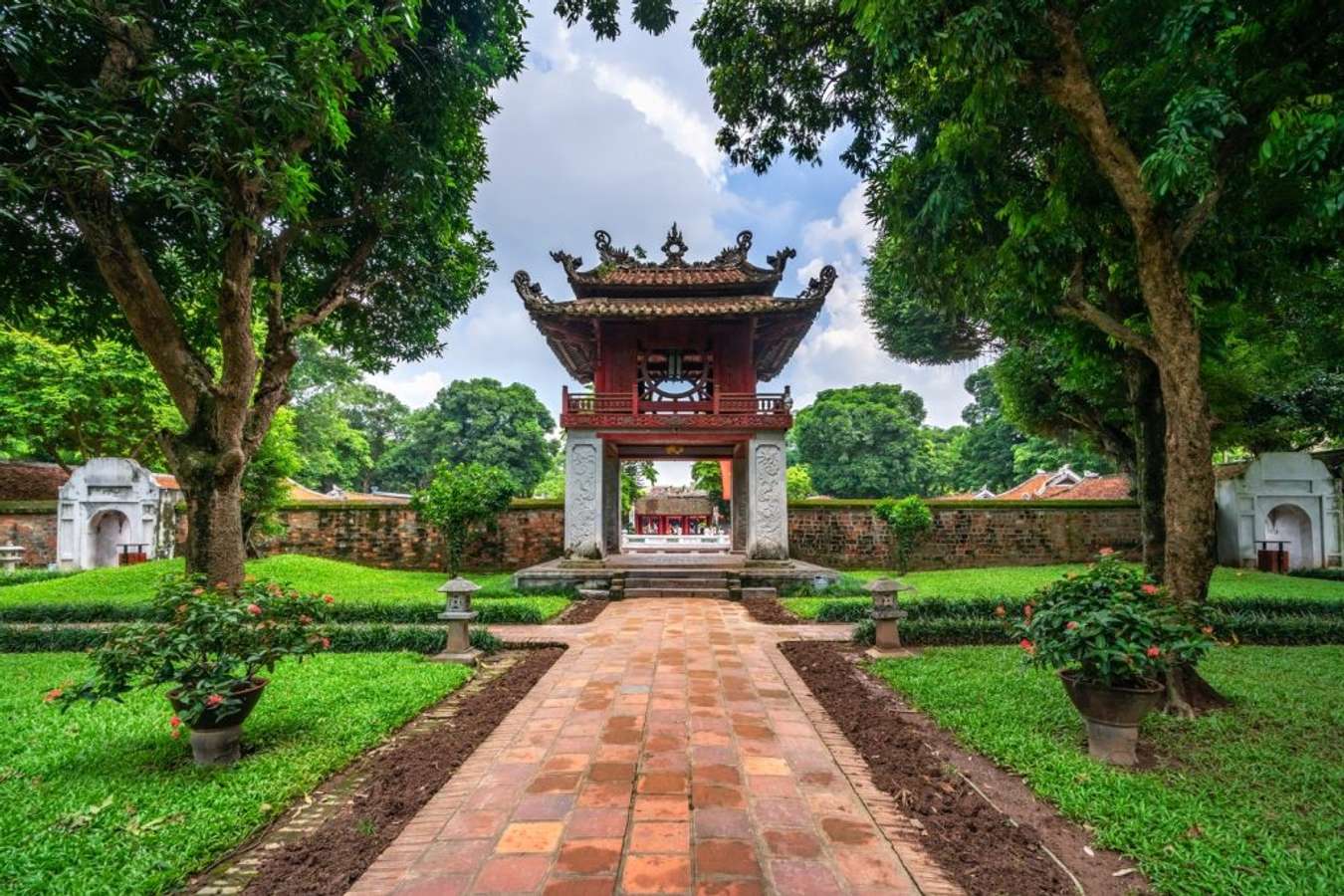
The fascinating and highly complex variable: upon securing independence, Vietnam did not execute a total system wipe of everything acquired from China. Massive amounts of data had integrated and become a permanent component of the Vietnamese operating system:
Confucianism: The educational framework, the civil service examinations, the bureaucratic hierarchy, and numerous social values carry deep Confucian code that the Vietnamese voluntarily maintained—not because they were forced, but because it was functionally efficient.
The Script: Chữ Nôm—the traditional Vietnamese writing system—was reverse-engineered directly from Chinese characters. It was only when the Latinized quốc ngữ script replaced it in the 20th century that Nôm ceased operation.
Architecture and Art: Numerous Vietnamese communal houses, pagodas, and temples deploy distinct East Asian architectural syntax—but localized and altered, not merely copied.
The Vietnamese do not deny these inputs. They simply enforce a critical distinction: absorbing influence does not equal assimilation. And Vietnamese history is the empirical proof of that statement.
The Difficult Neighbor — And How the Vietnamese Navigate
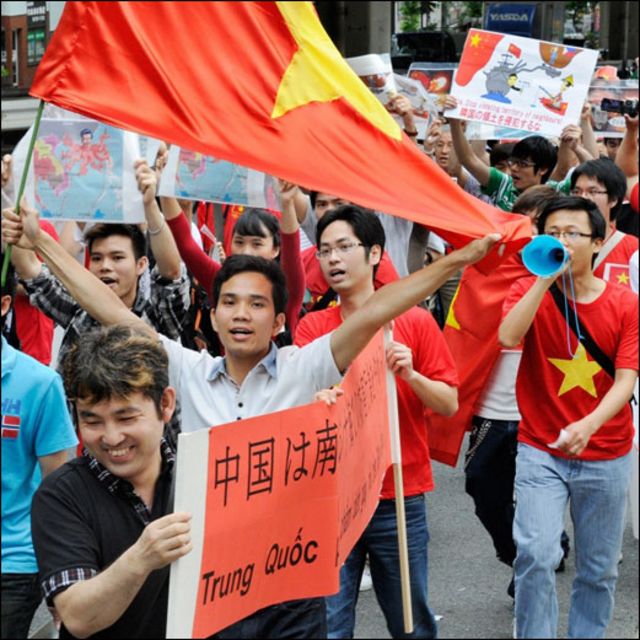
Throughout the 20th and 21st centuries, the Sino-Vietnamese dynamic continues generating equations that lack clean solutions:
1979 — The Border War: China launched a massive ground invasion into northern Vietnam—a brief but brutal conflict that generated deep historical trauma and ongoing controversy.
The South China Sea (Biển Đông): Geopolitical disputes regarding the Paracel Islands, the Spratly Islands, and the Exclusive Economic Zone generate chronic tension, regardless of the official diplomatic rhetoric.
Economics: China is Vietnam's massive primary trading partner and the source of its largest trade deficit. Economic dependency generates both massive opportunity and severe vulnerability.
The Vietnamese navigate this entire matrix utilizing what analysts term "bamboo diplomacy"—highly flexible, unconstrained by rigid ideology, maintaining pragmatic operational ties with both China, the United States, and other global powers, while refusing to bet everything on a single node.
That is not an absence of principles. That is the required geopolitical survival protocol of a small nation existing adjacent to a massive neighbor—a skill compiled and optimized over a thousand years.
There is no capability for the Vietnamese to view China through a simplistic lens—they cannot be classified purely as an enemy (due to massive shared cultural data and economic dependency), nor can they be classified purely as a trusted ally (historical trauma and current territorial disputes forbid it).
That perspective—highly complex, perpetually guarded, yet not unilaterally hostile—reflects an operational maturity that very few demographics achieve following that specific historical trajectory.
And arguably, that exact mentality is one of Vietnam's most valuable geopolitical assets in the 21st century.