Water Puppetry — The Unique Art Form Found Exclusively in Vietnam
Performers stand waist-deep in water, concealed behind a bamboo screen, operating puppets via a classified mechanical system — and they have been executing this since the 11th century
Consider this conceptual setup: you are observing a theatrical performance where the stage is a literal body of water. A dragon breathing actual fire violently dives into the water to catch a fish. A farmer rides a water buffalo across the field. The character "Chú Tễu" grins, dances, and delivers satirical comedy. All of this is executing directly on the surface of a pond, as if the entities are defying gravity.
Positioned behind a bamboo screen, submerged waist-deep in muddy water—invisible operators are mechanically calculating and driving every single movement.
This is water puppetry (Múa rối nước). And there is absolutely zero equivalent to this art form anywhere else on the planet.
From the Village Pond to the International Stage
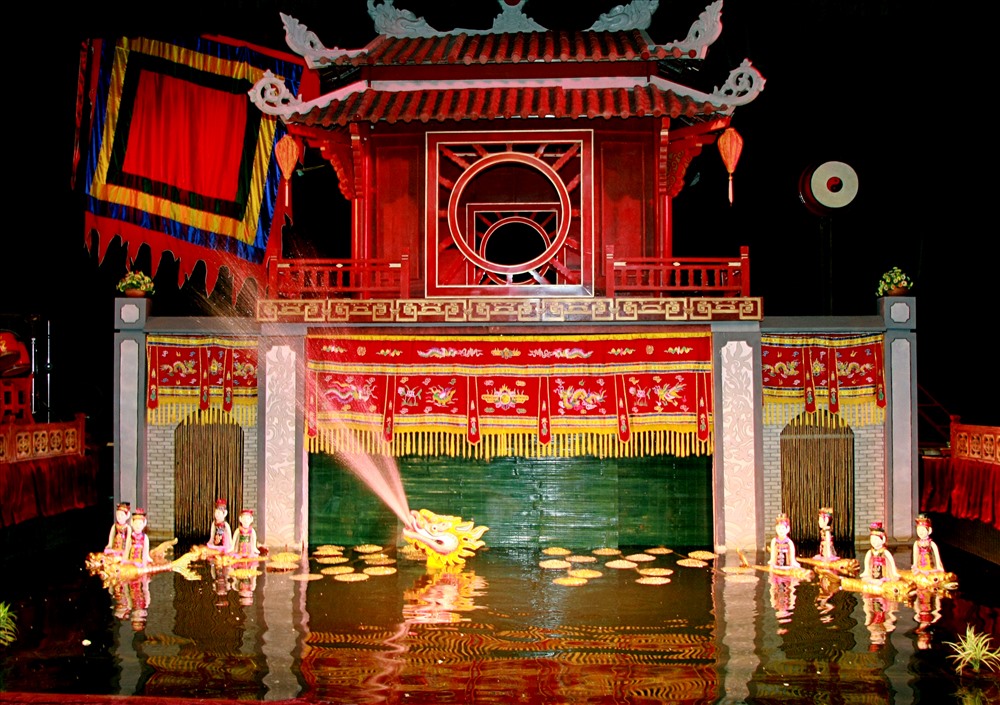
Water puppetry originated in the Red River Delta—a geographic sector defined by monsoons, flooded rice paddies, and massive river systems. The ancient Vietnamese agricultural demographic operated in such close proximity to water that the water itself organically became their stage. No historian knows exactly who engineered the initial concept of placing a puppet on the water—but a stone stele in Nam Dinh explicitly records a water puppet performance executing in the year 1121, during the reign of Emperor Ly Nhan Tong.
1,000 years old. And still operational.
Initially, it was strictly a village-level art form—specialized guilds (phường rối) were contractually obligated to perform during village festivals, specifically following the rice harvest. The control mechanics and puppet manufacturing algorithms were heavily classified within the guild—transferred exclusively to offspring, never to outsiders. There were literal blood oaths sworn to prevent the leakage of the mechanical designs to rival villages.
This was not arrogance. This was the protection of a family's economic survival algorithm.
The Classified Mechanics Behind the Bamboo Screen
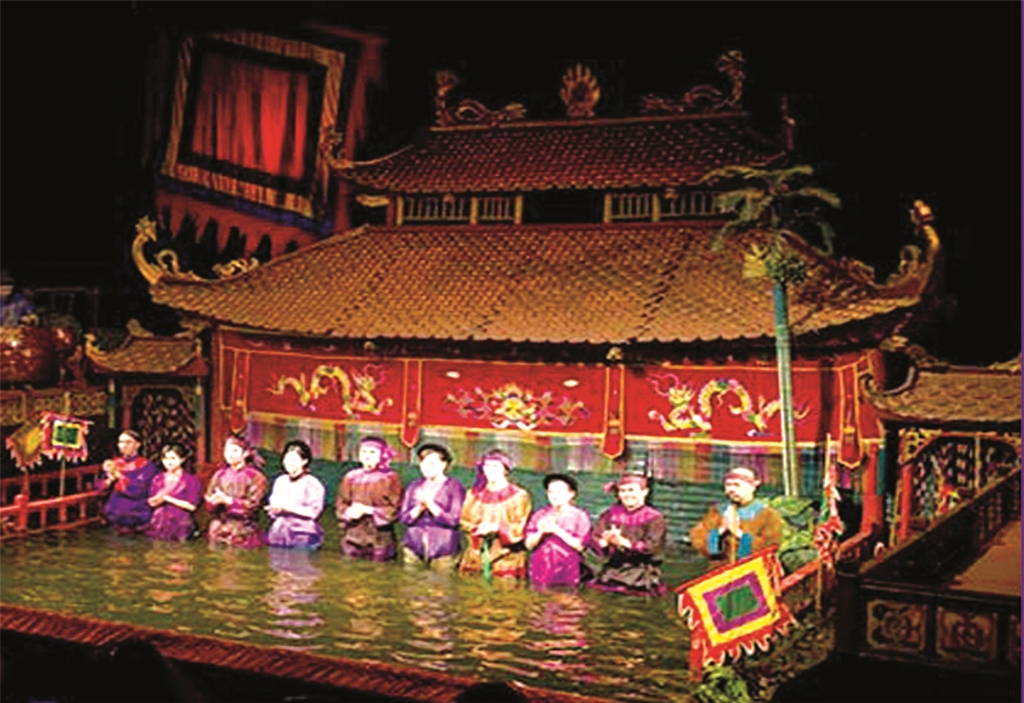
The specific question that consumes almost every audience member: how exactly do they control the puppet from behind the screen?
The generalized answer: a long bamboo rod attached to the base of the puppet, manually operated by forearms submerged in the water. An intricate secondary system of underwater strings controls the articulated components—the dragon opening its jaw to breathe fire, a bird flapping its wings, a farmer striking a drum.
However, the hyper-specific technical details are fiercely guarded by each individual guild—the optimal angle to conceal the rod, the exact tension algorithm to prevent strings from tangling in the current, the synchronization protocol required when 2–3 operators must simultaneously control a single massive puppet. This is the proprietary "intellectual property" of the guild.
The Dao Thuc guild (Hanoi) possesses a routine where the puppet breathes actual fire—not an electric light. The Nguyen Xa guild engineered a dragon that physically scales a fireworks tower. Every guild commands a "signature" routine that rival guilds cannot reverse-engineer.
Chú Tễu — The Operating System of the Show
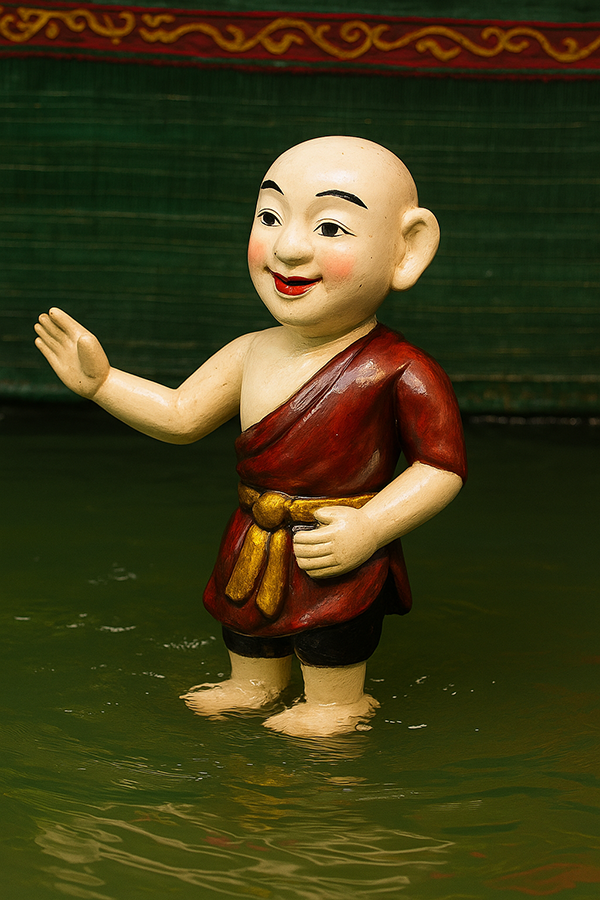
Within the water puppetry matrix, there is one non-negotiable entity: Chú Tễu—the master of ceremonies, the narrator, the comedic anchor.
Tễu is the architectural archetype of the cheerful Northern farmer: plump, deeply tanned, possessing a massive belly, a wide red-lipped grin, and perpetually wearing a red loincloth. Tễu initiates the performance to introduce the narrative and deliver satirical commentary criticizing social hypocrisy.
Historically, Tễu did not merely exist to generate laughter—Tễu functioned as the voice of the commoners, authorized to explicitly state truths that standard citizens could not safely utter. His function is structurally identical to the medieval European jester.
The Artisans — The Invisible Hands Generating the Magic
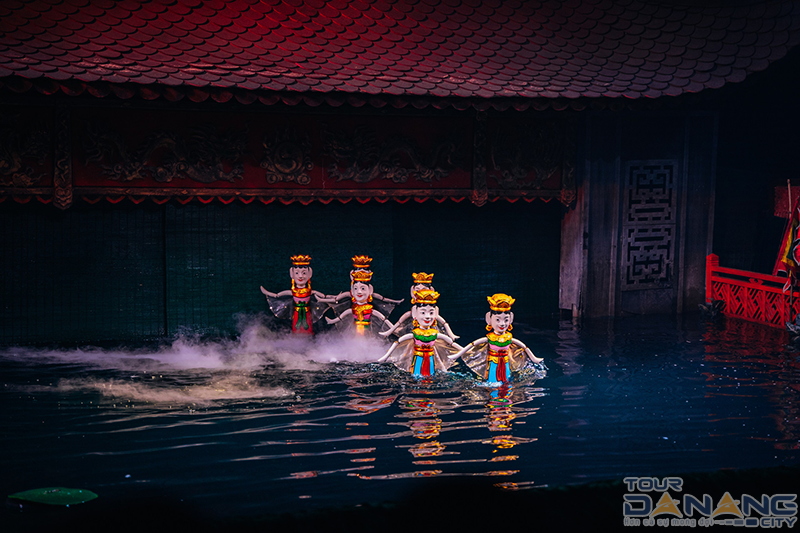
Water puppetry artisans execute their craft in conditions vastly more brutal than almost any other performance demographic: standing waist-deep (or chest-deep if the pond requires it) in water for hours. During a Hanoi winter, the ambient temperature can crash to 5–10 degrees Celsius.
They deploy waterproof gear, but there is mathematically no method to remain entirely warm and dry. Numerous senior artisans suffer from chronic joint degradation and rheumatism—the biological cost of decades spent submerged in cold water.
And when the performance terminates, the audience applauds the puppet—not the operator. This is an art form where the engineers generating the magic actively conceal themselves so the illusion remains unbroken.
There is something profoundly Vietnamese coded into that exact behavior.
Where to Analyze the Code
If your coordinates are Hanoi, the Thang Long Water Puppet Theatre (36 Dinh Tien Hoang, adjacent to Hoan Kiem Lake) is the most optimized, accessible professional venue. Tickets range from 100,000–200,000 VND, the runtime is approximately 50 minutes, and it features English subtitles.
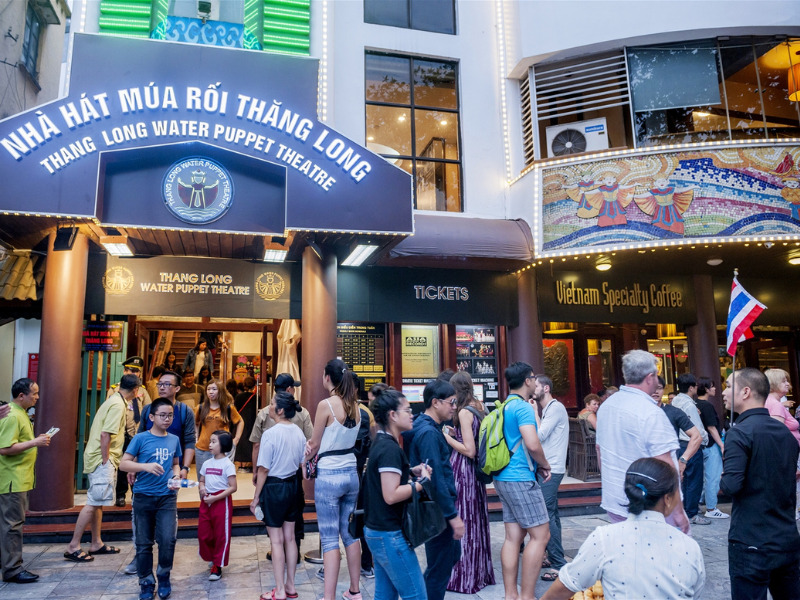
However, if the variable presents itself, inquire if any villages within the Red River Delta are currently hosting a festival—observing water puppetry in its original hardware (a village pond), at night, with oil lamps reflecting off the water surface, and the acoustic shock of live drums and flutes exploding from behind the bamboo screen—that is a radically different experience than a sterile indoor theatre.
A microscopic percentage of tourists unlock that specific achievement. But that is water puppetry operating on its original DNA.