Traditional Vietnamese Music — The Sounds You Don't Realize You're Hearing
From the monocord đàn bầu to ca trù, from quan họ to the royal court music of Huế — each is an entirely self-contained universe
If you hear the đàn bầu for the very first time without knowing what instrument is playing—you will never guess that it is a single string. Its sound mimics the human voice, yet it is undeniably not human. It sounds like wind slicing through a mountain gorge, yet it is not wind. It is something entirely singular, and there is no other acoustic signature on the planet quite like it.
That may sound like the opening line of a clichéd travel brochure. But in this instance, it is a statement of acoustic fact. The đàn bầu genuinely lacks a direct equivalent globally—both in its mechanical principles and its timbre.
The Đàn Bầu — One String, Infinite Sounds
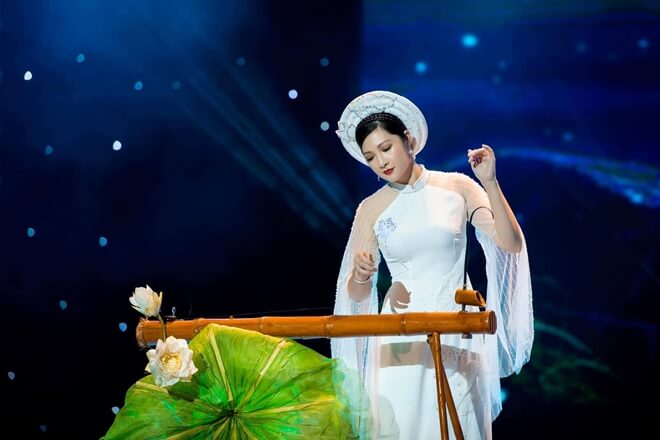
The đàn bầu (or độc huyền cầm — "the single-stringed lute") consists of exactly one metal string stretched taut across a wooden resonating chamber. The musician plucks the string with a plectrum while simultaneously manipulating a flexible bamboo or buffalo-horn rod attached to the base of the string—altering the tension to generate different pitches.
The physical principle is rudimentary. The acoustic output is astonishing: the đàn bầu produces a continuous, fluid sound capable of seamlessly sliding from one note to another (glissando)—mirroring the inflection of human singing. This is precisely why its timbre sounds so vocal. And this is also why mastering the đàn bầu is notoriously difficult—there are no frets, no fixed finger positions. The ear must be exceptionally absolute to locate the correct pitch.
A folk legend claims the đàn bầu was invented by a blind woman to keep her husband at home—the music was so profoundly sorrowful that he could not bear to leave. In reality, the instrument dates back to at least the 13th century. Yet, that melancholic legend aligns perfectly with its haunting timbre.
Nhã Nhạc (Huế Royal Court Music) — The Music of the Dynasty
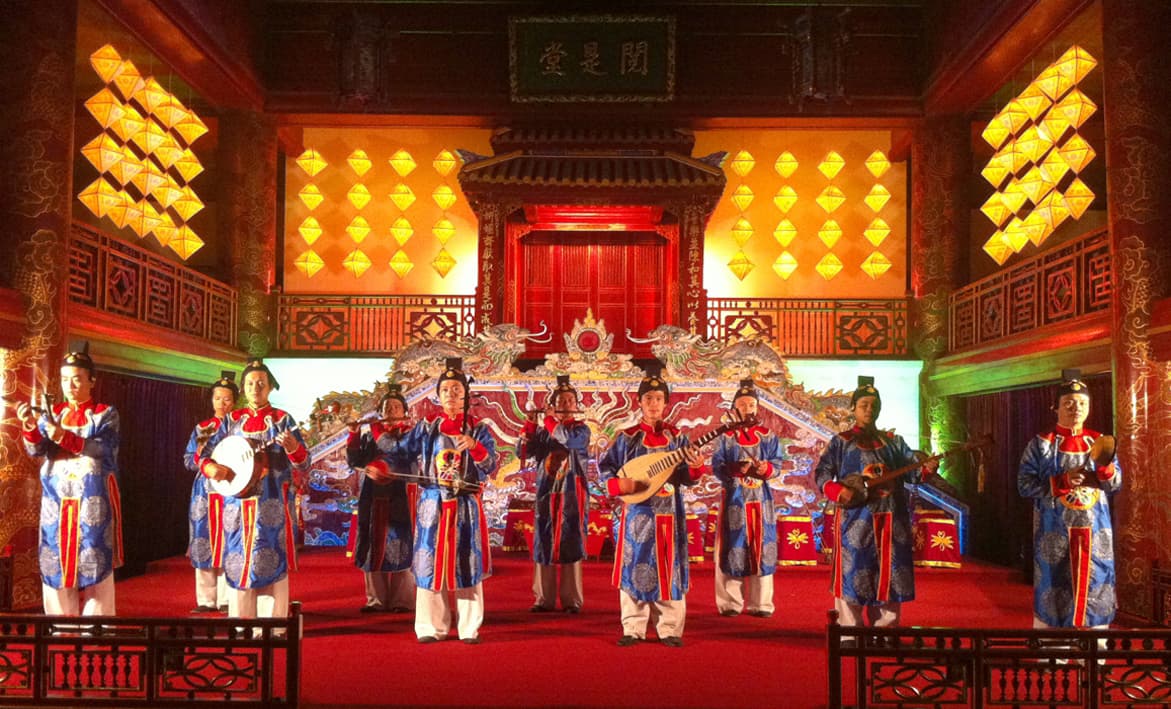
Nhã nhạc—translating literally to "elegant music"—was the ceremonial music of the Nguyễn Dynasty (1802–1945). It was performed during grand sacrifices, coronations, and receptions for foreign envoys—any occasion demanding the projection of absolute state majesty.
A comprehensive nhã nhạc orchestra can comprise dozens of instruments: the 16-string zither (đàn tranh), the two-stringed fiddle (đàn nhị), bamboo flutes, drums, gongs, and the moon lute (đàn nguyệt)—each possessing a rigid hierarchy and specific role within a composition. Nhã nhạc musicians do not improvise—every note is codified and must be executed with mathematical precision. This is the music of discipline and imperial order, not unbridled inspiration.
In 2003, UNESCO recognized Nhã nhạc as an Intangible Cultural Heritage of Humanity. But the grim reality is this: following the collapse of the Nguyễn Dynasty in 1945, and traversing the brutal hardships Huế endured post-1975, nhã nhạc almost evaporated entirely. Only a few dozen elderly musicians remained who knew how to play it.
Beginning in the 1990s, researchers and surviving masters initiated a desperate revival—hunting down fragmented sheet music, locating the elders to learn from them, and training a new generation. Today in Huế, you can hear nhã nhạc during tourist performances or festivals—but witnessing it in its authentic, intended ceremonial context remains exceedingly rare.
Ca Trù — An Art Form Racing Against Time
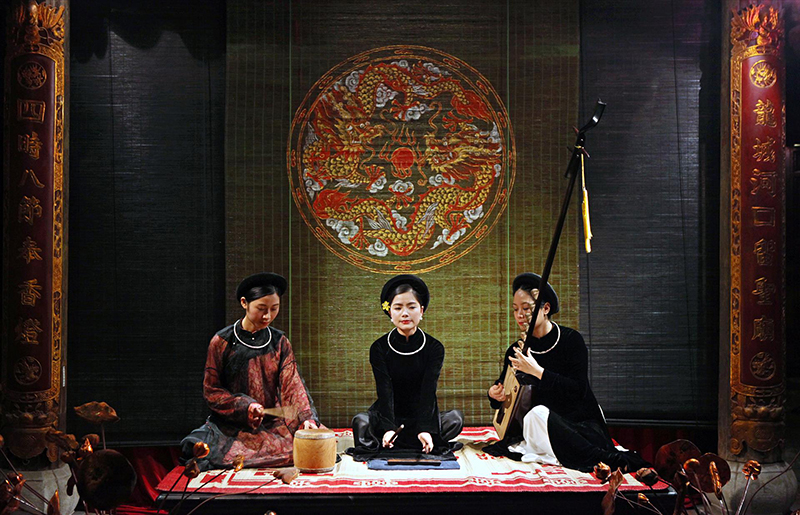
Ca trù is one of the most mechanically and vocally complex musical art forms in Southeast Asia—and it is currently in a state of critical emergency in the truest sense of the word.
The performance format: an đào (female vocalist) sings, accompanied by a musician playing the đàn đáy (a long-necked, 3-stringed lute), and a quan viên (an elite spectator) who beats a trống chầu (praise drum) to express comprehension and critique—a sharp strike indicates admiration, a soft tap indicates mediocrity.
Here is the brilliant anomaly: the audience for ca trù does not sit in silent reverence like attendees at a classical symphony. The quan viên is an active participant—they must possess sufficient musical literacy to know exactly when to strike the drum and what specific nuance they are responding to. Ca trù is fundamentally an art of dialogue between the performer and the listener.
It is widely acknowledged that mastering ca trù requires a minimum of 10 to 15 years of grueling practice. There are no conservatories offering formal degrees in it. The tradition is strictly oral, passed directly from master to disciple. Currently, there are fewer than 20 living masters in Vietnam who are considered truly proficient in the authentic ca trù tradition.
UNESCO placed ca trù on the List of Intangible Cultural Heritage in Need of Urgent Safeguarding in 2009. "Urgent" is not a bureaucratic euphemism here.
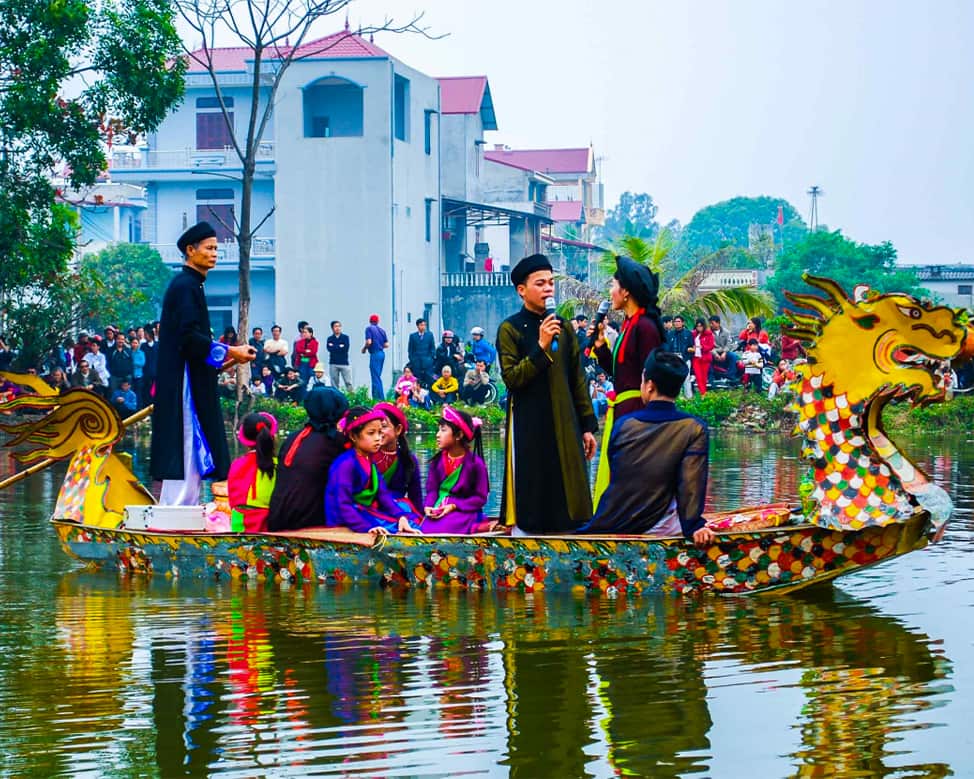
Quan Họ Bắc Ninh — Singing for Love and Platonic Courtship
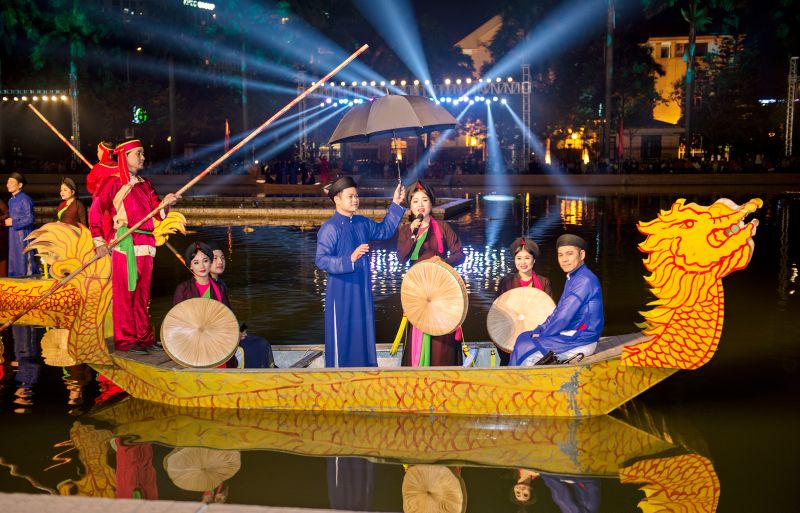
Quan họ is the folk music of the Bắc Ninh region—a province immediately adjacent to Hanoi, which historically served as the cultural epicenter of the ancient Kinh (Vietnamese) people.
The format: two groups, one male and one female, sing back and forth in a call-and-response structure (hát đối đáp)—typically exploring themes of love, friendship, and nature. It is not entirely improvised—there is an established repertoire of hundreds of songs—but the execution demands extreme agility and rapid intellectual responses to the lyrics hurled by the opposing side.
What makes quan họ extraordinary is that its primary objective is not public performance. Quan họ is a highly formalized system of courtship and friendship. "Quan họ guilds" (groups of male friends) from one village pair off with a group of female friends from a neighboring village. They convene during village festivals and sing to one another all day. However, the two groups are strictly forbidden from marrying each other—the golden rule of quan họ dictates that men and women within paired guilds are platonic "brothers and sisters"; their bond is sacred, but it must never cross the threshold into romantic love.
This is an incredibly sophisticated social architecture that requires time for outsiders to fully grasp.
Đờn Ca Tài Tử — The Jazz of the South
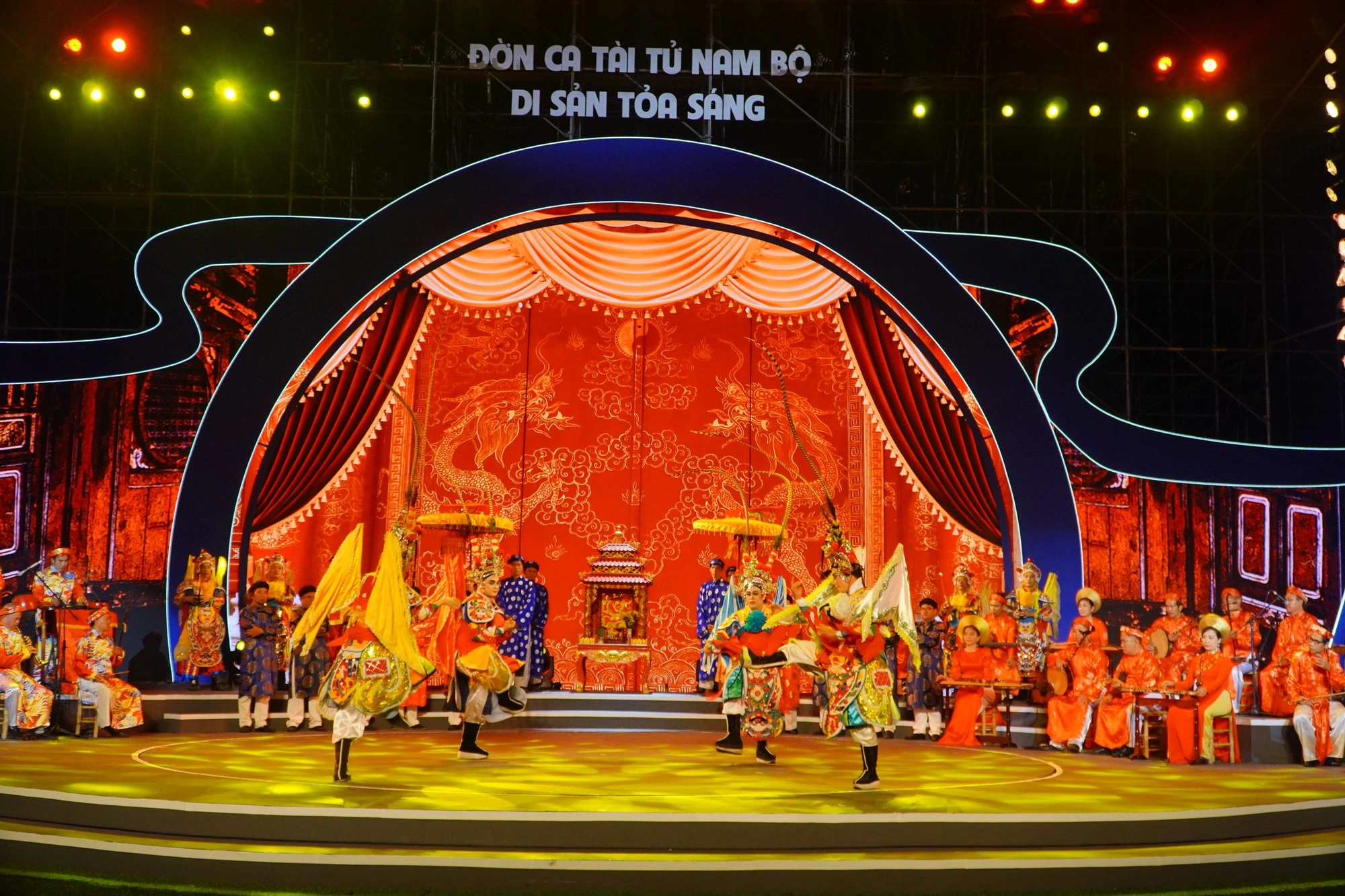
If the royal nhã nhạc of Huế is the music of regimentation, then đờn ca tài tử of the South is the music of absolute liberty.
Đờn ca tài tử (translating roughly to "the music of talented amateurs playing for pleasure") possesses no formal stage. There are no mandates requiring the audience to sit silently. It typically unfolds inside a living room, on a woven mat in a courtyard, or beneath the shade of a mango tree—musicians and singers sit together, playing for one another, improvising, embellishing, and feeding off each other's energy.
Does this format sound familiar? Yes—it is functionally identical to jazz in a sociological sense. It is not music intended for a concert hall. It is the music of a community sitting together.
Đờn ca tài tử originated in the late 19th century in the South—a frontier land characterized by a rugged, free-spirited pioneering ethos. It eventually evolved into cải lương—the wildly popular reformed theater genre of Southern Vietnam.
Why Does Traditional Music Matter to the Vietnamese Today?
A pragmatic question: in an era where K-pop, American Top 40, and V-Pop dominate the AirPods of the youth—who is actually listening to quan họ? Who even recognizes the term ca trù?
The brutally honest answer: not many. And that is precisely why these musical forms require urgent documentation, transmission, and exposure to a broader demographic.
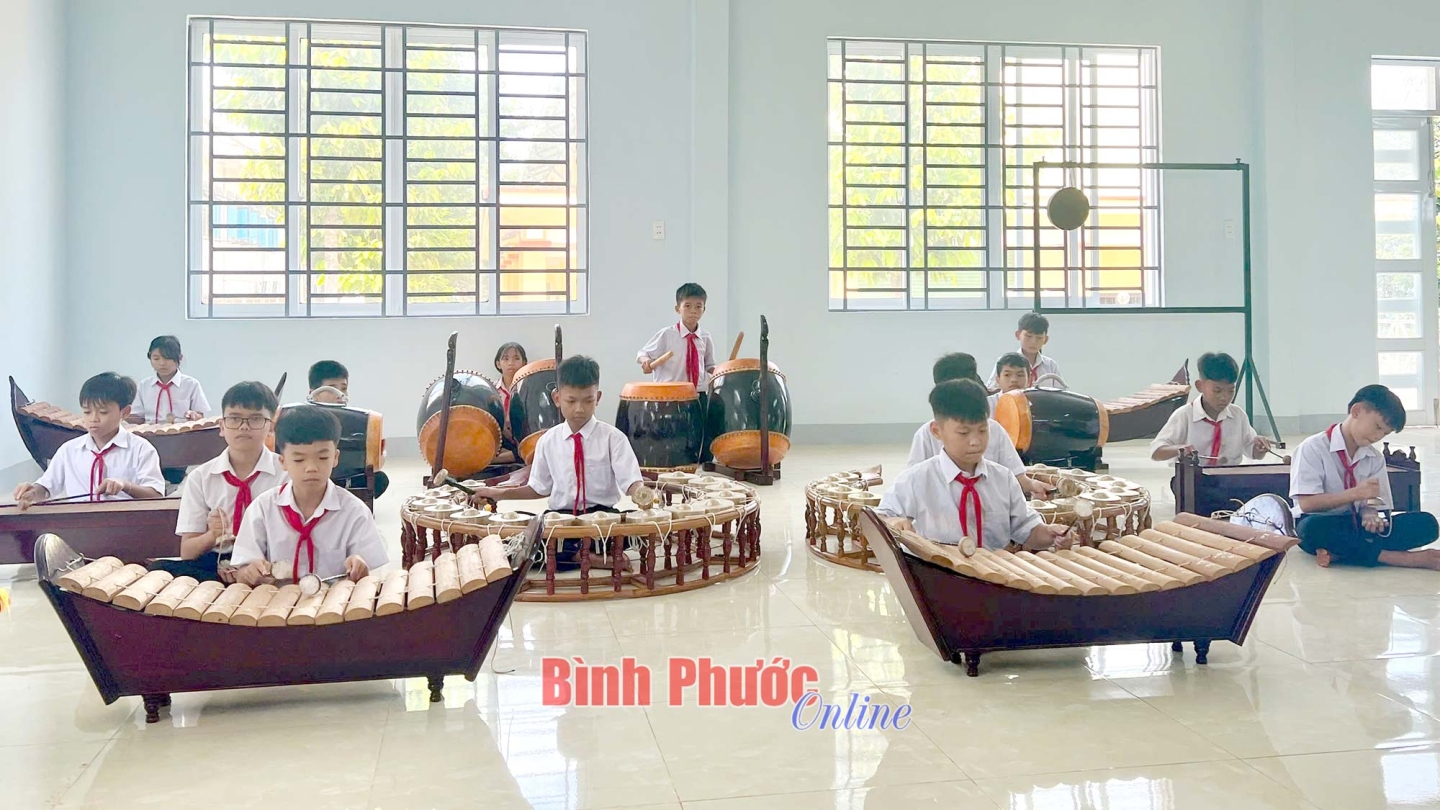
However, an intriguing phenomenon is underway: a vanguard of young Vietnamese artists is aggressively experimenting with fusing traditional music and modern genres. The đàn bầu wired through a loop station. Ca trù remixed with heavy electronic beats. Traditional instruments anchoring mainstream pop music videos.
Not all of it is successful. Some of it sounds objectively jarring. But certain experiments are genuinely forging something new, vital, and mesmerizing.
And perhaps that is the ultimate method for preserving a heritage—not hermetically sealing it inside a museum display case for passive admiration, but allowing it to collide with something living, breathing, and continually mutating.
Much like the Áo Dài. Much like countless other facets of the Vietnamese identity.