Vietnam is Becoming the Tech Hub of Southeast Asia — Here is Why
From software outsourcing to unicorn startups — the 20-year trajectory from an isolated nation to a primary target for global tech investment
In 2004, a young engineer in Saigon named Le Hong Minh made the decision to build an online gaming portal. The internet infrastructure in Vietnam at that specific moment was agonizingly slow, highly expensive, and only a microscopic fraction of the population had access to it. Very few analysts believed it was a viable market.
He built VNG (originally named VinaGame). And when the Vietnamese internet market violently exploded in the subsequent years—VNG was already fully operational, waiting. Twenty years later, VNG is the largest internet company in Vietnam, owns Zalo (the messaging application utilized by 70 million Vietnamese daily), and stands as one of the nation's billion-dollar tech unicorns.
That is the quintessential narrative of Vietnamese technology: arriving precisely on time, betting aggressively on the domestic market when others failed to see the data, and building with extreme patience.
The Engineering Foundation — Why Vietnam Produces Exceptional Developers

Vietnam currently commands an army of roughly 550,000 software developers—a number that is not massive by global standards, but it is expanding at terrifying velocity and the quality is highly respected regionally.
Why? Several structural variables:
A Brutally Strong STEM Education: Mathematics and the hard sciences are taught with extreme rigor beginning in primary school. The 2012 PISA scores confirmed this data globally. The cultural reverence for academic achievement funnels a massive percentage of top-tier students directly into engineering vectors.
Highly Competitive Labor Economics: Compared to India or other Southeast Asian nodes, Vietnamese engineers command salaries slightly higher than the "cheapest" options but remain hyper-competitive by global standards—engineering an absolute sweet spot for high-end outsourcing.
An Aggressive Learning Culture: The Vietnamese acquire English proficiency and master new technology stacks incredibly fast—partially driven by brutal market competition, and partially driven by the intense pragmatism mentioned previously.
From Outsourcing to Engineering Proprietary Products

During Phase 1, Vietnam operated strictly as an outsourcing node: foreign corporations hired Vietnamese engineers to execute code based on foreign architecture.
During Phase 2, Vietnam initiated the deployment of its own proprietary products: Zalo (messaging), MoMo (payments), Tiki (e-commerce), VinFast (electric vehicles), and Viettel (telecommunications expanding into 10+ international markets).
The evolutionary jump from outsourcing to proprietary product engineering—this is a transition that required Singapore 20 years and South Korea 30 years to fully execute. Vietnam is currently mid-execution and is significantly compressing the required timeline.
VinFast is the most extreme empirical example: a Vietnamese electric vehicle manufacturer that executed an IPO on the US Nasdaq, constructed a manufacturing facility in North Carolina, and is actively competing against Tesla within the American market. In 2023, VinFast's market valuation briefly eclipsed both Ford and GM—although it subsequently corrected.
You can debate the long-term sustainability of that specific valuation. But the undeniable reality that a 5-year-old Vietnamese corporation was sitting at the exact same table as Ford and GM on the Nasdaq is a scenario that literally zero analysts believed was possible a decade ago.
Samsung — The Handshake That Altered an Industry
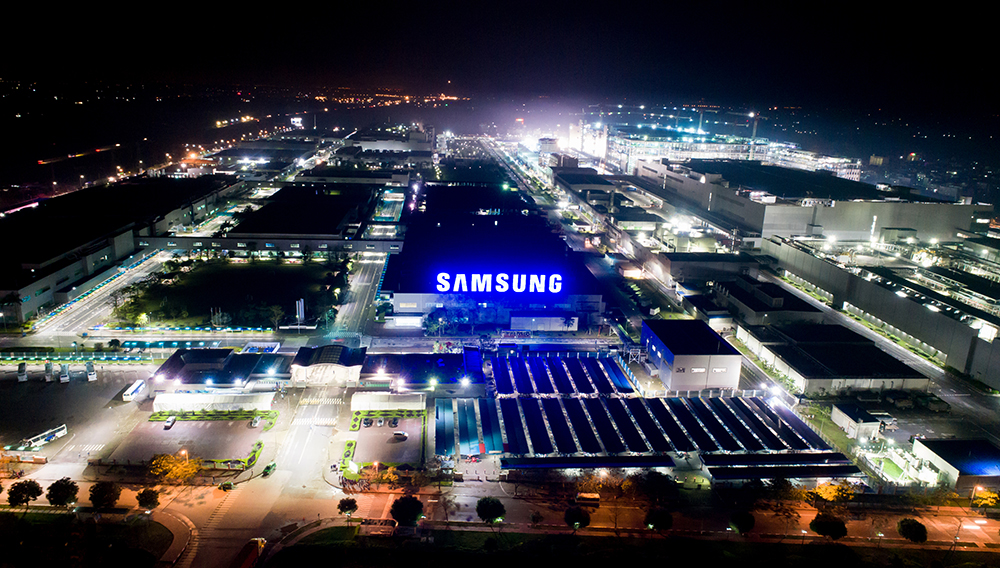
Any analysis of Vietnamese technology is structurally incomplete without analyzing Samsung. The South Korean conglomerate initiated investment in Bac Ninh in 2008, and today, the Samsung manufacturing nodes in Vietnam produce roughly 50% of the entire global volume of Samsung smartphones.
What that translates to in reality: every time a human being anywhere on earth unboxes a new Samsung Galaxy—there is a massive mathematical probability that the device was assembled by Vietnamese hands.
Samsung and other hardware titans (Intel, LG, Foxconn) selected Vietnam based on: highly competitive labor economics, absolute political stability, and flawless geographic positioning (sharing a border with China without actually being China). This dynamic generated hundreds of thousands of industrial jobs and triggered massive technological transfer.
The Bottlenecks — It Is Not Entirely Flawless
The Vietnamese tech narrative is spectacular, but it faces severe structural bottlenecks:
The Brain Drain: A massive percentage of the absolute top-tier engineers graduate and immediately route to foreign corporations overseas—pulled by salaries and operational opportunities in Singapore, the US, and Japan that are vastly superior.
A Deficit of Massive Domestic Capital: Vietnamese startups are frequently forced to secure capital from foreign VC funds—which inherently means critical operational decisions regarding the company are executed based on the logic and demands of external investors.
Lagging Legal Infrastructure: Numerous disruptive business models (fintech, the sharing economy) are forced to operate within ambiguous legal gray zones—generating significant operational uncertainty for both the founders building the tech and the VCs investing the capital.

These bottlenecks are not a terminal failure—they are simply the current equation that Vietnam must solve. And the velocity at which they solve that equation will mathematically dictate whether Vietnam actually ascends to become the supreme tech hub of the region over the next two decades.
The current telemetry: highly promising.