The Vietnamese Tube House — Asia's Strangest Architectural Anomaly and the Logic Behind It
5 stories tall, 3 meters wide, 20 meters deep — resembling a massive book slotted vertically into a shelf. This is not an aesthetic failure. This is urban economics
If you observe the old quarters of Hanoi or Saigon from a high altitude, you will witness a bizarre visual matrix that does not resemble any other metropolis on the planet: impossibly narrow, deep structures packed violently together like books slotted vertically onto a shelf. Every single unit boasts a different color palette, every unit possesses a different elevation, all aggressively competing for space to form an architectural chaos that is somehow inexplicably beautiful.
This is the nhà ống (tube house)—the absolute dominant residential architecture of urban Vietnam. And its source code originates entirely from taxation.
The Economic Logic Behind the Bizarre Geometry
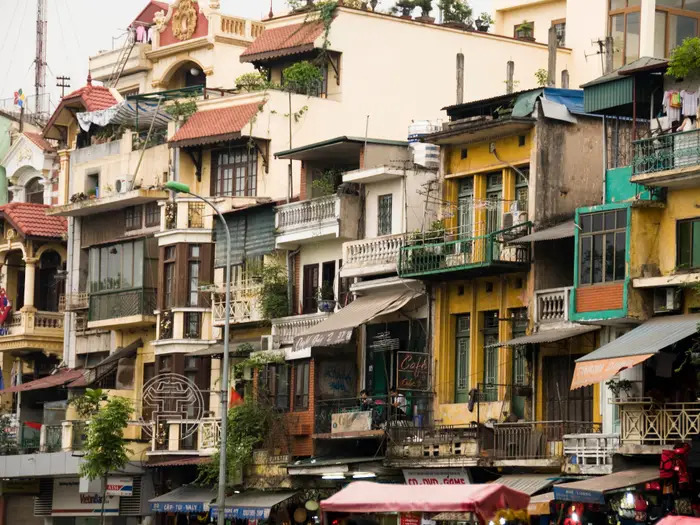
When the French colonial administration engineered the urban tax system, they deployed a tax calculated specifically on the street frontage width of the property—the wider the face of your house, the higher the financial penalty.
The Vietnamese populace reacted with absolute pragmatism: they constructed houses with microscopic frontage but massive depth. It was an aggressive tax evasion protocol. Furthermore, because street-facing real estate is mathematically the most valuable asset (crucial for commercial operations), possessing a narrow frontage allowed more families to secure direct street access for the same capital investment.
That specific economic logic survived for decades and became the default architectural operating system of urban Vietnam, long after the original French tax parameters were abolished. The population simply became accustomed to building that way. Land remained hyper-expensive. Capital remained scarce relative to demand.
Operating Inside a Tube House — The Full Experience
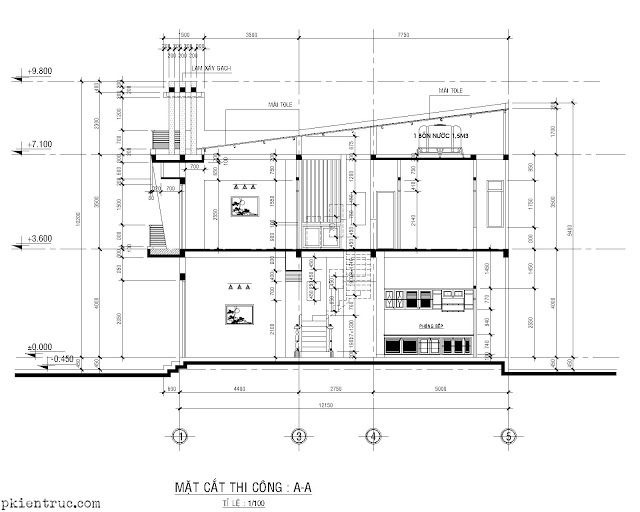
If you scan the interior of a standard tube house, from the ground up:
The Ground Floor: Almost universally deployed as a storefront, a small restaurant, a garage, or a formal reception room. The front opens directly onto the street—this is the exact reason the street frontage is so aggressively defended.
Floors 1–2: The primary living room, the kitchen, and the dining sector.
Floors 3–4: The sleeping quarters—typically featuring one bedroom and one bathroom per floor.
The Rooftop (if it exists): The terrace—a zone for drying laundry, cultivating microscopic vegetable gardens, or simply a sanctuary to escape the density below.
The structural reality of operating within a tube house: Natural lighting is a chronic, unsolvable crisis. The rooms engineered directly in the center of the structure—distant from both the front facade and the rear wall—possess zero access to exterior windows. Illumination relies entirely on a central skylight (if the architect included one) or permanent artificial lighting. Cross-ventilation is equally brutal.
The trade-off, however: A massive, multi-generational family can operate within a single structure—allocating one generation per floor, while sharing the communal kitchen and the central staircase. The physical footprint is constrained, but the interpersonal connectivity is absolute.
The Tube House and the Urban Vietnamese Identity
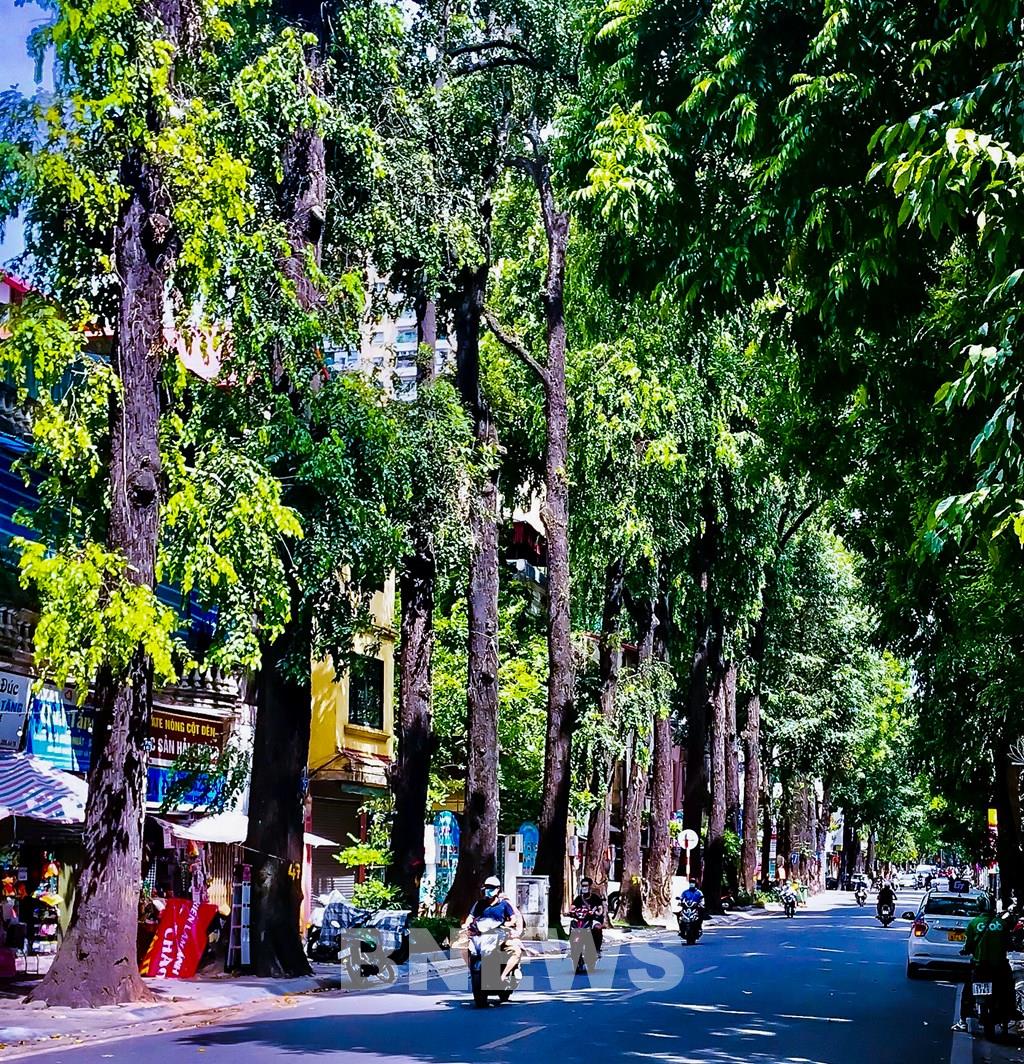
When international architects initially survey Vietnam, they frequently evaluate the tube house through a highly critical lens: it lacks centralized urban planning, it lacks symmetry, and it violates classical urban aesthetic parameters.
Then they observe it closer, and their assessment shifts.
The chaotic geometry of a tube house street—where every structure possesses its own micro-architecture, every facade deploys a different color tone, modern glass juxtaposed directly against ancient wooden shutters—generates a visual diversity and kinetic energy that heavily regulated, master-planned urban zones completely lack. No two structures are identical. The street constantly provides visual data.
Furthermore, the ground floor of these tube houses—operating as a continuous, unbroken chain of micro-commerce—engineers exactly what urban sociologist Jane Jacobs termed "eyes on the street": humans are permanently present, permanently observing, generating natural safety and organic vitality without requiring a massive security apparatus.
The Apartment Generation — And What is Being Traded Away
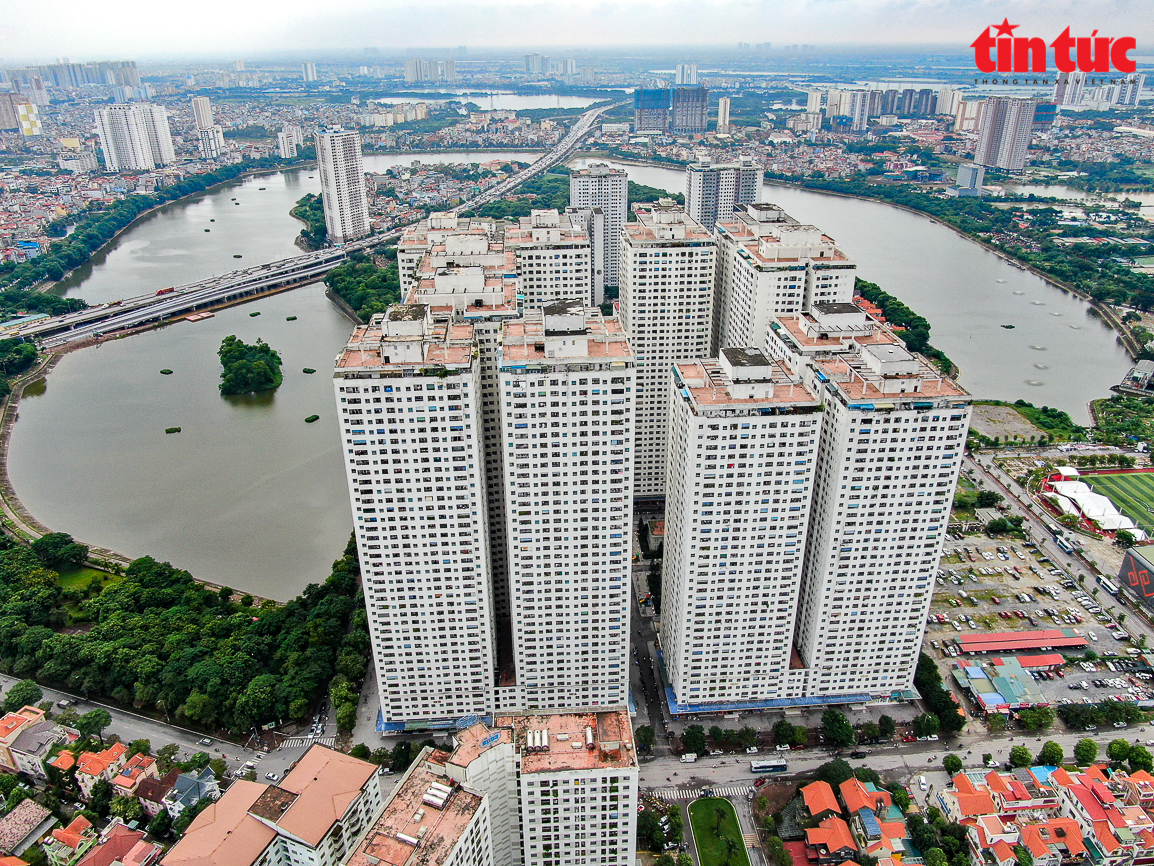
The younger generation is increasingly migrating toward high-rise apartment complexes: they are cleaner, they offer integrated amenities, they possess superior security, and they eliminate the brutal requirement of climbing four flights of narrow stairs daily.
On a purely functional metric, the modern apartment is vastly superior. But something critical is being structurally deleted as the tube house street yields to the uniform high-rise:
The Ground Floor Micro-Economy — The organic network of street-level commerce cannot exist when you reside on the 15th floor. The informal economic web of the old street—the microscopic barber shop, the improvised coffee stall, the neighbor selling vegetables—cannot survive the sterile environment of a modern apartment lobby.
The Proximity of Neighbors — Tube houses exist in extreme physical proximity. You literally hear your neighbor preparing dinner; you visually encounter them every single day. An apartment complex provides a sealed door, an isolated elevator, and the capacity to literally never interact with another human in your building if you choose not to.
This is not to imply that apartment complexes are negative. It is simply acknowledging the data: when the physical architecture of a society alters, the mechanics of how human beings connect alters alongside it. And that subsequent alteration is not always a strict upgrade.