Why Vietnamese Families Live in Multi-Generational Households — And Why It Works
Four generations under a single roof is not an impossibility — it simply requires a specific rulebook and an understanding that Westerners are rarely taught
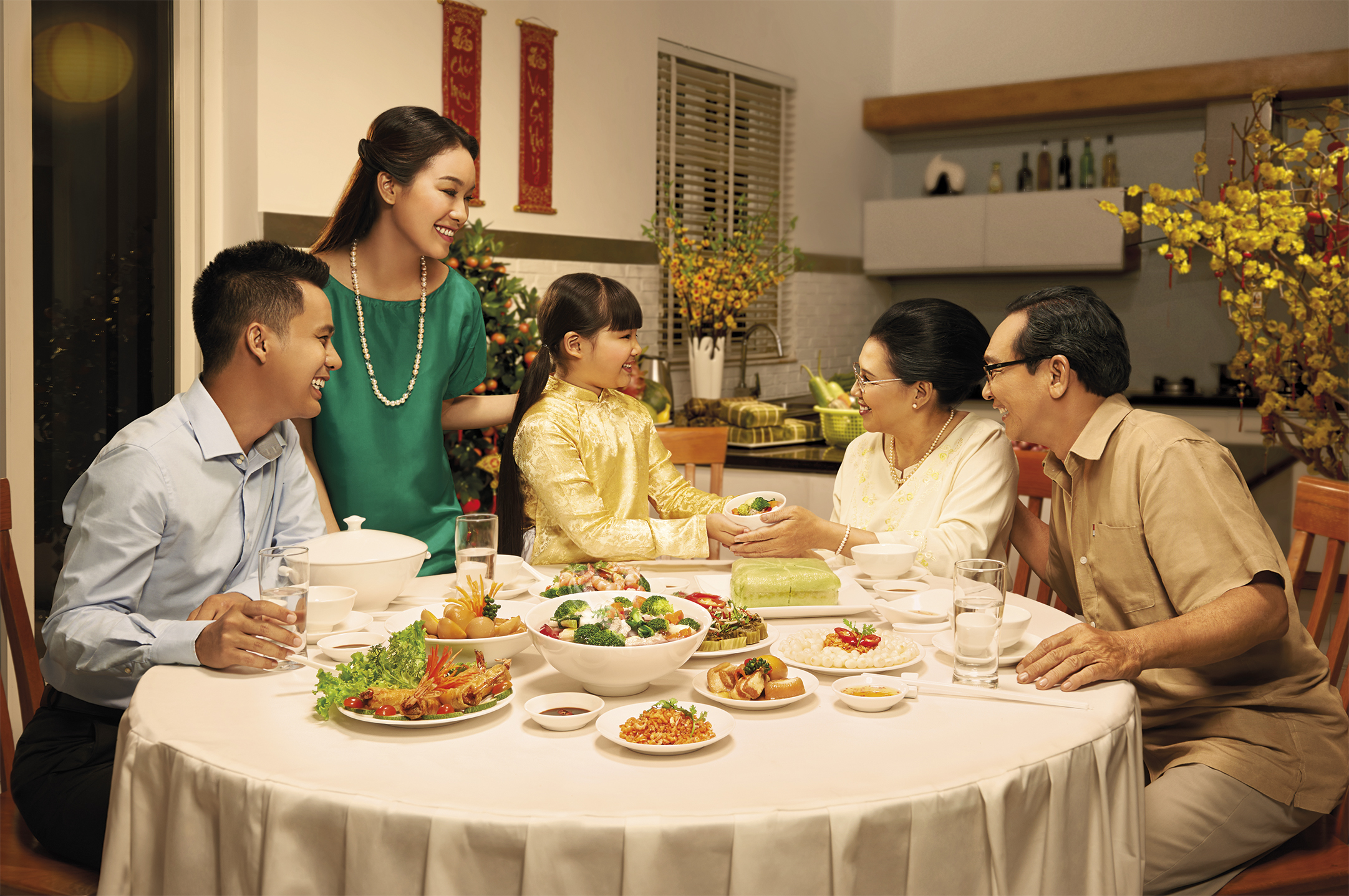
Imagine a four-story house tucked into a narrow alleyway in Hanoi. Ground floor: the 78-year-old grandmother and 80-year-old grandfather—she orchestrates the kitchen, he sits sipping green tea while watching the evening news. Second floor: the parents, both in their fifties; the father works a corporate job, the mother juggles two gigs while managing the household logistics. Third floor: the eldest son, newly married, alongside his wife and their 4-year-old child. Fourth floor: the unmarried younger sister, working as an accountant.
Four generations. One house. One shared kitchen (which is invariably the absolute domain of the grandmother). Competing habits, fiercely conflicting viewpoints, and a staggering volume of patience forged over decades.
The vast majority of Westerners hearing that architectural breakdown would immediately think: "That sounds like a psychological catastrophe." Meanwhile, countless Vietnamese individuals residing under exactly those roofs would shrug and think: "Seems perfectly normal."
Who is correct? Both of them. Depending entirely on the day of the week.
Why the Vietnamese Co-Live — It Is Not Because They Lack Options
The immediate, reflexive explanation most outsiders gravitate toward is: "The Vietnamese live together because they are poor and cannot afford separate housing."
That is partially true—economic reality is undeniably a factor. But it is nowhere near the entire equation. Because even when the economic circumstances vastly improve, a massive demographic of Vietnamese families still choose to co-live. Not because they cannot afford the down payment on a separate apartment, but because the physical act of fracturing the family unit just feels fundamentally wrong.
There is a deeper, vastly more powerful set of values operating beneath the surface:
Chữ Hiếu (Filial Piety): The parents exhaust themselves raising the child to adulthood; therefore, the child bears the absolute, non-negotiable obligation to care for the parents when they wither. This is not a transactional economic exchange—it is a moral imperative that supersedes debate. Placing one's parents into a nursing home in Vietnam is still widely condemned as a deeply shameful act within many families, although this stigma is slowly fracturing in major metropolitan centers.
Children require grandparents: The Vietnamese fundamentally believe that grandparents are not merely unpaid "babysitters"—they are the primary transmitters of core values, the storytellers, the ones who possess the time to teach the lessons that exhausted, working parents simply cannot. The bond between grandparent and grandchild in Vietnam is frequently incredibly intense and vital to the psychological health of both parties.
The pragmatic support network: When someone in the house falls violently ill, when a child needs an emergency school pickup, when the primary cook requires a sous-chef—co-living generates an instant, reliable reservoir of human resources that an isolated nuclear family simply does not possess.
The Hidden Price Tag — The Reality No One Speaks Aloud
However, multi-generational living is absolutely not a flawless utopia. And the Vietnamese—specifically the women—are acutely, painfully aware of the dark side of this arrangement.
The relationship between the mother-in-law and the daughter-in-law is a subject so infinitely complex and fraught that it has entirely spawned its own genre of Vietnamese folk literature and modern television dramas. When a young woman marries into her husband's family, she is not merely marrying a man—她 is being assimilated into an entire, pre-existing familial ecosystem complete with its own rigid expectations, deeply entrenched habits, and unyielding viewpoints.
The mother-in-law is typically the undisputed matriarch who has managed the household according to her specific methodology for decades. The daughter-in-law arrives carrying her own modern methodologies. And when those two opposing forces collide—over how to season the soup, over how to discipline the toddler, over how to manage the family finances—the tension is practically inevitable.
"She doesn't even know how to cook a proper meal." "She has zero respect for my personal boundaries." "She is raising my grandchild entirely wrong." "I literally cannot find a single corner to breathe in this house."
None of those statements are inherently false. And none of the women uttering them are inherently malicious. It is simply the explosive reality of two women, originating from two entirely different generations and backgrounds, forced to co-administer a shared domestic space where the borders of authority are blurry at best.
The Mechanics That Make It Work (When It Does Work)
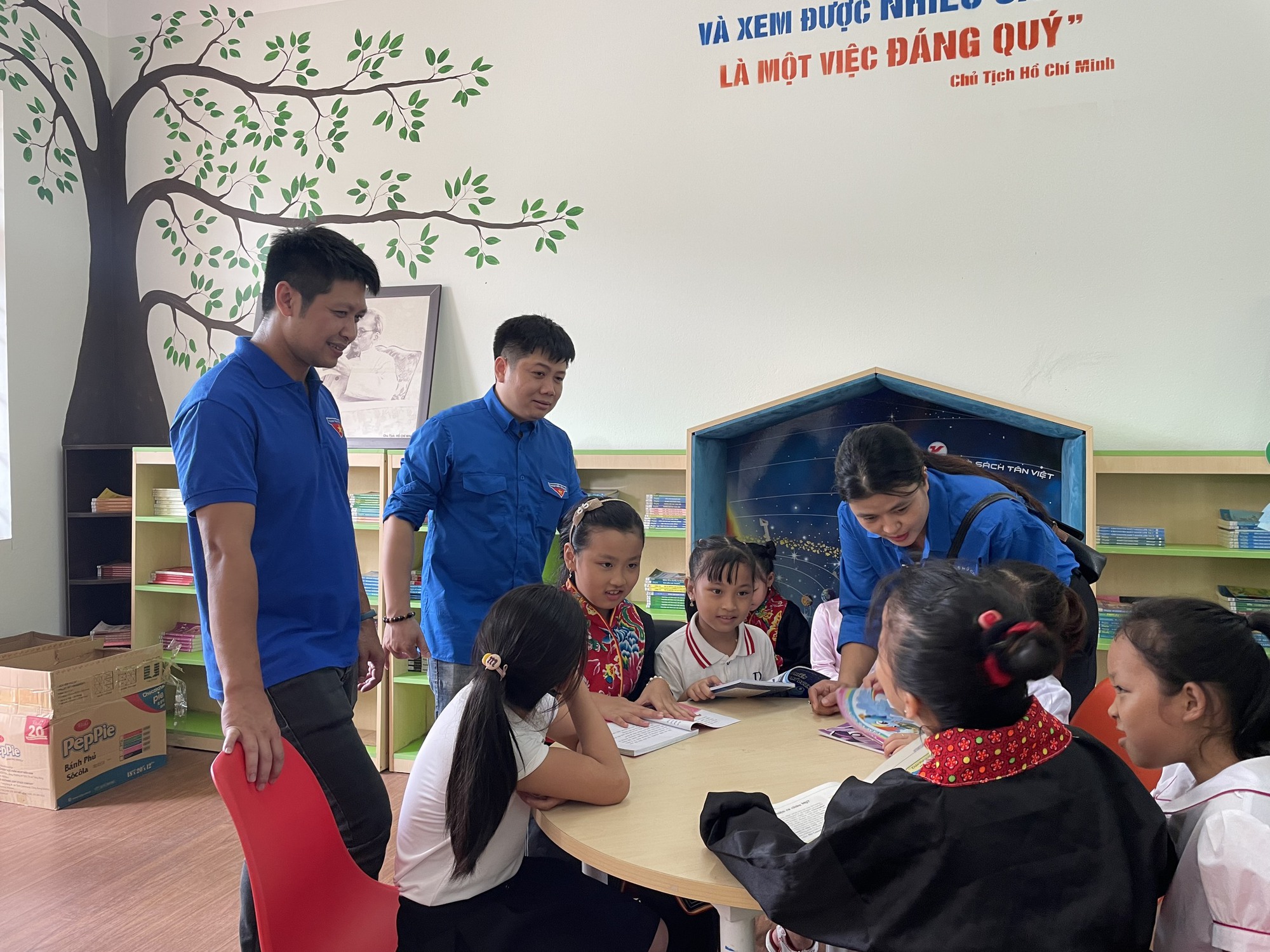
The multi-generational Vietnamese families that actually function smoothly typically share several highly specific traits:
Ruthlessly clear division of roles — even if entirely unspoken. The grandmother dominates the morning kitchen. The mother commands dinner. The daughter-in-law manages the laundry. This is not dictated by a signed contract—it is forged through mutual observation and unspoken compromise over time. When this delicate choreography is disrupted without renegotiation—the tension instantly escalates.
Dedicated private sanctuaries — no matter how small. Even within a cramped, narrow tube house, every sub-family unit must possess their own distinct bedroom, and ideally, a secondary kitchen or kitchenette. These physical borders may be minuscule, but they are absolutely vital for maintaining psychological autonomy.
A highly skilled diplomat capable of "reading the air." This role typically falls to the son—the man who is simultaneously the child of his mother and the husband of his wife. He must master the terrifyingly complex art of ensuring the two most important women in his life never enter into direct, open warfare. This is a survival skill they do not teach in universities, yet it is arguably as critical as any degree.
A sharp sense of humor. In all seriousness—the multi-generational households that thrive are invariably the ones equipped with a robust arsenal of inside jokes. They possess the capacity to laugh about the grandfather constantly mistaking the TV remote for his smartphone, or the grandmother's pathological inability to cook less than ten portions of rice for four people. Humor is the most potent, non-toxic social glue available.
The New Generation is Renegotiating the Contract
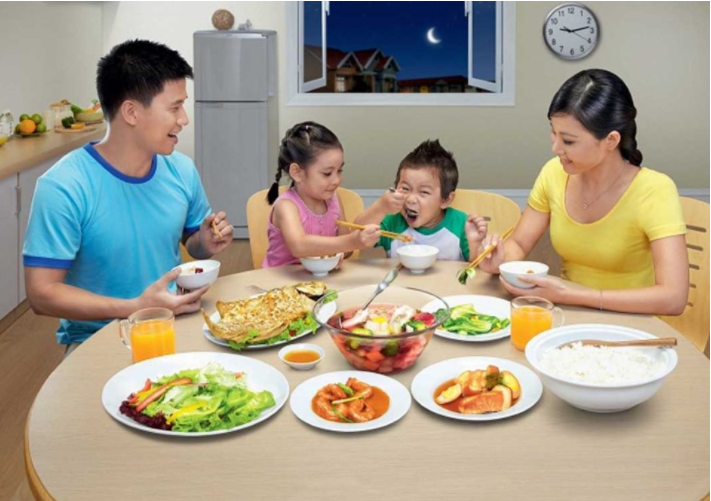
Vietnamese Gen Z and Millennials are beginning to vocalize a question that their parents rarely dared to ask: "Who actually decreed that we must all live together?"
An accelerating wave of young urban couples are demanding to establish their own independent households immediately following marriage—not because they lack love for their families, but because they have accurately diagnosed that physical distance frequently protects the relationship far better than proximity. When you do not interact every single day, the moments you do share become exponentially more valuable. The opportunities for petty, attritional conflict are drastically reduced.
But here is where the psychological knot tightens: the parents of those young adults sacrificed their youth, their finances, and their sweat to educate and raise them. Their core expectation—even if they refuse to state it explicitly—is usually, "When my hair turns white, my child will be sleeping in the room next door."
Renegotiating that unspoken contract—navigating the collision between the fierce independence of the modern generation and the deeply ingrained expectations of the older generation—is currently one of the most agonizing, complex dialogues occurring within the modern Vietnamese family.
There is no objectively correct or incorrect answer. There are only choices, and the specific tolls and rewards associated with each.
And the most optimistic observation to make is this: the Vietnamese are finally beginning to actively discuss it, rather than allowing it to fester as a silent, suffocating pressure that no one is permitted to name.