Vietnamese Women — From the Battlefield to the Boardroom, a Thousand-Year Journey Still Underway
The leader of the very first armed resistance against China was a woman. The individuals who maintained the food supply and raised the next generation during devastating wars were women. The demographic evolving the fastest in the modern era — are also Vietnamese women.
In the year 40 AD, while the Chinese Han Empire exerted total control over Vietnamese territory and the local occupation commander had just executed her husband — Trung Trac made the tactical decision to rebel.
She did not grit her teeth and accept it. She did not flee. She did not petition for mercy. She mobilized an army and violently expelled the occupying commander, To Dinh, from the country.
And her co-commander—the individual fighting directly beside her throughout the entirety of the rebellion—was her younger sister, Trung Nhi. Two women. The Trung Sisters (Hai Bà Trưng).
This is not an isolated anomaly in Vietnamese history. It is a repeating structural pattern: during the absolute most critical moments of national crisis, Vietnamese women do not sit passively and wait for a savior.
Women in Vietnamese History — Not Merely Symbolic
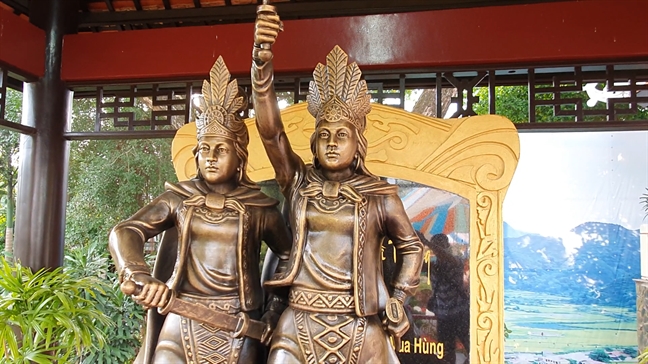
When Westerners first encounter the historical data regarding the Trung Sisters or Lady Trieu (3rd century), their reaction typically falls into one of two categories: extreme surprise that an "Eastern tradition" produced female warlords—or extreme skepticism, assuming the narrative is pure mythology rather than verified history.
The geopolitical reality is vastly more complex than either reaction.
In pre-Confucian Vietnamese society—prior to the brutal imposition of a rigid, patriarchal Chinese system—Vietnamese women possessed a socioeconomic status significantly higher than in most contemporary global cultures. A woman was legally permitted to own property, inherit wealth, operate commercial enterprises, and wield substantial influence within the community architecture.
A thousand years of Chinese occupation aggressively enforced Confucianism—specifically the "Three Obediences" (Tam Tòng: a woman must obey her father, then her husband, then her son) and draconian protocols designed to neutralize female agency. However, the resistance to this system was never entirely crushed. The ancient Vietnamese proverb, "When the enemy breaches the gate, even the women must fight"—is not a desperate, last-resort plea. It is an accurate description of operational reality.
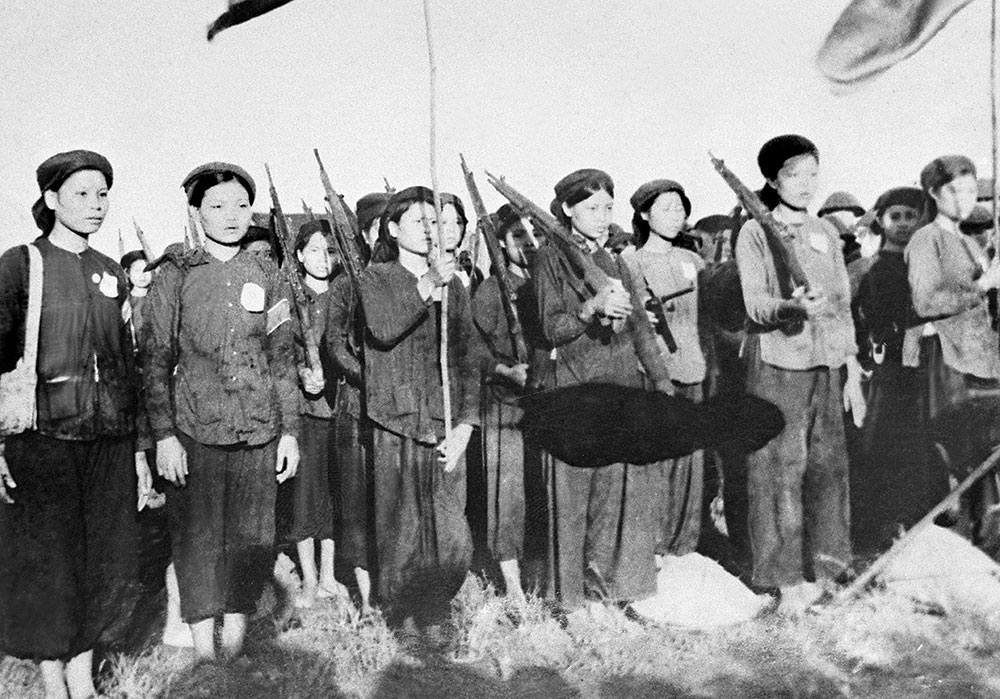
During the catastrophic conflicts against the French and the Americans: hundreds of thousands of women integrated directly into combat operations or executed critical logistical support. All-female artillery units shot down American aircraft. Female reconnaissance squads operated behind enemy lines. And massive divisions of female civilian laborers (dân công) transported ammunition and rations—carrying crushing loads across heavily bombed supply routes, many of them never returning.
The Double Burden of the Modern Vietnamese Woman

The modern Vietnamese woman currently operates within a highly pressurized transitional zone:
Verified Progress: Vietnam's female labor force participation rate is statistically higher than the regional average. Vietnamese women have deeply penetrated virtually every sector—from education and healthcare to corporate business, technology, and high-level politics. A massive demographic of women are founding their own startups. A massive demographic of women operate as the primary financial engines of their households.
Unchanged Expectations: Simultaneously, despite executing all of the above, the Vietnamese woman is still aggressively expected to: cook daily for the family, manage the children's education, serve her parents-in-law, maintain a flawless home, and—this is the most complex cultural trap—ensure she does not become "too successful" to the point where it damages her husband's ego (losing face).
This double burden is not merely a psychological feeling; it is a mathematically verifiable reality: according to numerous labor surveys, Vietnamese women execute significantly more hours of unpaid domestic labor per week than men—even when operating under full-time external employment.
"Giỏi Hai Vai" (Excelling on Both Shoulders) — The Compliment That Operates as a Trap
Within Vietnamese culture, there is a specific, ultimate compliment designated for women: "Giỏi hai vai"—literally, excelling on both shoulders; mastering both your professional career and your domestic duties. Receiving this label is considered the apex of social validation.
It sounds incredibly positive.
But analyze the structural logic: Why exactly are women required to excel on "both shoulders" while men are not? When society compliments a man, they praise him as "a great earner", "kind-hearted", "responsible"—absolutely no one praises a man for flawlessly executing domestic cooking while simultaneously maintaining a strong career.
The crushing expectation embedded within that compliment—that a woman must shoulder both worlds without a single complaint—is a protocol that the younger generation of Vietnamese women is rapidly identifying and aggressively questioning.
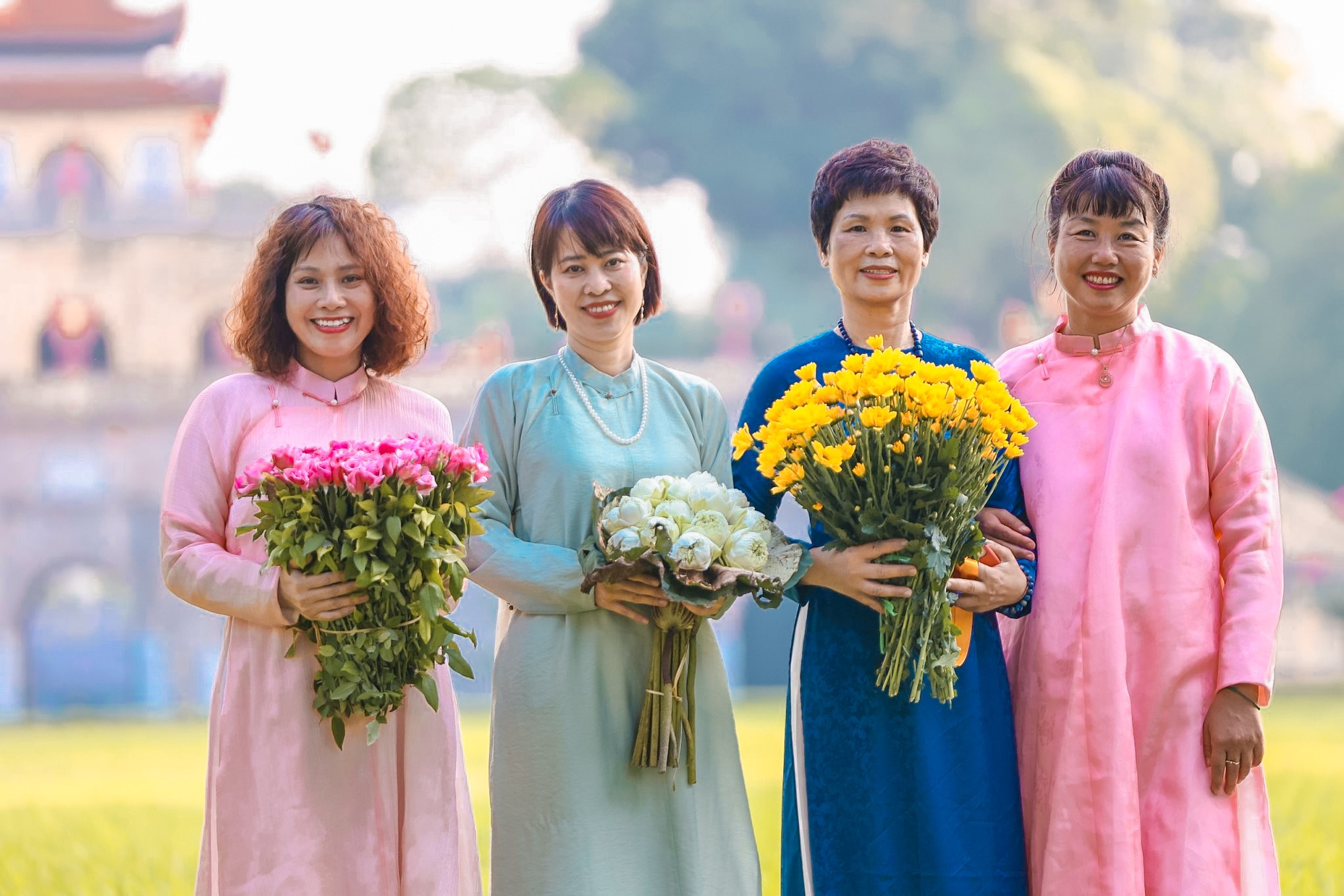
The New Generation is Rewriting the Source Code
Gen Z and Millennial Vietnamese women are actively altering the parameters of the conversation—not by aggressively rejecting family values (the vast majority still desire a family, still respect their parents, and still uphold core traditions), but by assigning names to phenomena that were previously unnamed and ignored.
The "mental load"—the invisible, exhausting labor required to manage a household, remember birthdays, and anticipate everyone's needs—is now being discussed with brutal clarity.
"It is not a character flaw that I want both a career and a family—the flaw is within the system that forces me to choose."
"I love my children unconditionally. I also require my own operational space."
These statements are not attacks on the family unit or on cultural heritage. They are the declarations of individuals who are actively learning how to honor their legacy while simultaneously amputating the components of that legacy that are no longer functional.
And that specific capability—the intelligence required to retain what works and ruthlessly discard what does not—is perhaps the most authentic and difficult cultural evolution any society must undergo.
Vietnamese women are operating on the absolute front lines of that process. And it is certainly not the first time in history they have done so.