Filial Piety — The Duty That Shapes Every Vietnamese Life
This is not merely "loving your parents." It is a staggeringly complex value system that dictates everything from career trajectories to marriage to death
Within the architecture of Western culture, there is an unspoken question that young adults are aggressively conditioned to ask themselves: "What do I want to do with my life?"
Within countless Vietnamese families, that question exists—but it is rarely permitted to stand alone. It is invariably chained to a second, heavier question, whether explicitly spoken or silently absorbed:
"What do my parents want for me? What must I achieve to ensure my parents feel proud and secure?"
This is not because the Vietnamese lack personal ambition or individual willpower. It is because Chữ Hiếu—filial piety, the profound devotion to one's parents—is the bedrock of the Vietnamese identity, possessing enough gravitational force to bend the trajectory of an entire life.
What Exactly is Filial Piety? — It Is More Than Just "Love"
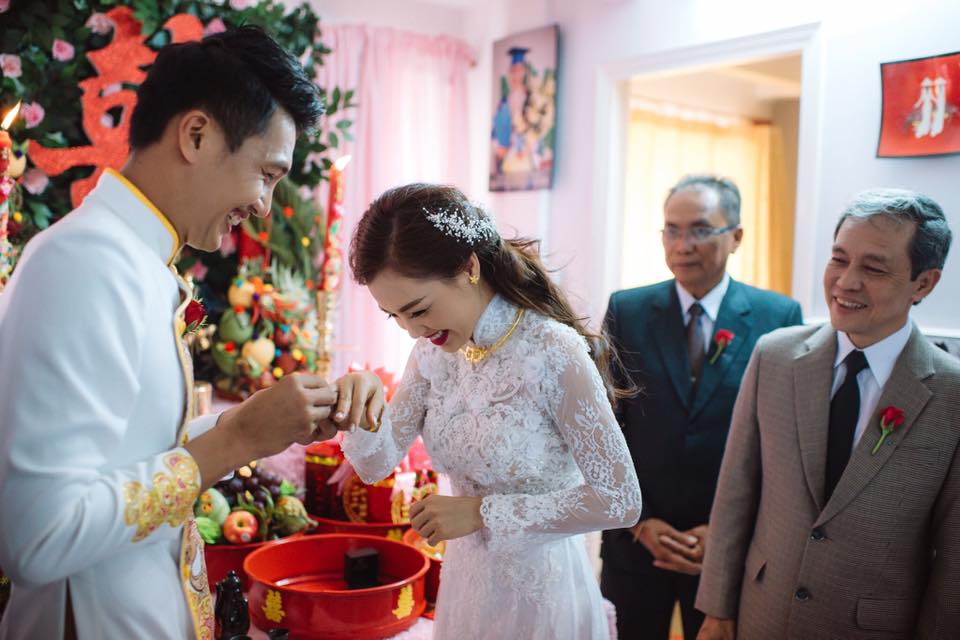
Translating Chữ Hiếu into the English phrase "Filial Piety" captures the technical definition—the reverence a child holds for their parents and ancestors. But the translation is agonizingly thin compared to the actual weight of the concept.
Chữ Hiếu—originating from Confucian philosophy, fully absorbed and aggressively adapted by the Vietnamese—demands absolute compliance across multiple dimensions:
Phụng dưỡng (Material Provision): The absolute obligation to physically and financially care for parents in their old age. Providing food, securing medicine, ensuring comfortable housing, and guaranteeing they never lack resources.
Thủ hiếu (Moral Preservation): Maintaining flawless personal integrity to ensure you never bring shame upon your parents. Every single action a child takes in the public sphere is viewed as a direct reflection of their parents' morality.
Thế hiếu (Lineage Continuation): The duty to produce children to continue the bloodline, ensuring the ancestral surname is never extinguished.
Tâm hiếu (Emotional Peace): The obligation to bring joy and absolute psychological peace to your parents—this goes far beyond mere financial support. This is frequently the most brutal requirement, as it demands you suppress your own desires if they cause your parents anxiety.
Filial Piety in the Trenches of Daily Life
Filial piety is not a theoretical concept reserved for grand ceremonies. It is the operating system running in the background of utterly mundane, daily actions:
Calling home. Massive numbers of Vietnamese adults—whether they are 30 or 50, whether they live in Ho Chi Minh City or Houston—call their parents every single day, or at least several times a week. Failing to call home for a few weeks is not merely rude; it is a crisis requiring a serious explanation.
Returning home for Tet. For the Vietnamese, returning to your hometown for the Lunar New Year is not a suggestion—it is a mandatory pilgrimage. Missing Tet without a life-or-death justification is considered a profound failure of duty. The spectacle of millions of people flooding the highways to return to their provinces every year is the most violent, physical manifestation of filial piety on earth.
Caring for sick parents. When a parent falls severely ill or requires long-term care, Vietnamese children typically assume the burden themselves, refusing to outsource the labor entirely to hired help or nursing homes. Physically washing, feeding, and tending to aging parents is viewed as an irreplaceable demonstration of respect.
Sending money back. Especially for those working in major cities or laboring overseas—remitting money home every month is a silent, unquestioned obligation. Vietnam receives tens of billions of dollars in remittances annually—those are macroeconomic statistics, but behind every single wire transfer is a child honoring a debt to their parents.
The Vu Lan Festival — When Filial Piety Becomes Art
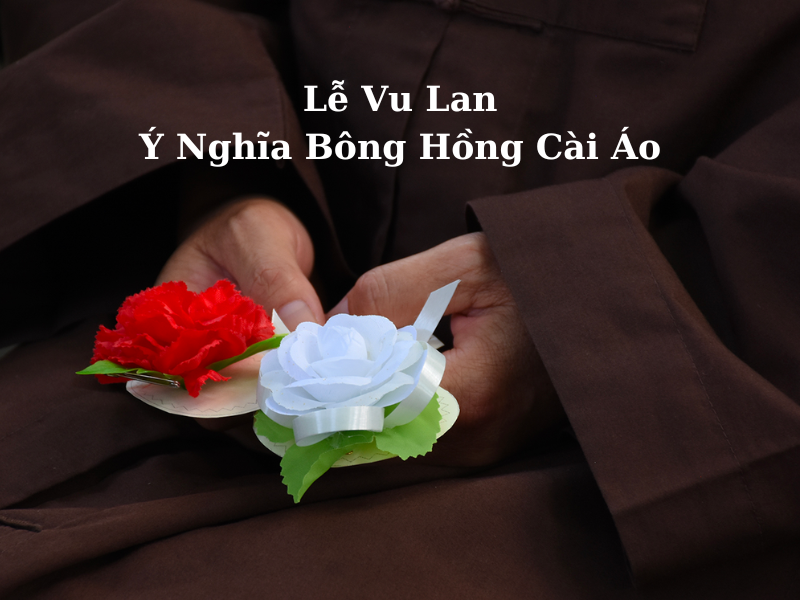
Every year, on the 15th day of the 7th Lunar Month, the Vietnamese observe the Vu Lan Festival (Lễ Vu Lan Báo Hiếu)—a solemn day entirely dedicated to remembering parents and expressing profound gratitude.
The most iconic ritual is the Rose Pinning Ceremony (Bông Hồng Cài Áo)—popularized by Zen Master Thich Nhat Hanh in the 1960s and now universally practiced across the nation:
- If your mother is still living: You pin a red rose to your chest.
- If your mother has passed away: You pin a white rose to your chest.
The visual of thousands of people sitting in a temple—one half wearing red, the other half wearing white—is staggering. They look at each other, frequently choking on their words. The person wearing red looks at the person wearing white and is violently reminded: I am still allowed to wear the red rose. I still have my mother. Do not take that for granted.
There are very few ceremonies on the planet so remarkably simple, yet so devastatingly profound.
The Crushing Pressure of Filial Piety — The Dark Side No One Wants to Discuss
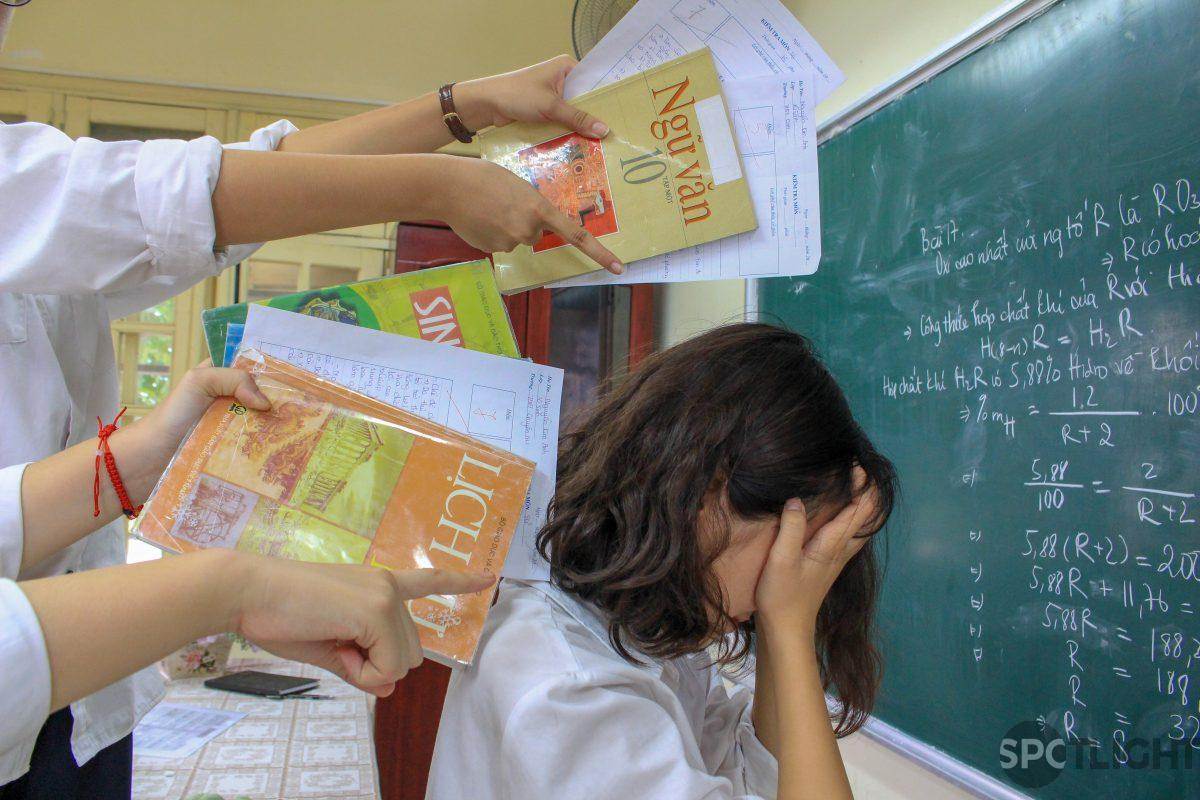
Filial piety engineers beautiful, tear-jerking narratives. But it also constructs a terrifyingly real psychological cage that modern Vietnamese youth are currently struggling to survive inside.
Selecting a career to appease parents rather than pursuing passion. Doctor, lawyer, engineer, corporate executive—these are the professions "parents can brag about to the neighbors." How many brilliant Vietnamese youths are currently suffocating in majors they despise solely to protect their parents from disappointment? The number is incalculable.
Marrying to satisfy family metrics. Do you choose the person you love, or the person your family approves of? These two options do not always conflict—but when they do, it triggers one of the most agonizing, soul-crushing wars a young Vietnamese person will ever fight.
"Why aren't you married yet?", "Why don't you have kids yet?". These questions—almost always deployed with genuine care rather than malice—inadvertently drop the crushing weight of ancestral expectations onto the shoulders of young adults who are frequently entirely unequipped to bear it.
Filial Piety in the 21st Century — The Great Renegotiation
The younger generation of Vietnamese are not abandoning filial piety. They are simply translating the ancient code to function within a modern reality.
"I cannot fly home for Tet because of my grueling work schedule—but I bought plane tickets for my parents to fly to the city and live with me for a month."
"I refuse to marry the person my parents selected—but I will introduce the person I love respectfully, buying time for the family to understand them."
"I don't send a portion of my salary home every month—but I bought premium health insurance for my parents, and I bought my father a new iPad so we can FaceTime in high definition."
The mechanics are shifting. The core architecture remains completely intact: Vietnamese children are absolutely not abandoning their responsibility to their parents. They are merely engineering new methods to execute that responsibility under radically different circumstances.
And that, in the truest sense, is the ultimate manifestation of filial piety—not rigid, mindless obedience to an archaic script, but a reverence deep enough to find a way to honor the past while surviving the future.
"No matter how big you grow, you are still your mother's child."
That axiom has no expiration date.