The Mekong Delta — Where No One Rushes and Everything is Sufficient
The territory that exports enough rice to feed the nation and the world — yet the people who live there rarely possess the wealth they have earned
There is a persistent, structural paradox regarding the Mekong Delta that urban Vietnamese frequently analyze: This is the territory that literally feeds the nation—rice, shrimp, fish, tropical fruit—yet the farmers operating there rarely ascend into the prosperous demographic of Vietnamese society.
They engineer the exact calories the world requires. And that value passes through numerous intermediaries before a fraction of it reaches their hands.
That is a highly complex geopolitical reality involving agricultural economics, supply chain monopolies, and structural policy. But for the people of Miền Tây (The West—the affectionate term the Vietnamese use for the Delta)—that reality does not prevent them from operating under a philosophical code that leaves many urbanites simultaneously awestruck and deeply confused:
Utter relaxation. Zero rush. Enough is enough.
The Territory of Water
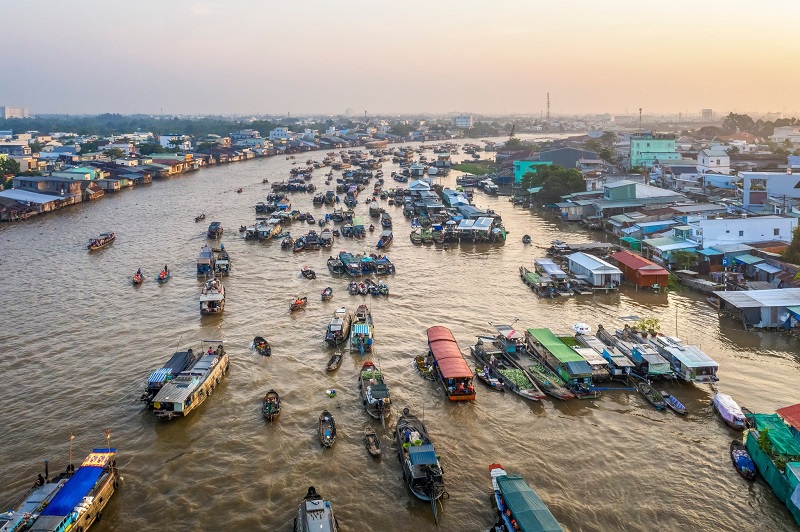
To comprehend the West, you must first comprehend water. Not water merely as a transport mechanism—water as the fundamental habitat.
Over 28,000 kilometers of brutal, interconnected canals and rivers dissect the delta—a network so dense that in numerous sectors, navigating from one house to another via boat is physically faster than walking. The markets operate on the water. The highways exist on the water. Human existence is tethered to the water.
The floating markets—the iconic, heavily marketed image deployed for tourists arriving in the West—are not an artificial tourist performance (at least, they weren't originally). They are the supreme, logical commercial infrastructure for a territory possessing minimal roads and infinite canals: the vendor transports inventory via boat, the buyer approaches via boat. It is flawless logistical logic.
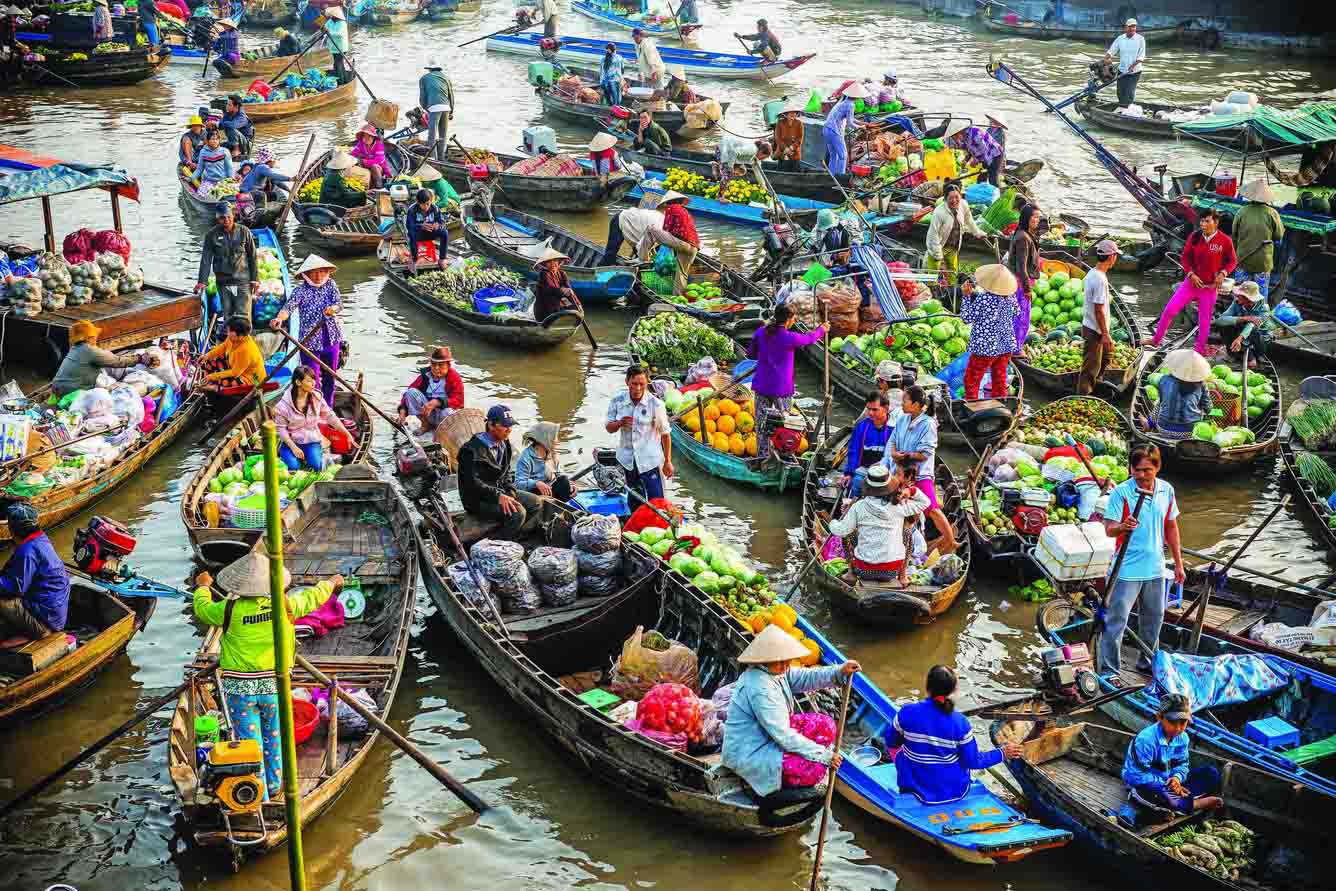
The population exists atop the water—migrating with the water, extracting calories from the water (an infinite supply of fish, shrimp, crabs, and snails), with architecture perpetually facing the river. That specific operational rhythm—vastly slower, entirely subordinate to the tides and the seasonal floods—is permanently hardwired into their psychological temperament.
The Westerner — So Relaxed That Outsiders Cannot Compute It
If the Hanoian is cautious and the Saigonese is hyper-fast—then the Westerner is profoundly relaxed.
It is absolutely not laziness. It is not a lack of ambition. It is a highly pragmatic, localized folk philosophy: the earth provides sufficient calories to eat, there are sufficient fish to extract, there is sufficient fruit to harvest—so what exactly is the biological imperative to rush?
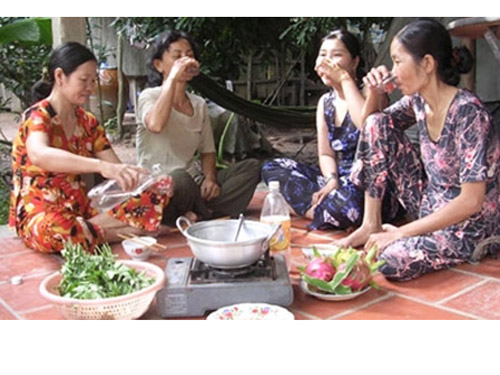
The Westerner is legendary for executing extreme hospitality without requiring justification: whenever you visit their home, they will serve you something. No advance notice is required, no formal attire is required, no legitimate reason is required. Just arrive. The table will contain food. If it does not, it will within 15 minutes.
That open-house operational code—which in a modern metropolis requires a week of calendar coordination—is the most standard, unremarkable protocol in the West.
Aquatic Culture and Don Ca Tai Tu Music
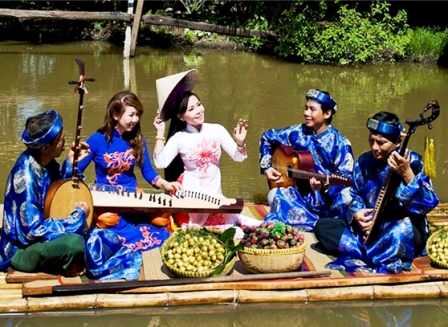
The West is not exclusively defined by rice production. It is also the birthplace of Đờn Ca Tài Tử—the signature folk music architecture of the South, officially recognized by UNESCO as Intangible Cultural Heritage in 2013.
Đờn ca tài tử does not utilize formal stages, nor does it require pre-planned performance schedules. It occurs spontaneously: individuals assemble, extract their zithers, moon lutes, and scooped-fret guitars—and they simply play and vocalize. There is no rigid audience—anyone is authorized to participate, anyone who appreciates it can sit down and join.
The technical brilliance of đờn ca tài tử lies in its highly structured improvisation: there are established melodic frameworks, but the musicians possess massive operational freedom to deviate, embellish, and react to their co-performers in real-time. It is the structural equivalent of jazz—but engineered utilizing the specific tonal scales of the South.
It is the exact acoustic frequency of a population relaxed enough to possess the time required to sit down and create music together.
Climate Change — The Threat the Delta Cannot Evade
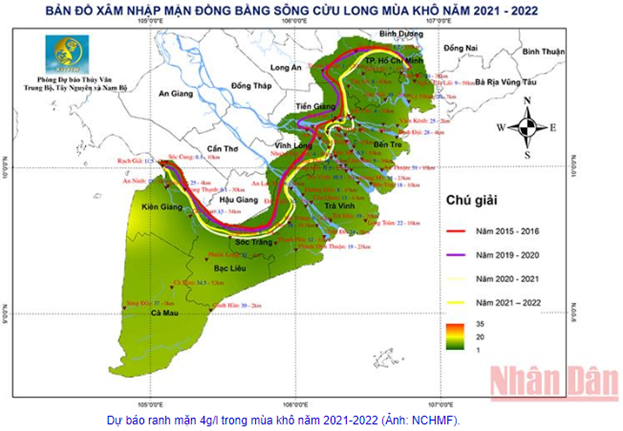
This is the critical data point that travel brochures aggressively omit, yet it is as vital as anything mentioned above: The Mekong Delta is physically sinking.
It is the catastrophic intersection of multiple variables: Upstream hydroelectric dams on the Mekong (predominantly in China and Laos) are trapping the sediment, starving the delta of the physical mass required to rebuild itself. Hyper-aggressive groundwater extraction is causing the land to physically subside. Sea levels are rising due to climate change. Lethal saltwater intrusion is penetrating deeper into the interior every single year.
Projections from multiple international organizations are brutal: by 2050, massive sectors of the delta will experience chronic saltwater flooding during the dry season, rendering agricultural operations impossible. By the conclusion of the 21st century, without massive, unprecedented intervention, a significant percentage of the delta's landmass could be permanently erased.
This is not merely an existential threat to the inhabitants of the delta—it is a catastrophic threat to the food security of the entire nation, and to the entire Southeast Asian quadrant that relies on Vietnamese rice exports.
The delta population is fully aware of this. They are actively adapting—transitioning from rice cultivation to saltwater shrimp farming, engineering saline-resistant crops, or migrating to urban centers. The wooden boats and the canals remain. But the future of this territory is being violently rewritten—and not by the people who actually live on it.
The Westerner observes this incoming catastrophe with the specific psychological armor possessed only by those who have survived for centuries amidst an unpredictable environment: they do not panic, they do not deny reality, and they do not complain excessively. Their operational response is simply: "Alright, we will calculate a different approach."
That specific relaxation—that refusal to panic—when analyzed closely, is absolutely not passivity. It is a variant of resilience. It is a different frequency than the resilience of the Center, different from Hanoi, different from Saigon. But it remains unbreakable resilience—simply flavored with river water, rice, and the southern wind.