Why the Vietnamese Eat on the Sidewalk — And Why You Must Do the Same
High-end restaurants offer air conditioning, leather-bound menus, and soft jazz. But the absolute best meal you will eat in Vietnam will be consumed on a plastic stool under a battered tarp
In 2016, Barack Obama was the sitting President of the United States when he met Anthony Bourdain at a sidewalk bún chả stall in Hanoi. They sat on comically low blue plastic stools. They drank canned Hanoi beer. They consumed bowls of grilled pork and vermicelli, and the total bill for the entire table was less than six dollars.
That specific image detonated across the globe—not because Obama was consuming something exotic, but because of his own subsequent admission, repeated years later: it remained one of the greatest, most memorable meals of his entire eight-year presidency.
Not a White House state dinner. Not a diplomatic banquet with kings or prime ministers. It was sidewalk bún chả in Hanoi, sitting on cheap plastic, drinking cheap beer, under a slow-spinning ceiling fan.
The Vietnamese heard that story and nodded. They were not surprised.
Extreme Specialization — The Secret Weapon of the Sidewalk
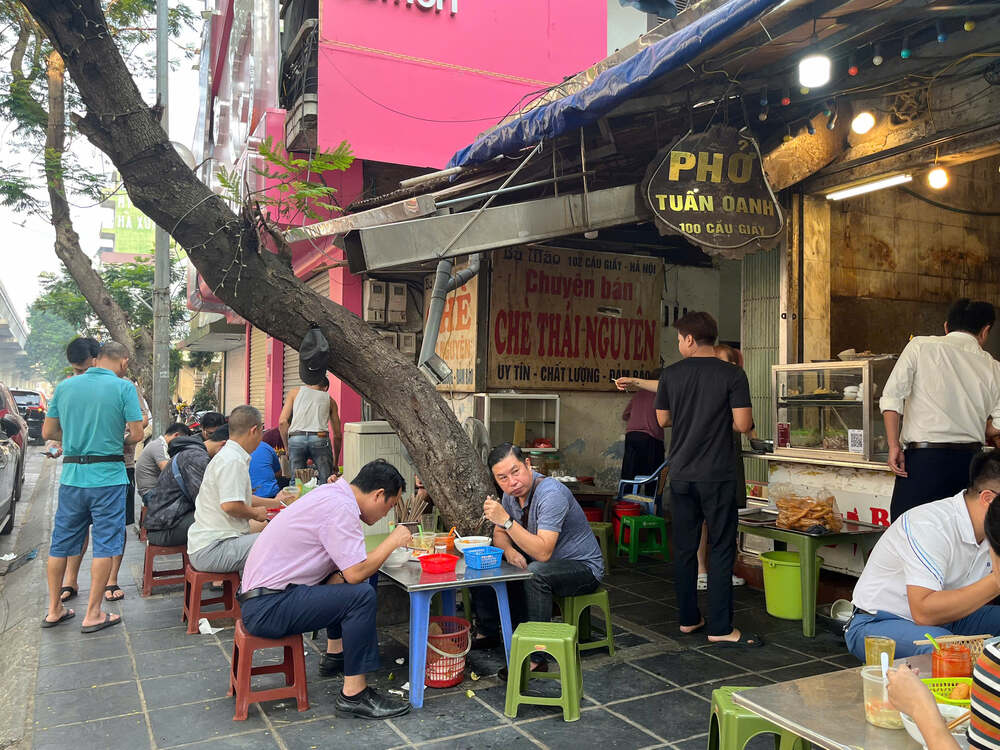
The primary operational difference that separates Vietnamese street food from almost anywhere else on earth is extreme, ruthless specialization.
A vast majority of Vietnamese sidewalk stalls sell exactly one dish. This stall sells exclusively phở. That stall 20 meters away sells exclusively bún đậu mắm tôm (vermicelli with fried tofu and fermented shrimp paste). The cart on the corner sells exclusively xôi xéo (mung bean sticky rice). Occasionally, the parameter is even tighter: they sell only beef pho—do not even ask for chicken.
And within that microscopic parameter lies staggering depth: the woman operating that sidewalk stall has been cooking that exact dish for years, frequently decades. Her broth algorithm has been brutally refined through thousands of iterations. The specific mechanics of how she slices the meat, how she blanches the noodles, how she ladles the boiling liquid—it is a sequence of movements repeated hundreds of times a day until it transcends conscious thought and becomes pure muscle memory.
No culinary institute on the planet can teach you that level of mastery. It is forged exclusively through time and relentless repetition.
That is precisely why Vietnamese street food is consistently superior to high-end restaurant food—not despite the fact that it is cheap, but because of that insane, obsessive specialization.
The Sidewalk as the Ultimate Social Equalizer
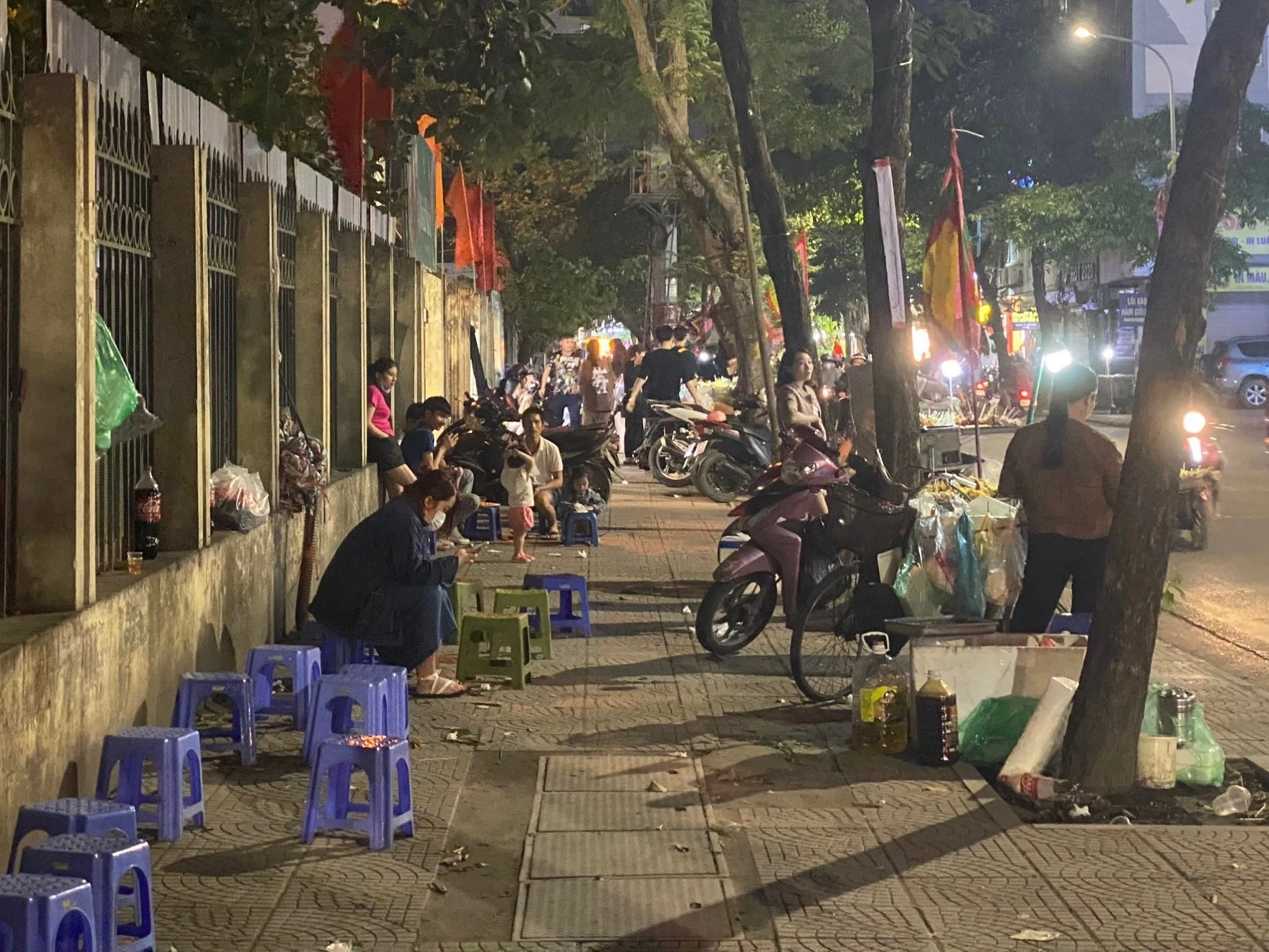
Beyond the actual food, the sidewalk operates as the most critical social infrastructure in urban Vietnam.
On the sidewalk, the rigid hierarchy of society is temporarily suspended. The finance executive who arrived in a Mercedes sits on a plastic stool eating bún chả directly adjacent to the woman who just finished her shift selling vegetables at the morning market. A group of broke university students shares a plate of grilled squid millimeters away from a table of middle-aged businessmen drinking beer. The physical barriers of class segregation collapse entirely when everyone is forced to sit mere inches from the ground and yell across the street for "more chili."
That dynamic does not exist inside luxury restaurants. Restaurants aggressively segregate demographics via price tags and dress codes. The sidewalk does not care how much money you make.
The Sidewalk Breakfast — The Ritual that Ignites the City
In Vietnam—specifically in Hanoi and Saigon—eating breakfast is fundamentally not an activity you perform inside your own house. At least not for the working population.
Every morning, between 5:00 AM and 8:00 AM, the sidewalks transform into the most massive, highly efficient, decentralized breakfast distribution network on earth: hundreds of thousands of individual vendors, each specializing in a single item, scattered strategically across the entire city—outside your alley, next to the bus stop, in front of the elementary school, adjacent to the office tower.
You do not have to travel far. You do not have to wait long. A massive percentage of the population consumes their breakfast in under 15 minutes—standing over a cart or crouching on a stool, inhaling a bowl of noodles, handing over cash, and leaving.
But there is a secondary demographic that lingers—because the morning is the precise time the Vietnamese drag their colleagues out to "sit coffee" or "eat breakfast and talk." It is an informal, street-level networking protocol that is significantly more critical to doing business than any formal boardroom meeting.
How to Eat on the Sidewalk Like a Local
If you are attempting to navigate Vietnamese street food for the first time—these are the absolute rules of engagement:
Target the stalls packed with locals, ignore the giant signs. An elite sidewalk stall does not require marketing. Customers queue up because the food is spectacular and they have eaten there for ten years, not because of a neon sign.
Point directly at the bowl of the person eating next to you if you don't know what to order. The vendor will understand instantly. No language is required.
Abandon your Western paranoia regarding hygiene. High-quality street stalls possess massive customer turnover—the ingredients are relentlessly fresh because the inventory is exhausted and restocked daily. Multiple studies suggest the risk of foodborne illness from boiling hot street food is actually lower than from lukewarm items sitting in a luxury hotel buffet.
The low plastic stool is a feature, not a bug. Sitting intimately close to the earth, entirely exposed to the chaos of the shared street—that is a physical experience consumed by the whole body, not just the mouth.
Pay in cash, say thank you, and leave. There is no waiting for the bill, there is no POS software, there is absolutely no tipping. Hand over the cash, nod, and walk away.
The Existential Threat to the Sidewalk
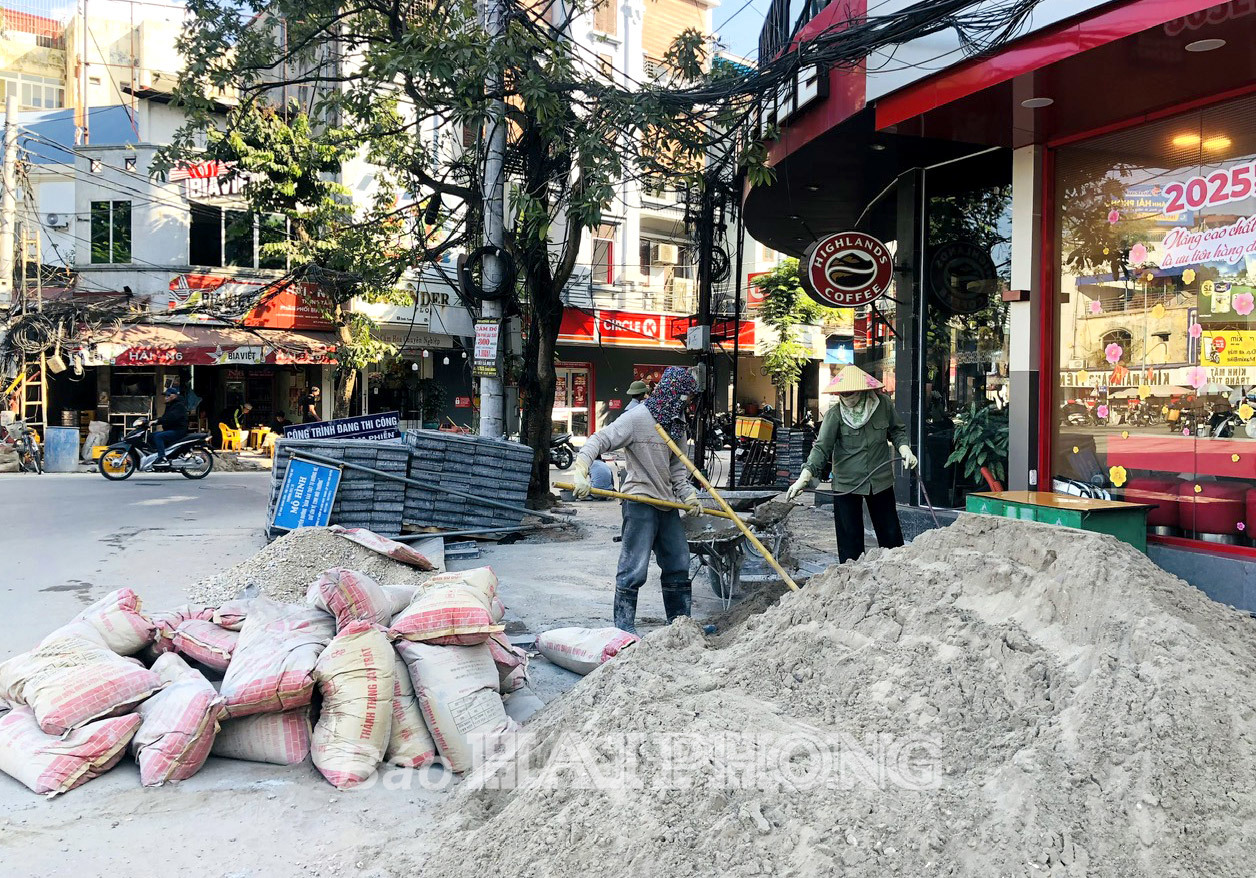
In recent years, several major Vietnamese cities—most notably Ho Chi Minh City—have launched aggressive municipal campaigns to "clean up the sidewalks," aiming to reclaim the pavement for pedestrians and mitigate traffic congestion.
The objective sounds logically sound on paper. But in execution, thousands of sidewalk food vendors were violently displaced or lost their livelihoods—and the streets that were once the vibrant, chaotic arteries of the city suddenly became barren, sterile, and lifeless in a manner absolutely no one actually desired.
The Vietnamese public—including the highly educated, urban youth demographic—frequently react with intense, emotional hostility to these campaigns. It is not because they oppose a cleaner city. It is because they instinctively understand a brutal reality: the sidewalk is not merely urban infrastructure. It is the exact location where the actual life of the city happens.
A city where the sidewalks are exclusively reserved for walking, devoid of people sitting, devoid of vendors shouting, devoid of the smell of roasting pork or morning coffee—is a city that is actively bleeding out its own soul.
And the Vietnamese, even if they never articulate it using those exact words, feel that loss in their bones.