Pho — The Bowl of Rice That Carries an Entire Culture
It is absolutely not just noodle soup. Pho is history, it is a ferocious debate, it is generational memory, and it is the single thing millions of exiled Vietnamese crave the most
There are certain things you never realize are critical to your existence until you are violently separated from them. Vietnamese expatriates who have been exiled or living abroad for decades frequently confess that when they desperately miss home, they do not miss the physical landscape, they do not miss the architecture of the streets—they miss the hyper-specific smell of Pho broth smoke bleeding into the early morning air.
It is not the scent of perfume. It is not the scent of the ocean. It is the dense, intoxicating aroma of beef bones, star anise, and cinnamon that have been violently simmering overnight—a smell that physically blankets an entire street at 4:00 AM when the Pho vendors ignite their stoves. To millions of Vietnamese people, that exact smell is the ultimate definition of "home."
There are very few culinary dishes on the planet forced to carry that level of staggering emotional weight. And understanding exactly why that is the case—that is the actual story of Pho.
How Pho Was Born — And Why No One Knows for Certain
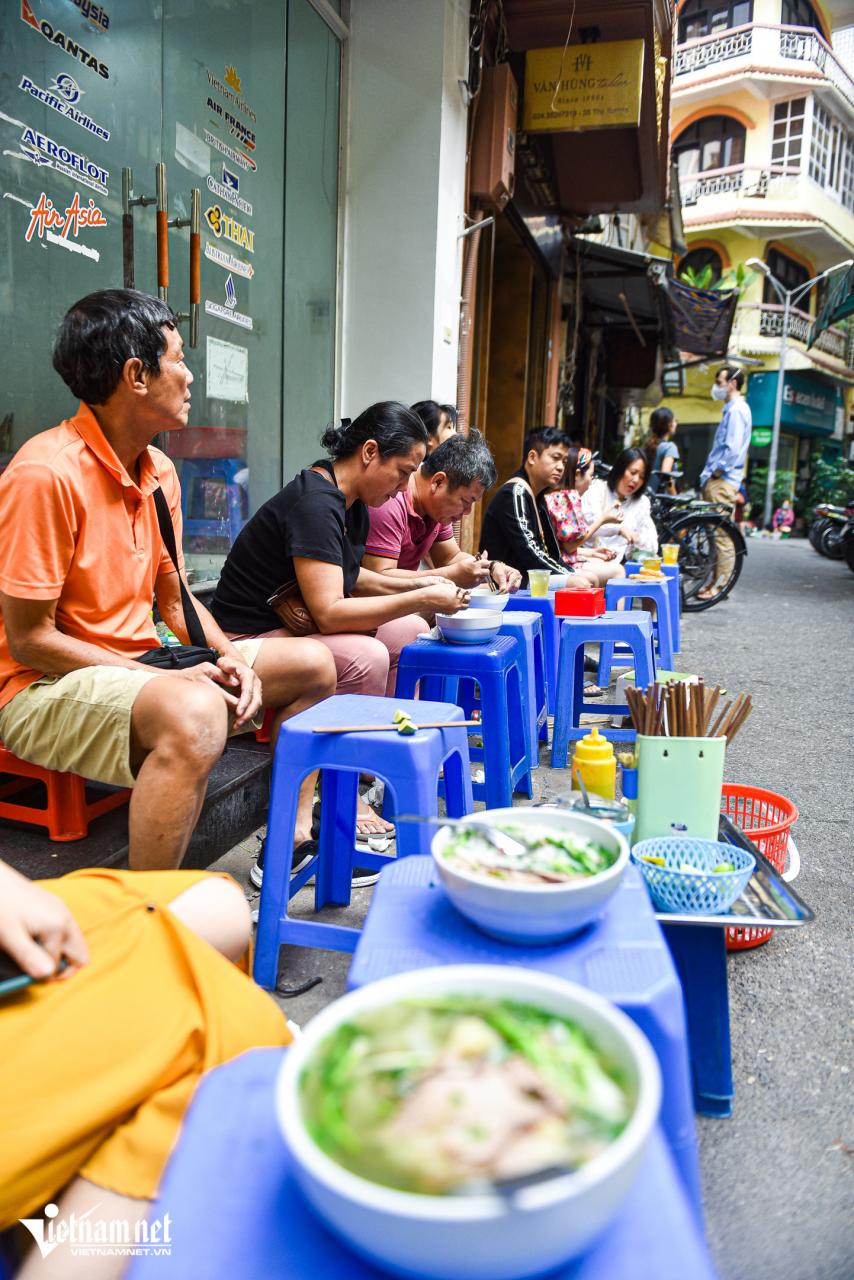
The history of Pho is significantly shorter than most people assume—and vastly more politically and culturally complex than many purists wish to admit.
Pho detonated onto the scene roughly at the intersection of the late 19th and early 20th centuries—an incredibly recent invention compared to the vast timeline of Vietnamese culinary history. The Vietnamese had been consuming vermicelli, rice paper, and countless variations of noodles for centuries prior. But Pho—featuring flat, translucent rice noodles submerged in a violently rich beef broth—appeared much later.
Why? Because the traditional Vietnamese did not slaughter and consume cows. Water buffalo and oxen were critical agricultural machinery—they were the equivalent of a modern tractor. Slaughtering a working animal for meat was an act of economic suicide that peasant farmers simply did not commit.
The seismic shift arrived alongside the French colonialists: they generated a massive, sudden demand for beef in Hanoi and Nam Dinh. New slaughterhouses were hastily constructed to feed the French military and administrators. The beef bones—the discarded waste products of these slaughterhouses—became suddenly cheap and massively available. Resourceful Vietnamese street vendors began hoarding these bones, simmering them aggressively to extract the marrow, and combining the resulting broth with local flat rice noodles and indigenous herbs.
Pho was birthed directly at the violent collision point between French colonial influence (the demand for beef) and indigenous Vietnamese culture (the herbs, the rice noodles, the fish sauce). It is a profoundly Vietnamese dish engineered entirely with ingredients made available by the machinery of colonialism. That is not a paradox—it is merely actual history.
The Broth — The Brutal Secret of 8 to 24 Hours
In the brutal, unforgiving universe of Pho, the broth is absolute. The noodles, the premium cuts of beef, the fresh herbs—they are all merely vehicles. The broth is the soul.
The non-negotiable protocol: 1. The Purge: The beef bones are violently boiled in a preliminary bath of water to aggressively strip away blood and impurities—that toxic water is immediately discarded. 2. The Char: Whole ginger and massive onions are blasted directly over an open flame until the exterior is blackened and blistered—this is the secret engine that generates the broth's signature golden hue and faint, haunting smokiness. 3. The Simmer: The bones are submerged in fresh water and subjected to a relentless simmer—an absolute minimum of 6 hours, with serious establishments pushing 12–18 hours, and elite purists demanding a full 24-hour extraction. 4. The Botanicals: Star anise, cinnamon bark, black cardamom, and cloves are sealed within a cotton bag and dropped into the cauldron—preventing the spices from clouding the pristine liquid. 5. The Calibration: The final, microscopic adjustments utilizing premium fish sauce, salt, and rock sugar—tinkered with until the balance is flawless.
An elite Pho broth must be: crystal clear (never cloudy or murky), deeply sweet (a clean sweetness extracted purely from marrow, never from artificial sugar), possessing a subtle botanical aroma that does not overpower the beef, and possessing "độ đầm"—a heavy, lingering, profound finish that coats the throat long after it is swallowed.
There is no universal, absolute recipe. Every single legendary Pho stall fiercely guards its proprietary ratio of botanicals, its specific simmering timeline, and its clarification techniques. That is exactly why, despite all being "beef bone broth," every single stall tastes radically different—and a true Hanoian can determine if a stall is elite within the very first spoonful.
Northern Pho vs. Southern Pho — One Dish, Two Hostile Philosophies
This is the eternal, violently contested debate within the global Vietnamese community: Which is superior, Northern Pho or Southern Pho?
The objective answer: Both are spectacular according to their own internal logic. The realistic answer: Every single Vietnamese person will answer that question with absolute hostility based entirely on where they were born.
Hanoi Pho (Northern Pho): - The broth is crystal clear, hyper-refined, and minimally sweet. - The beef is sliced with surgical precision and arranged neatly. - Served strictly with quẩy (crispy fried dough sticks), sliced onions, a squeeze of lime, and fresh chili. - The aesthetic is brutal minimalism—there is absolutely no massive plate of raw herbs. - A native Hanoian: will never squeeze hoisin sauce (tương đen) or sriracha directly into the broth—doing so is considered a culinary insult to the chef.
Saigon Pho (Southern Pho): - The broth is significantly sweeter, darker, and vastly more aggressive. - The bowl portions are massive. - The obligatory herb mountain: raw bean sprouts, Thai basil, sawtooth herb, and lime leaves. - Hoisin sauce and Sriracha: absolutely mandatory. - A native Saigonese: will aggressively squeeze lime, dump a fistful of raw bean sprouts directly into the bowl, and heavily bomb the broth with both sauces—that chaos is the intended, complete experience.
Neither philosophy is factually incorrect. But if you ask a traditional Hanoian their opinion on squirting hoisin sauce into Pho—prepare yourself for a very loud, very definitive lecture.
Morning Pho — The Sacred Ritual of Hanoi
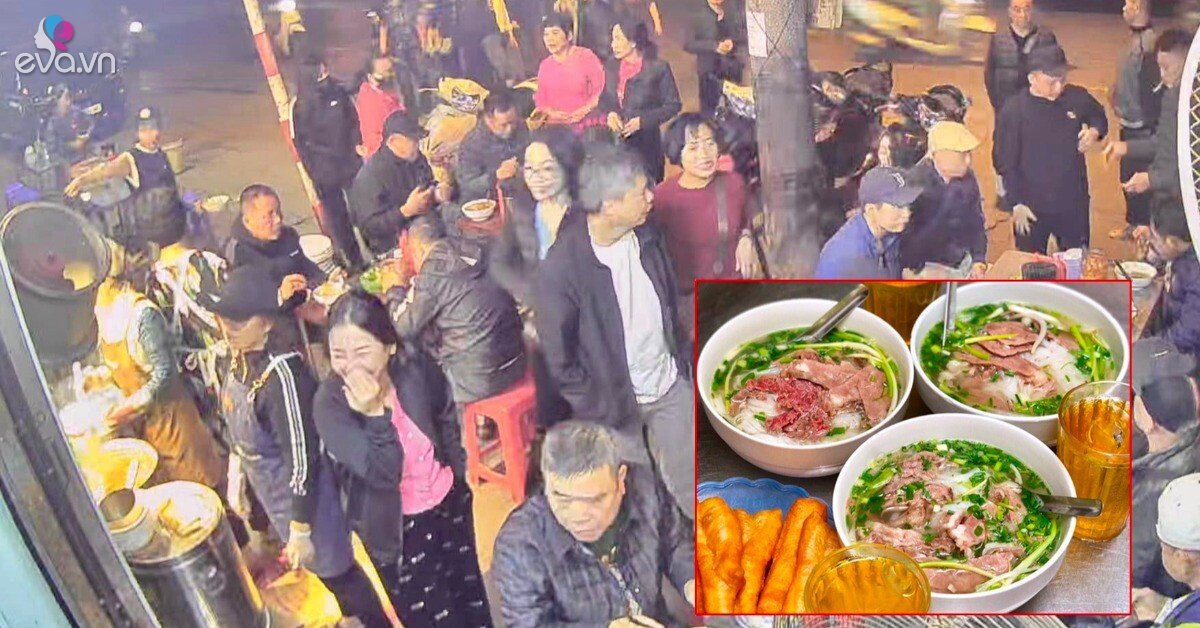
In Hanoi, Pho is strictly a breakfast protocol. It is not dinner, it is rarely lunch—it is the dawn. The most legendary Pho stalls ignite their stoves at 5:00 AM and are entirely sold out before 9:00 AM.
Standing in line at 6:00 AM during a freezing Hanoi winter to secure a bowl of Pho—shivering, still half-asleep, stepping through the dense morning fog—then finally collapsing onto a tiny, plastic stool, receiving a bowl radiating volcanic heat, and inhaling that very first spoonful of scalding, smoky broth...
Hanoians rarely discuss that specific physical sensation because they don't have to. Every single person in the city knows exactly what that feels like.
And when a Hanoian is exiled or moves far away, that exact physical sequence is the very first thing they miss.
Pho Conquers the Globe — And the Lessons It Carries
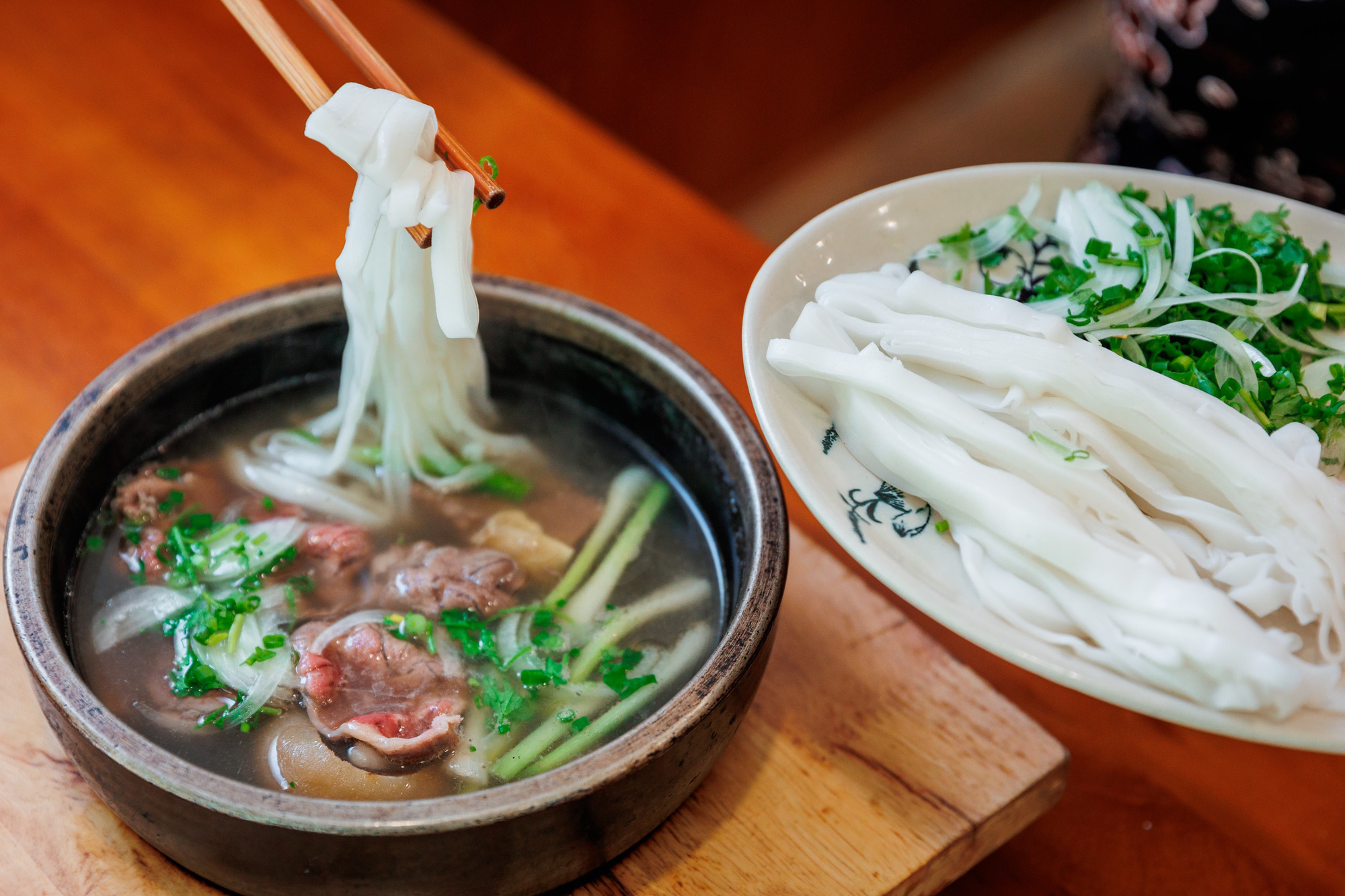
Today, Pho operates effectively in over 50 countries. From apex global cities like Paris, London, and New York, to vastly more unexpected outposts like Wellington, Lagos, and Stockholm.
In the vast majority of these cases, those overseas Pho outposts were established by the Vietnamese diaspora—the generation that fled in 1975 and those who followed, carrying the recipes strictly in their heads when they abandoned their homeland.
The most fascinating aspect of Pho's global expansion is that, unlike countless other Asian dishes, it has largely resisted catastrophic mutation. The Vietnamese protect the integrity of Pho with terrifying aggression—any restaurant attempting to serve a heavily Westernized, "fusion" Pho is instantly and mercilessly boycotted by the local Vietnamese community. That relentless community pressure forces the dish to remain shockingly close to its original blueprint, even when served ten thousand miles from its origin.
That is not irrational, stubborn conservatism. That is the profound realization that: when you consume a bowl of Pho anywhere on the planet, you are actively sharing a moment with millions of others—the man who ate it this morning in Hanoi, the woman who simmered the bones overnight in Nam Dinh, the student who is desperately missing home in a freezing apartment in a foreign city.
The invisible thread connecting all of those isolated moments—as fragile as the steam rising from the bowl, but powerful enough to instantly recognize—that is precisely the thing that must never be broken.