Banh Mi — When the Bread of the Colonizer Becomes the Symbol of the Colonized
A French baguette, a smear of pâté, some cold cuts, and fresh herbs — and the result is what the entire world is now fighting to crown the "best sandwich on earth"
In 2019, Anthony Bourdain—widely regarded as the most influential American culinary critic of his generation—was asked to identify the one meal he would choose to eat before he died. He selected a Vietnamese bánh mì.
Not high-end Japanese sushi. Not artisanal Italian pasta. Not a flawless French bistro classic. A sidewalk Vietnamese sandwich purchased for the equivalent of a few quarters.
He referred to it as "a symphony in a sandwich... perhaps the most perfect sandwich on earth."
The Vietnamese heard that assessment and were not particularly surprised. They had known this for decades—it was simply that, prior to that moment, no one had bothered to ask them.
The 60-Year Campaign to Morph French Bread into a Vietnamese Weapon
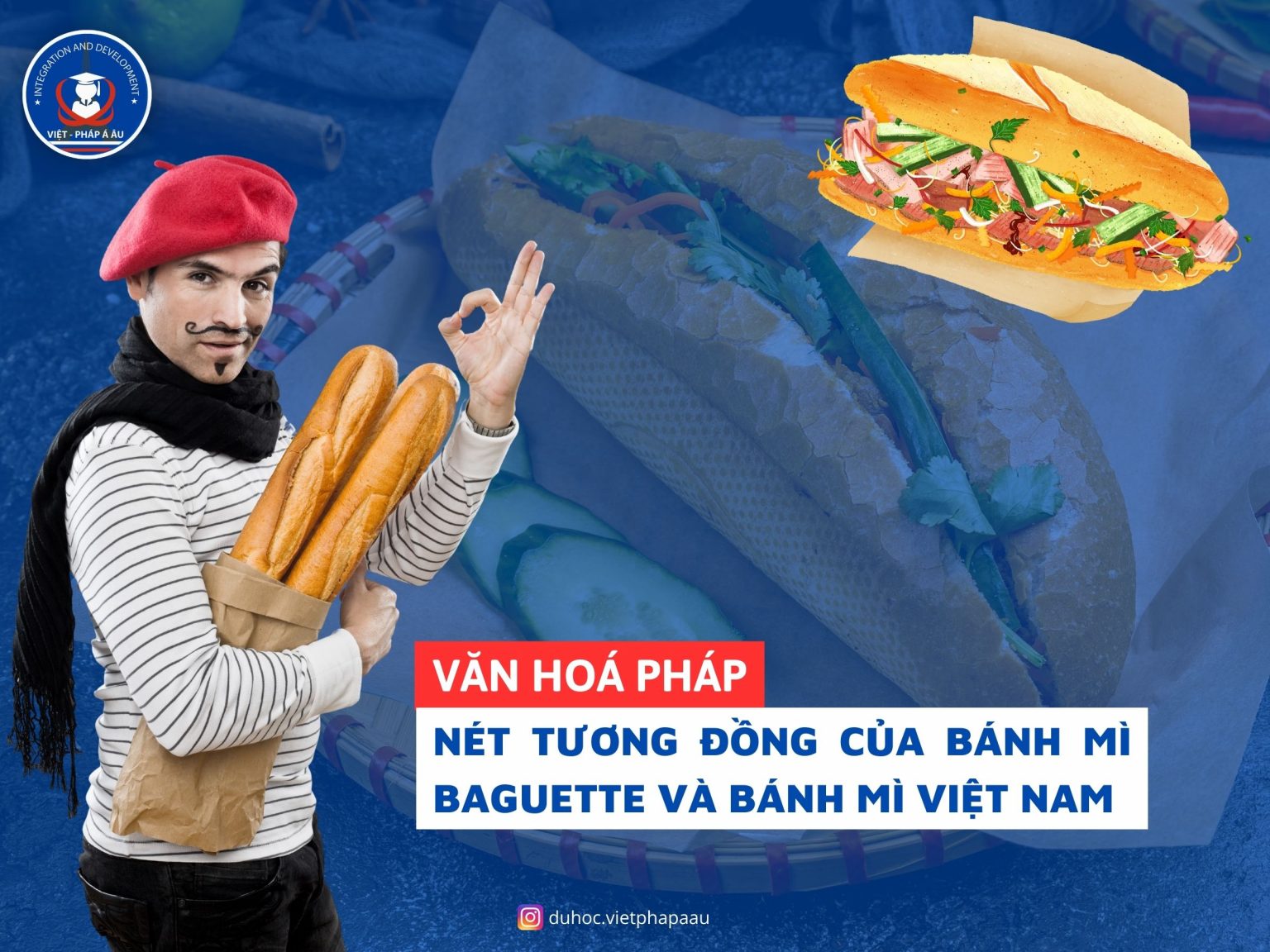
The French dragged the baguette into Vietnam in the mid-19th century as they initiated colonization. Initially, the bread was exclusively reserved for the French administration and the elite, Francophile Vietnamese class—it was an expensive, imported luxury item.
The "Vietnamization" of the baguette occurred relentlessly and progressively. First came the technical engineering of the dough: Vietnamese bakers began cutting the imported wheat flour with local rice flour. This specific alteration engineered a radically different bread—the crust became paper-thin and shatteringly crisp, while the interior crumb became vastly lighter and airier compared to the dense, chewy French original. The physical dimensions were scaled down into a torpedo shape—perfectly suited for the Vietnamese grip and ideal for immediate street consumption.
Then came the architecture of the filling: The French consumed their baguettes with butter, imported cheese, and jambon. The Vietnamese peasantry could not afford imported cheese—and functionally, they did not care for it anyway. They weaponized what they had: pâté (a culinary technique retained from the French), cold cuts (adapted from French curing methods), and then violently introduced entirely indigenous elements: đồ chua (daikon radish and carrots pickled in sweet vinegar), fresh cilantro, explosive raw chili, black pepper, and—absolutely non-negotiable—a sharp hit of fish sauce or dark soy sauce.
The final result was an entity that did not taste like French bread, did not taste like an American sub, and did not resemble anything else on earth. It only tasted like itself.
The Anatomy of a Perfect Sandwich
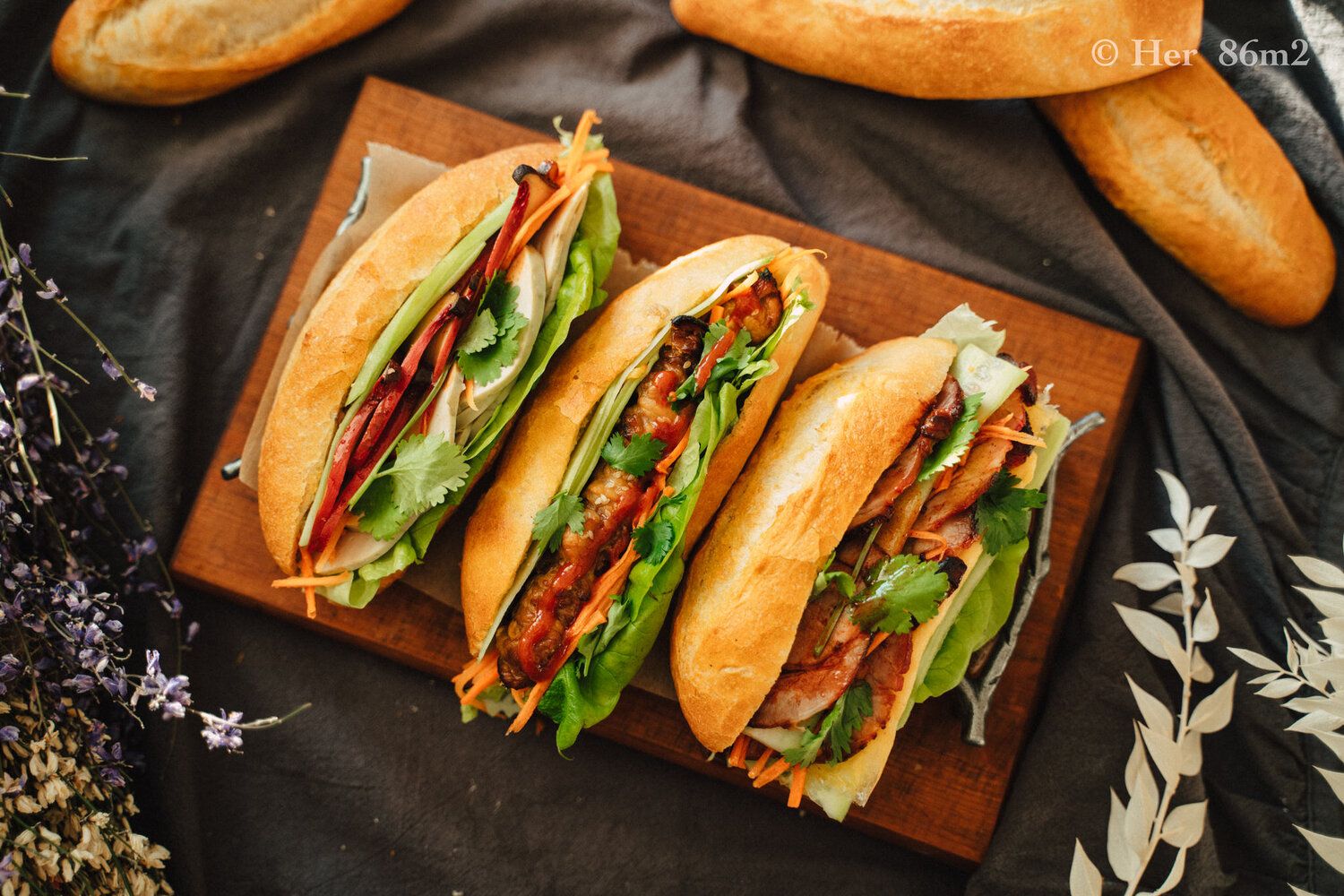
A "fully loaded" (đầy đủ) classic Banh Mi is constructed with brutal precision:
The Foundation — Pâté and Butter: A heavy smear of pork (or beef) liver pâté coats the interior crumb—delivering dense, fatty richness. A thin layer of local butter or mayonnaise is frequently applied to ensure the bread does not dry out.
The Primary Protein: Chả lụa (a dense, slightly chewy Vietnamese pork roll), various local cold cuts, roasted pork belly, grilled minced pork, or sweet Chinese-style BBQ pork (xá xíu).
The Acidic Cut: Đồ chua (shredded daikon and carrots cured in sugar and vinegar)—its sweet, acidic crunch is engineered specifically to slice through the heavy fat of the pâté and meat.
The Botanicals: Fresh cilantro, scallions, and cucumber strips—injecting explosive, herbaceous freshness.
The Detonator: Slices of raw bird's eye chili, a dusting of black pepper, and a streak of seasoning sauce (soy sauce or Maggi)—the final chemical catalyst that binds the French and Vietnamese elements into a singular, unified profile.
A flawless Banh Mi is a masterclass in equilibrium: sweet from the bread and pickles, salty from the meat and soy sauce, sour from the vinegar, violently spicy from the chili, herbaceous from the cilantro, and texturally perfect via the shattering crust. The Five Flavors contained within a single unit. It is entirely by design.
Why Is Banh Mi So Cheap Yet So Spectacular?
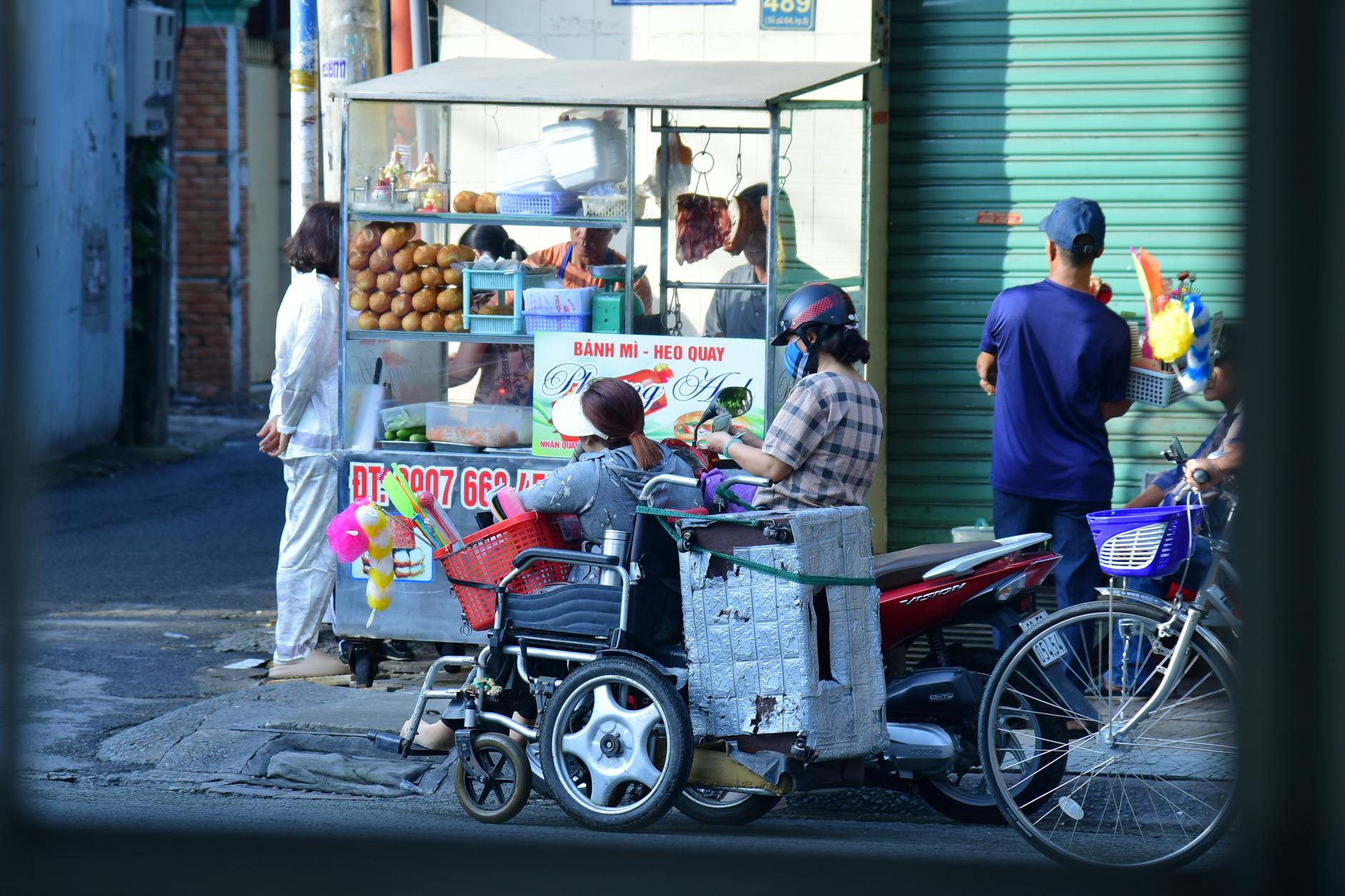
Vietnamese Banh Mi is one of the most brutal real-world refutations of the assumption that: "High-quality food must be expensive."
On the sidewalk, a fully loaded Banh Mi costs between 15,000 and 25,000 VND. Less than a dollar and a half. In the United States, that amount of money will barely purchase a bottle of water.
The economics of why it is cheap: a hyper-efficient localized supply chain, zero overhead for real estate (the sidewalk is public domain), and—most critically—the street vendors are almost exclusively self-sustaining family operations with zero labor overhead.
The mechanics of why it is spectacular: a sidewalk Banh Mi vendor constructs the exact same sandwich hundreds of times a day, every single day, for decades. That level of ruthless, repetitive mastery cannot be taught in a culinary institute.
And there is one variable that overrides everything else: every single vendor possesses their own proprietary algorithm—the exact ratio of vinegar in their pickles, the specific fat content of their pâté, the exact brand of soy sauce they deploy. No two Banh Mi carts are 100% identical. This is why a local Saigonese knows precisely which cart they want to buy from—and will aggressively refuse to buy from the cart 10 meters down the street.
Banh Mi Conquers the Globe — And Rewrites the Narrative
The Oxford English Dictionary officially inducted the word "bánh mì" into its lexicon in 2011. It was the year a Vietnamese word—not Chinese, not Japanese, not Thai—was formally recognized by English linguistics as an entity so globally pervasive and structurally unique that it defied translation.
In London, New York, Paris, and Melbourne—Vietnamese Banh Mi shops command massive lines. Not lines of homesick Vietnamese tourists—lines of locals, across all demographics, waiting an hour to consume a $7 sandwich that structurally outclasses almost every $15 premium sandwich in the vicinity.
Within those lines, something vastly more profound than mere culinary ambition is occurring: it is the narrative of a historically underestimated, war-torn nation aggressively rewriting its global identity—not through political speeches or sophisticated PR campaigns, but through the overwhelming, undeniable superiority of a crispy sandwich.
That was absolutely not the strategic objective when that first anonymous baker decided to cut French wheat with Vietnamese rice flour a century ago. But occasionally, the most devastating cultural victories are entirely unplanned.