The Vietnamese Think "We" Before "I" — And Here Is Why
Collectivism does not mean the individual is erased — it is a completely different architecture for defining the self
There is a specific question the Vietnamese constantly ask each other upon meeting—even among strangers, even at 2 PM when it is clearly not mealtime: "Ăn cơm chưa?" (Have you eaten rice yet?)
Translated literally into English, it registers as a purely logistical inquiry. Asking to ascertain if your stomach is currently empty.
But within the Vietnamese context, "Ăn cơm chưa?" is rarely an actual investigation into your gastrointestinal status. It is a greeting—a method of articulating: "I see you. I am actively concerned about your well-being."
And buried within that pragmatic-question-turned-greeting lies the foundational social philosophy of the Vietnamese people: I exist in relationship to you. Your well-being is my concern, not merely as a matter of social etiquette, but as a matter of actual substance.
The Vietnamese Ego — Not "I", But "We"

In comparative cultural research, psychologist Geert Hofstede developed the Individualism Index to measure the degree to which a culture prioritizes the individual over the collective.
The United States: 91/100—one of the most fiercely individualistic cultures on the planet.
Vietnam: 20/100—heavily skewed toward collectivism.
What does that translate to in daily reality?
The American framework: I possess the unalienable right to pursue my personal happiness. I am solely responsible for my life. My success belongs entirely to me.
The Vietnamese framework: I am a node within a network. My decisions directly impact my family. My success is never entirely my own—it is "thanks to the grace of my parents, the grace of my teachers, the grace of heaven and earth."
It is a profound misunderstanding to assume the Vietnamese lack an ego. They possess one—and it can be fiercely strong. But that ego is defined strictly by its relationship to others, not by its separation from them.
Wet Rice and the Collective Brain

There is a fascinating anthropological hypothesis regarding the origin of the Asian collectivist mindset—commonly referred to as the "Rice Theory," proposed by psychologist Thomas Talhelm.
Cultivating wet rice differs fundamentally from farming wheat: to successfully grow rice, you must construct a staggeringly complex irrigation system—building dikes, channeling water, rationing flow. No single family possesses the manpower to accomplish this alone. The entire village must cooperate, must share the water source, and must synchronize their labor according to communal seasons.
Conversely, wheat—the staple crop of Europe and the Middle East—is significantly more drought-resistant, allowing individual families to farm with vastly greater independence.
The hypothesis: Thousands of years of wet rice cultivation forged a communal brain hardwired for cooperation, interdependence, and the reflexive prioritization of the group's survival over the individual's ambition.
This theory is not universally proven and faces academic pushback. But it provides a compelling lens: Collectivism is not a philosophy dictated from the top down; it is the natural psychological byproduct of historical survival conditions.
"Privacy" — The Word That Does Not Exist
Here is a revealing linguistic detail: the Vietnamese language possesses no exact equivalent for the Western concept of "privacy"—the absolute right to possess an entirely personal space that no one, not even family, is permitted to violate.
"Riêng tư" is the closest approximation—but it fails to capture the full Western nuance. In traditional contexts, "riêng tư" can actually carry a slightly negative connotation—"Why are you being so 'riêng tư' (secretive/isolated)?" sounds more like a mild accusation than the acknowledgment of a fundamental human right.
This does not mean the Vietnamese do not crave personal space. They absolutely do—and the younger generation is increasingly naming and demanding that boundary. But within traditional culture, the concept of "this is my room, do not enter" is simply not the default operating system.
Parents entering a child's room without knocking? Completely normal. Asking what the child is doing, who they are texting, what they are thinking about? Completely normal—it is classified as care, not toxic control (although the boundary is frequently blurred).
This dynamic is engineering an increasingly visible generational tension: the modern generation, raised on the global internet, understands the Western concept of privacy and desires it—while their parents view constant, unfiltered intrusion as the most natural manifestation of love.
Collectivism Does Not Mean Erasing Personality
The most prevalent Western misconception: a collectivist mindset = people lack individual personality and are terrified of deviating from the herd.
This is fundamentally incorrect.
The Vietnamese can possess intensely strong individual personalities—they harbor fierce personal opinions, ferociously defend their viewpoints, and ruthlessly pursue their desires. But the manner in which they execute those actions is usually kept within the framework of the family and community, rather than actively severing ties from it.
Instead of declaring: "This is my decision, and it is none of my parents' business."
The narrative is usually: "I want to do this, and I believe it will ultimately benefit our family in the following ways..."
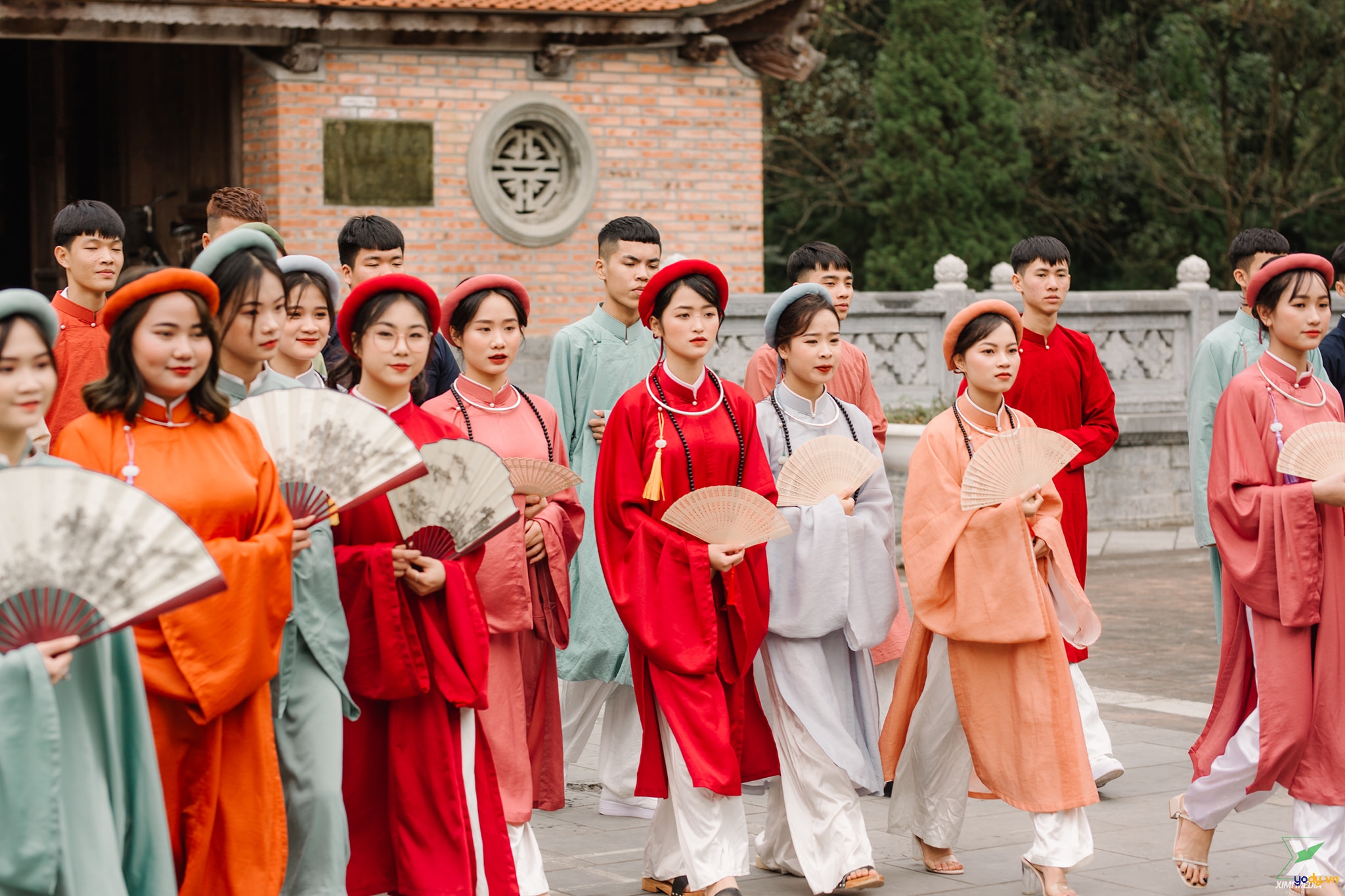
Not everyone successfully navigates this balance. But the default cultural assumption remains: The highest evolution of the ego is the ego that does not sever itself from its roots.
When the Collective Collides with the Individual
Harmony is not a constant reality. There are brutal moments when what the individual desperately wants and what the community rigidly expects violently collide—and resolving that conflict is agonizing.
Choosing a career. Choosing a spouse. Choosing where to live. Deciding whether (and when) to have children. In Vietnam, these are rarely pure, isolated personal decisions—they are complex, exhausting negotiations with familial expectations.
The modern Vietnamese generation is learning to navigate this labyrinth with increasing sophistication—rarely through direct, explosive confrontation (which is viewed as destructive and counterproductive), but through the methodical construction of consensus. Explaining it to the family. Allowing them time to process. Identifying strategic allies within the family unit first. Waiting for the precise tactical moment to strike.
That methodology consumes vastly more time and demands agonizing patience compared to a blunt declaration of independence. But it usually preserves the family relationship—and to the Vietnamese, preserving the network is an operational priority that simply cannot be ignored.
No one claims it is easy. But within that crucible, young Vietnamese develop a highly sophisticated social agility—the capacity to relentlessly pursue their own identity while maintaining the integrity of their network—and that is an exceptionally potent skill in the modern world.