Superstitions Foreigners Should Know Before Arriving in Vietnam
Not "superstition" in the negative sense — this is an active belief system operating within daily Vietnamese life
Let us begin with a true story. In 2011, Samsung opened its first massive manufacturing plant in Bắc Ninh, Vietnam. This was a multi-billion dollar investment. Prior to breaking ground, the South Korean executive board received highly specific counsel: they must invite a feng shui master to determine the precise orientation for the factory's construction.
Samsung is not a superstitious corporation. Their executives hold MBAs from the world's elite institutions. But they were sufficiently astute to understand a critical reality: in the Vietnamese context, this is not a matter of personal spiritual belief—it is a matter of demonstrating respect for the culture of your partners.
That anecdote rather accurately summarizes the paradigm you should adopt when approaching the Vietnamese folk belief system: do not judge, do not condescend, but you also do not need to believe in it 100%. You merely need to comprehend that it is actively operating—and heavily influencing the decisions of the people surrounding you.
Lucky Numbers and Cursed Numbers
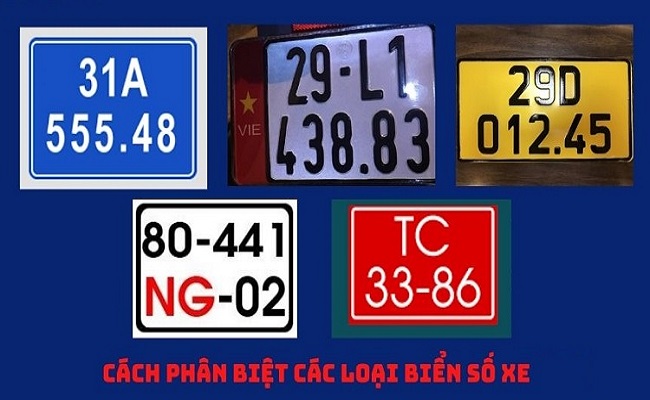
Before booking a table at a restaurant, before signing a contract, before cutting the ribbon on a new storefront—the Vietnamese (or at least a substantial demographic of them) will calculate the numbers.
The Good Numbers: - 8 — "phát" (to prosper, to generate wealth). The number 8 is the absolute pinnacle in Sino-Vietnamese culture. License plates saturated with 8s are auctioned for tens to hundreds of millions of VND. August 8th (8/8) is consistently the most heavily booked day for wedding banquets of the entire year. - 6 — "lộc" (fortune, windfall). Highly favored, frequently paired with 8. - 9 — "cửu" (longevity, eternity, permanence). Slightly less "hot" than 8, but universally recognized as highly auspicious.
The Bad Numbers: - 4 — pronounced very similarly to "tử" (death) in Sino-Vietnamese. Countless high-rises in Vietnam simply do not possess a 4th floor—the elevator skips from 3 directly to 5. Phone numbers containing multiple 4s are notoriously difficult to sell and are priced significantly cheaper. - Number sequences like 1-3-5 or 7-9-11 are not inherently unlucky—Vietnamese numerical taboos are generally tied to the specific phonetic meaning of a single digit rather than mathematical patterns.
A fascinating anomaly: 666 is absolutely not unlucky in Vietnam. That sequence is a sinister omen in Western Christian tradition, but to the Vietnamese eye—three consecutive 6s visually register as immense "fortune" (lộc lộc lộc). You could sell the license plate 666-66 for a small fortune in Hanoi, but you would likely struggle to give it away in Nebraska.
Feng Shui — Geographic Science or the Art of Living?
Feng shui (wind and water — phong thủy in Vietnamese) is the belief system dictating the relationship between physical spatial arrangements and energetic flow—and it dictates construction decisions, interior design layouts, and even the selection of retail locations in Vietnam in a highly pragmatic, undeniable manner.
The foundational feng shui principles that many Vietnamese strictly adhere to (though certainly not all—and the intensity varies wildly across generations):
House orientation: The idealized home faces South or Southeast—welcoming the cooling breezes while blocking the Northern winds (which are cold and bring bad luck). The orientation of the main door is critically important and must align with the homeowner's astrological age.
Mirrors: Never position a mirror directly facing the main entrance—the mirror will "reflect" wealth and fortune right back out the door. Never place a mirror directly facing the bed.
The Altar: Must be situated in the highest, most elevated position in the home, and absolutely never placed beneath a staircase or adjacent to a bathroom (although in cramped modern apartments, this is increasingly difficult to execute).
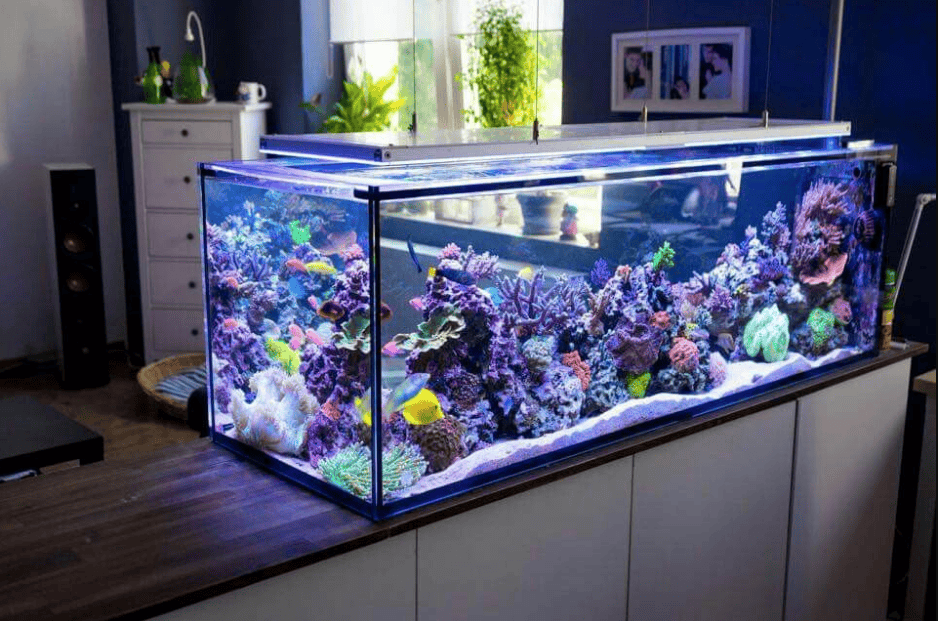
Aquariums: Small aquariums inside a home or business are ubiquitous—the goldfish swimming within the tank symbolize the active circulation of wealth. Even the exact number of fish is calculated: 9 goldfish (8 gold + 1 black to absorb bad luck) is the standard configuration.
Good Days and Bad Days — The Vietnamese Perpetual Calendar
One of the factors foreigners least expect when negotiating with Vietnamese partners: the date the contract is signed might be dictated by the lunar calendar.
"That day won't work, it's a bad day." "Next week has a more beautiful day." "The day after tomorrow is an auspicious day (ngày hoàng đạo), let's do it then."
The Perpetual Calendar (Lịch Vạn Niên)—the lunisolar calendar—is utilized by the Vietnamese to cross-reference good and bad days according to the sexagenary cycle (the 60-year Asian calendar system). Every single day is governed by "stars"—auspicious stars (hoàng đạo) and inauspicious stars (hắc đạo).
Weddings: the families of both the bride and groom absolutely must consult an astrologer or the calendar to select a "good day and good month"—no one is willing to marry on a bad day, even if it means postponing the wedding for months.
Store openings: the precise hour the ribbon is cut is frequently selected according to an auspicious hour—the doors unlock at that exact minute, not a moment before or after.
Breaking ground for construction: picking the day, picking the hour, and occasionally inviting a master to perform a ritual for the earth deity before the foundation is dug.
Among young, urban Vietnamese, adherence to this varies drastically. Some dismiss it as "archaic." Many still do it—not necessarily out of absolute, terrified conviction, but rather "to give the grandparents peace of mind," or simply because "it doesn't cost anything to do it, just in case."
Pragmatic Taboos You Will Encounter Daily
These folk beliefs will directly impact your personal experience while navigating Vietnam:
Early mornings on the first of the week or month: Many Vietnamese business owners are intensely fixated on the "first footer" (người xông đất/xông nhà)—the very first customer to cross the threshold in the morning. If that person looks "cheerful and bright," the entire day will be prosperous. If their expression is grim and gloomy—some shop owners will become visibly anxious.
Helmets and motorbikes: Not strictly a superstition, but you will notice the Vietnamese tying various protective amulets to their motorbikes—small statues of Quan Âm (the Goddess of Mercy), red threads, or Buddhist icons hanging from the rearview mirror. You should absolutely never touch these items without permission.
What Not To Do: - Do not gift a clock or watch to a Vietnamese person — the phrase "giving a clock" sounds identical to "attending a funeral" or "sending off to death." - Do not gift handkerchiefs — they are symbols of weeping and funerals. - Do not gift white flowers — the color of mourning. - Do not gift shoes — it implies you are "chasing them away." - Do not take a photograph with exactly 3 people — the person in the center is believed to be cursed with bad luck or an early death.
What You Should Do: - Present gifts using both hands — handing something with one hand is viewed as dismissive or impolite. - Receive money or objects using both hands — it demonstrates gratitude and respect. - Do not tear open a gift immediately in front of the giver (it is considered polite to wait until later to open it).
Recontextualizing These "Superstitions"
Before you summarily dismiss all of the above as negative "superstition"—pause and reconsider.
Almost every culture on earth possesses unscientific beliefs that its practitioners do not view as superstitious. Americans knock on wood to ward off bad luck. Europeans refuse to walk under ladders. The Japanese avoid the number 4 (shi — sounding like "death") in the exact same manner the Vietnamese do.
The line separating a "cultural belief" from "blind superstition" is often simply determined by: who is doing the observing from the outside.
When the Vietnamese consult feng shui prior to purchasing a home, or check the lunar calendar before signing a contract—they do not necessarily believe with 100% certainty that it is hard science. Many do it because it helps them feel psychologically secure when facing massive, life-altering decisions—and the desire for psychological security is an entirely universal human condition.
In a volatile, violently unpredictable world—sometimes you require an amulet, a lucky number, an auspicious day—not to actually control the future, but simply to summon the courage to step into it.