Ancestor Worship — The Religion Most Vietnamese Practice Without Calling It a Religion
You might be Buddhist, Catholic, or staunchly atheist — but almost everyone has an ancestral altar in their home
Imagine, for a moment, that you are invited into a Vietnamese home. You step across the threshold. The living room features a modern sofa, a massive flat-screen television, and perhaps a beautifully arranged vase of flowers. But inevitably—with almost absolute certainty—there will be a dedicated table or a carved wooden cabinet situated in the most prominent, commanding position in the room. Resting upon it: several framed photographs of individuals gazing outward with solemn expressions, a small vase of flowers, a plate of fresh fruit, an incense burner, and sticks of incense that are either currently burning or have long since turned to ash.
That room exists within two distinct timelines simultaneously: the timeline of the living occupants, and the timeline of those who walked the earth before them.
That is the most succinct summation possible of Vietnamese ancestor worship.
Not a Religion, But Something Far Deeper Than Religion
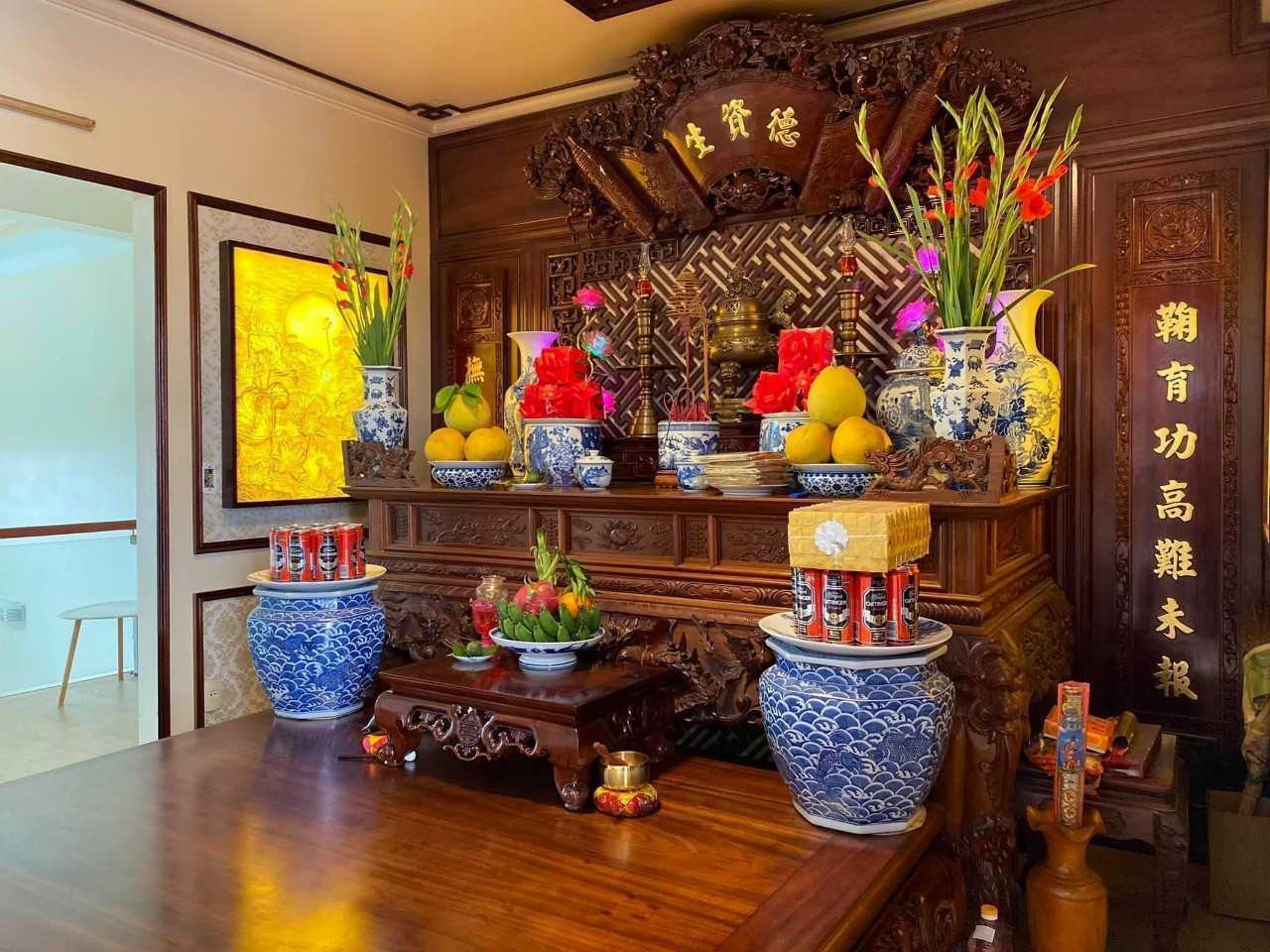
If you ask a Vietnamese person, "What religion do you follow?"—the answer might be Buddhism, Catholicism, or even a declarative "I don't follow any religion." But if you follow up with, "Do you worship your ancestors at home?"—the answer is almost universally yes.
This is the brilliant anomaly: ancestor worship in Vietnam does not operate on the logic of an institutionalized religion equipped with dogma, sacred texts, or an organized church hierarchy. It operates strictly on the logic of the family. No priest or monk instructs you that you must worship your ancestors according to a specific sect. You worship them because it is simply what your family does. Because your father watched his grandfather do it, and his grandfather watched his father do it, stretching back further into antiquity than anyone can recall.
That organic, unbroken inheritance—transmitted without theological lectures or proselytization—is precisely why the belief system of ancestor worship has survived a thousand years of Confucian Chinese domination, eras of surging Buddhist influence, nearly a century of Catholic missionary work, and even decades where spiritual practices were actively discouraged by the state.
It requires no institutional infrastructure to survive. It lives entirely within the mundane, daily gestures of domestic family life.
What the Altar Is — And What It Is Not
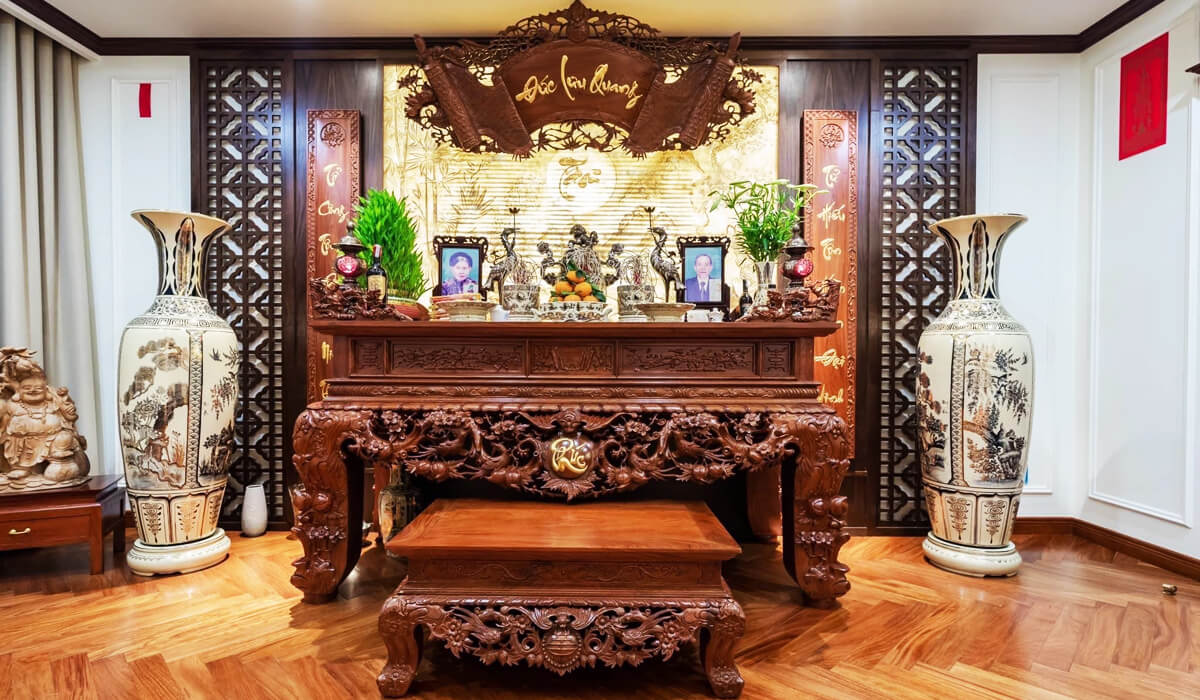
The most pervasive misconception foreigners harbor when viewing a Vietnamese ancestral altar: they assume it is a "shrine to gods"—a place to worship abstract deities. It is not.
The ancestral altar is dedicated to the worship of highly specific individuals: a grandfather, a grandmother, a father, a mother, a deceased sibling. These are people with names, faces captured in photographs, and specific dates of death. This is a critical distinction—you are not worshiping an abstract, omnipotent force, but rather actively maintaining a relationship with the specific human beings who birthed or nurtured you.
The essential elements of the altar: - The incense burner (bát hương / lư hương) — the undeniable epicenter of the altar, where incense is planted. - Photographs of the deceased — not statues, not abstract iconography, but actual portraits. - A flower vase — containing fresh flowers, which must be replaced frequently. - A fruit platter — replaced immediately when it begins to wilt or spoil. - Cups of clean water — refreshed daily in many devout households. - Oil lamps or candles — illuminated on special occasions.
Every family dictates their own arrangement and degree of formality. A wealthy household might possess a massive, intricately carved mahogany altar occupying an entire dedicated room. A modest apartment might only have a small, wall-mounted shelf holding a single photograph and an incense bowl. The extravagance is irrelevant. The sheer presence of the altar is what matters.
The Death Anniversary — Not a Day of Mourning, But a Reunion
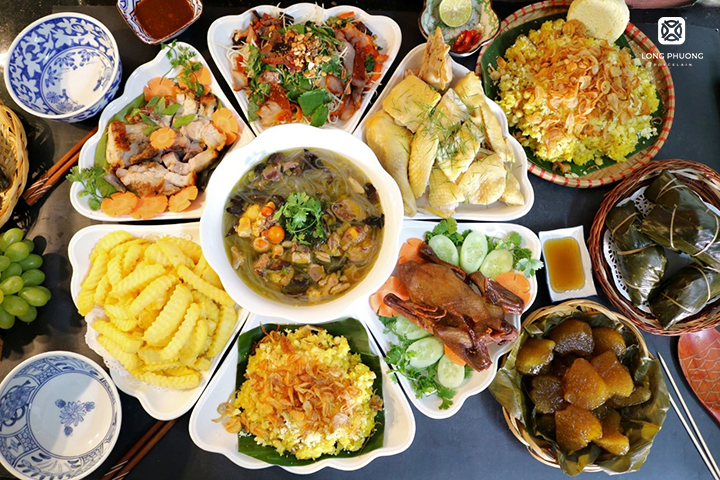
One of the most profound cultural misunderstandings occurs when foreigners hear the term "Death Anniversary" (ngày giỗ / kỵ giỗ). They immediately assume it is a somber, weeping day of mourning. It is not.
The Death Anniversary is, fundamentally, a family reunion designed to commemorate the deceased—and it frequently ranks as one of the most joyful, boisterous, and warmest days of the year for the extended family.
The entire extended family congregates. The most skilled cooks in the family volunteer to prepare the finest, most elaborate dishes. The feast is first meticulously arranged on the altar—a formal invitation for the deceased to return and partake. Once the incense burns down and the ritual is complete, the entire family sits down to eat that exact same food together.
During the meal, people share anecdotes about the deceased. These are not rigidly formal eulogies. They are brutally honest, human stories: the annoying habit the grandfather had of leaving his sandals in the wrong place, how notoriously frugal the grandmother used to be, how the father would always fall asleep in front of the television every night. Those stories—the articulation of their "human flaws"—are precisely what makes them so deeply missed and loved.
Through the mechanism of the ngày giỗ, the deceased are not flattened into flawless, statuesque deities. They remain human beings, retaining all their quirks and temperaments. And that is exactly how the Vietnamese keep the dead alive in their memory—not by idealizing them into perfection, but by remembering them exactly as they were.
The Philosophy Beneath It All: The Dead Are Not "Gone Forever"
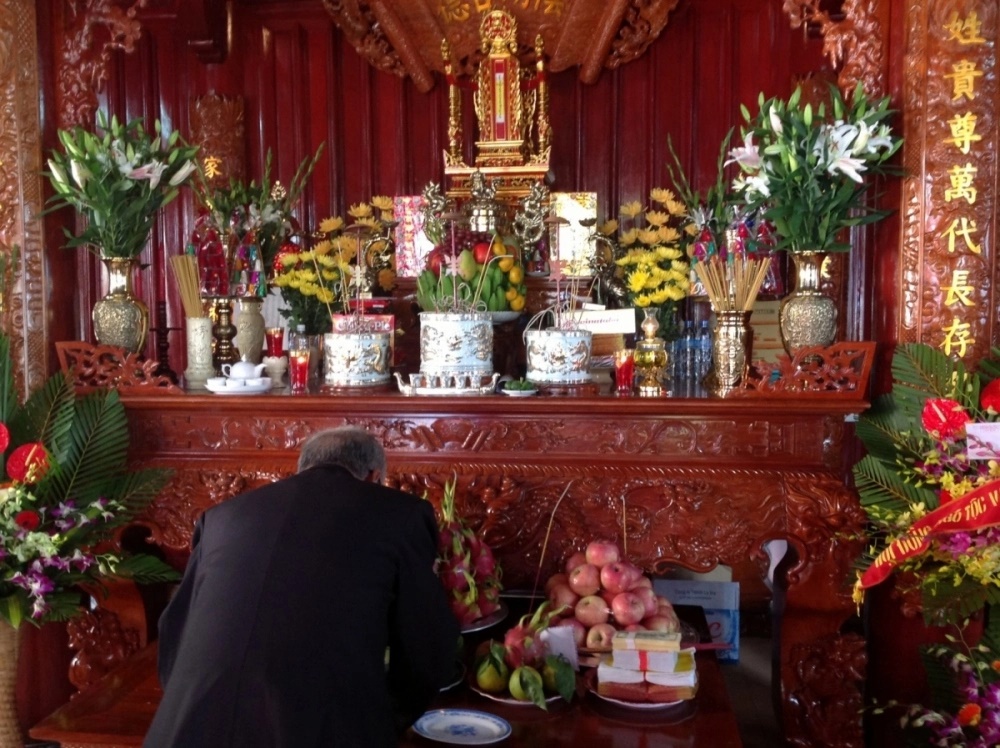
To truly comprehend ancestor worship, you must grasp a foundational premise that the vast majority of Vietnamese implicitly believe, even if no one explicitly articulates it aloud:
The dead do not cease to exist. They simply transition into a different state of presence.
Within that specific worldview, the deceased remain intensely invested in the lives of their descendants. They can still feel joy or sorrow when observing their descendants committing good or terrible acts. They still require care—nourishment (provided via ritual offerings), to be informed of major life milestones (weddings, university exams, business openings must all be reported at the altar), and above all, to be remembered.
And the dynamic works in reverse: ancestors possess the power to protect and bless their descendants. When you achieve success, it is partially attributed to the grace of your ancestors. When you encounter a crisis, lighting incense and praying to your ancestors is one of the very first actions you take—not out of blind superstition, but because you need to remind yourself that you are not fighting this battle alone.
This is a spiritual architecture that lacks a codified holy book, yet it functions perfectly because it satisfies one of the most primal psychological needs of the human condition: the absolute refusal to sever the bond with those we love, even after they have physically departed.
Ancestor Worship in the Modern World
How does Generation Z in Vietnam approach ancestor worship, having been raised in a hyper-connected world governed by scientific logic and rationalism?
The answer is likely more surprising than you would anticipate: The vast majority of them still practice it. Only their underlying reasoning has become more nuanced.
They do not necessarily harbor a literal, 100% conviction that their grandfather is "physically sitting on the altar watching everything I do." But they will still light incense on the full moon. They will still return home for the death anniversaries. When asked why, their responses often reflect a pragmatic, grounded sentiment: "Whether you literally believe in it or not, doing it costs you nothing. And when I do it, I feel a sense of connection; I feel closer to my family and my roots. So I do it."
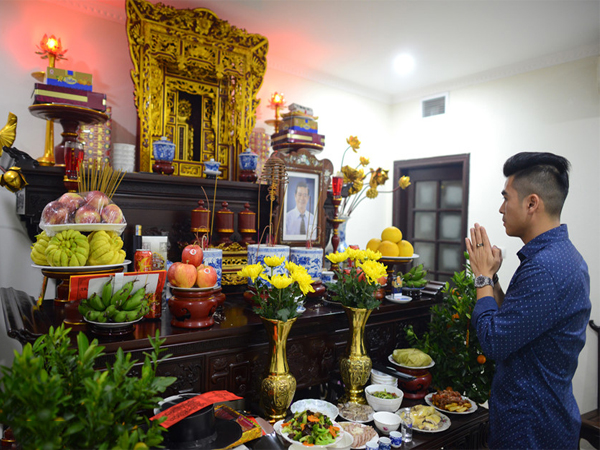
That specific brand of pragmatism—refusing to engage in exhausting metaphysical debates and simply performing the action because it provides psychological comfort and strengthens family bonds—is a hallmark trait of the Vietnamese psyche.
Ancestor worship, in its final analysis, is the Vietnamese answer to the agonizing question humanity has grappled with since the dawn of civilization: How do we survive profound loss?
Their answer is defiant: Do not accept it as a total loss. Keep them here, in whatever capacity you can. Light a stick of incense every full moon, prepare a feast on the anniversary of their death—and the ones who have left will never truly be gone.