Tranh Đông Hồ (Đông Hồ Folk Woodcut Painting) — The Fading Soul of the Vietnamese Village
An art form once pasted on the door of every Vietnamese home during Tết, now sustained by only a handful of remaining masters
There is something deeply peculiar about things that are on the verge of vanishing: they rarely disappear loudly. There are no warning trumpets. There is no crowd gathered to bid them farewell. They simply thin out, day by day—like the fading smoke of an evening cooking fire, like the distant, diminishing crow of a rooster—until one day you suddenly realize: you haven't heard it in a very long time.
Tranh Đông Hồ (Đông Hồ folk woodcut paintings) are disappearing in exactly that manner.
Something that was once an obligatory presence in every Vietnamese home during the Lunar New Year, serving as the accessible "art collection" for impoverished farmers who could never afford silk paintings—is now clinging to survival, maintained by merely three or four families in a tiny village in Bắc Ninh who are desperately trying to preserve the craft their ancestors bequeathed to them.
Đông Hồ Village — Where Colors are Extracted from Nature
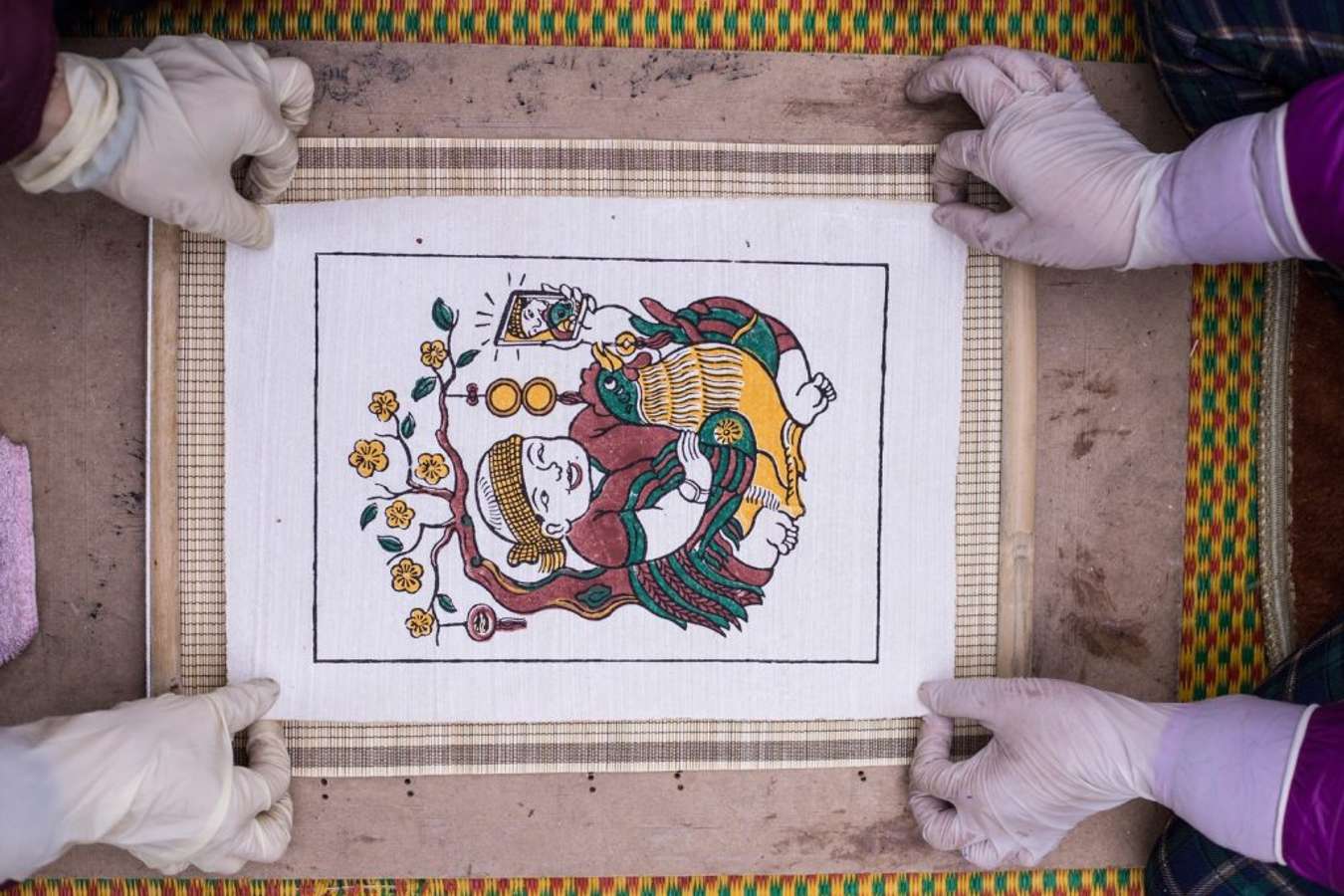
Đông Hồ village sits along the banks of the Đuống River in Thuận Thành district, Bắc Ninh province. It is not a sprawling village, nor is it famous for anything other than one singular achievement: producing the most highly distinct folk woodcut paintings in Vietnam.
What elevates Đông Hồ art above the folk traditions of numerous other cultures is its materials. The Đông Hồ artisan does not employ standard paper, nor do they use industrial synthetic inks. They utilize:
Giấy dó (Dó paper) — crafted from the bark of the dó tree, a plant that yields terrible timber but produces exceptionally fine fibers. Dó paper is incredibly light, highly resilient, absorbs pigment beautifully, and—most crucially—is highly resistant to termites and insects.
Natural pigments — the absolute black is derived from the soot of burnt bamboo leaves mixed with rust; red comes from red gravel (sỏi son); yellow is extracted from the hòe flower or turmeric; deep blue from indigo leaves; and pristine white is forged by grinding oyster shells into a fine powder and mixing it with sticky rice paste (hồ nếp) to create a signature, shimmering gloss.
It is precisely that layer of white oyster shell powder coating the dó paper that generates an ethereal, warm, subtly sparkling luminescence under lamplight—a visual texture that absolutely no modern industrial printing technique has ever managed to flawlessly replicate.
The Masterpieces Everyone Knows Despite Never Hearing the Title
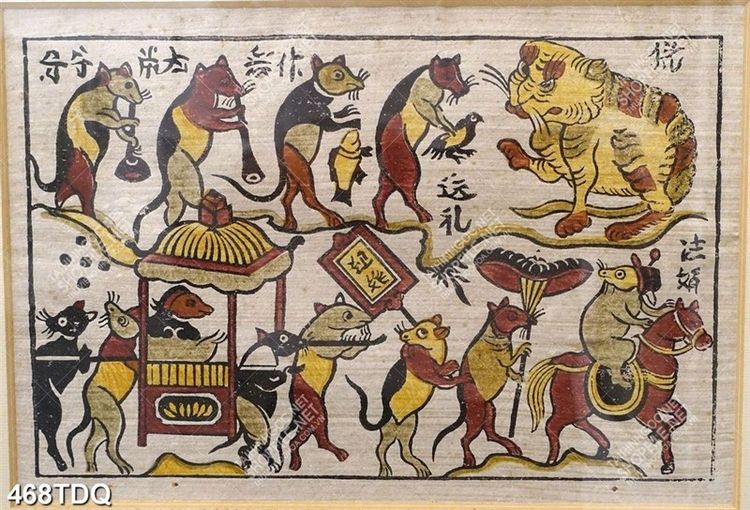
If you have ever seen a Vietnamese folk print depicting a procession of rats heading to a wedding, featuring the rat groom clad in a traditional tunic riding a palanquin, while a massive cat sits off to the side with an expression of immense satisfaction having just received "tribute"—that is a Đông Hồ painting. Specifically, it is Đám Cưới Chuột (The Rat's Wedding)—arguably the most famous piece of folk satire in Vietnamese history.
That painting is not merely intended for visual amusement. It is a highly sophisticated social critique: the rats, desiring to hold their wedding in peace, must first bribe the ruling cat. No "envelope" for the cat, no wedding. That narrative was carved into wood several hundred years ago—yet it sounds terrifyingly familiar today.
Other universally recognized Đông Hồ classics include:
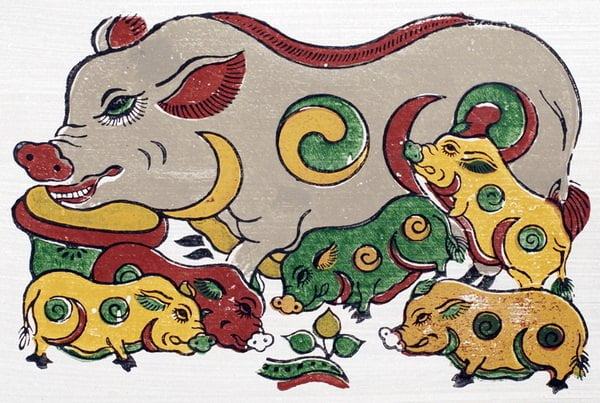
Lợn Đàn (The Pig Flock) — a massive sow flanked by plump, perfectly round piglets, serving as the ultimate symbol of prosperity and a thriving, multi-generational family. The Yin-Yang swirls painted on the pigs' bodies are not mere decoration—they are philosophical markers of cosmic harmony.
Gà Đại Cát (The Great Rooster) — a majestic, aggressively postured rooster boasting a brilliant red comb, acting as the symbol for the five Confucian virtues of a gentleman: "literary grace, martial prowess, courage, benevolence, and trustworthiness." High-minded, elite philosophy translated through the most common barnyard animal known to the peasant.
Hứng Dừa (Catching Coconuts) — a vibrant, joyful depiction of a young couple harvesting coconuts, with the husband scaling the tree and the wife standing below to catch them—a highly rustic, playful image that conceals a deeply warm narrative of marital intimacy.
A Process That Cannot Be Replaced by Machinery
To yield a single completed Đông Hồ print, the artisan must execute dozens of meticulous steps—and every single color necessitates a separate, distinct printing phase using a separate hand-carved wooden block.
A painting demanding five colors requires five distinct blocks, five separate applications of pigment, and five drying periods. The wooden block must be hand-carved from thị wood—a timber fine enough to hold razor-sharp details, yet dense enough to endure thousands of impressions. A masterfully carved block can successfully print thousands of sheets across decades of use.
The fundamental crisis: that process demands sharp eyes, immensely skilled hands, and—most critically—time. A commodity that the modern market is increasingly unwilling to pay a premium for.
A retail Đông Hồ print typically sells for a few dozen to a few hundred thousand VND (a few dollars). Meanwhile, the astronomical cost of raw materials (authentic dó paper, natural pigments, thị wood blocks) and the sheer labor involved make it an agonizingly poor business model. The economics simply do not compute—and the children of these artisans frequently abandon the village to pursue more stable, lucrative careers.
Three Families and an Asymmetrical War
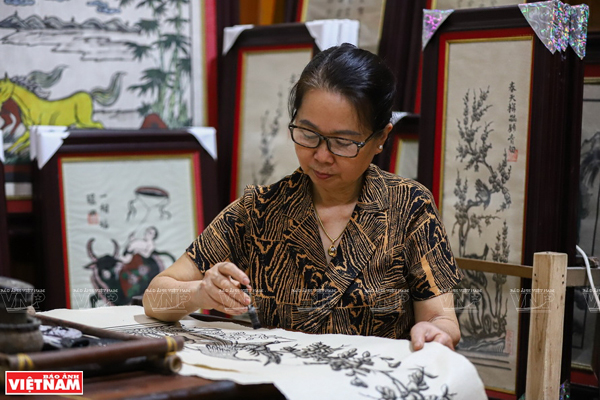
Currently, the number of households in Đông Hồ village that genuinely produce these prints using the rigorous, authentic traditional process can be counted on one hand—the most prominent being the family of master artisan Nguyễn Đăng Chế, a man who has dedicated his entire existence to sustaining and resurrecting this folk art.
They are acutely aware they are fighting an asymmetrical war: an era dominated by smartphones and TikTok does not offer much premium real estate for dó paper and crushed oyster shells. Tourists visit the village, snap a few photos, purchase a few prints as souvenirs, and leave. There is virtually no one stepping up to inherit the mantle.
But they continue to carve. They continue to print. Not for economic viability. But because they harbor a terrifying conviction: if no one makes it, no one will remember it, and if no one remembers it, that specific iteration of beauty will genuinely cease to exist—it will no longer be "fading," it will be "dead."
What Đông Hồ Art Tells Us About the Vietnamese
A French art historian once wrote regarding Đông Hồ woodcuts: "This is the art of impoverished people who possess a wealthy soul." He did not intend it as a pejorative. He meant: the Vietnamese peasant during the feudal era possessed no capital to acquire the luxurious silk or exquisite paper paintings favored by the mandarins. Yet, they still demanded color in their homes for the New Year. They still demanded that the imagery on their walls carried profound, auspicious meaning.
So, they engineered art from the detritus surrounding them: forest leaves, discarded oyster shells, the soot from their cooking pots, wild flora. And from those profoundly humble, pedestrian materials, they birthed masterpieces of satire, profundity, and warmth—encapsulating an entire philosophy regarding existence, Yin and Yang, and the virtues humanity ought to strive for, all articulated through the visual vocabulary of a plump pig and an arrogant rooster.
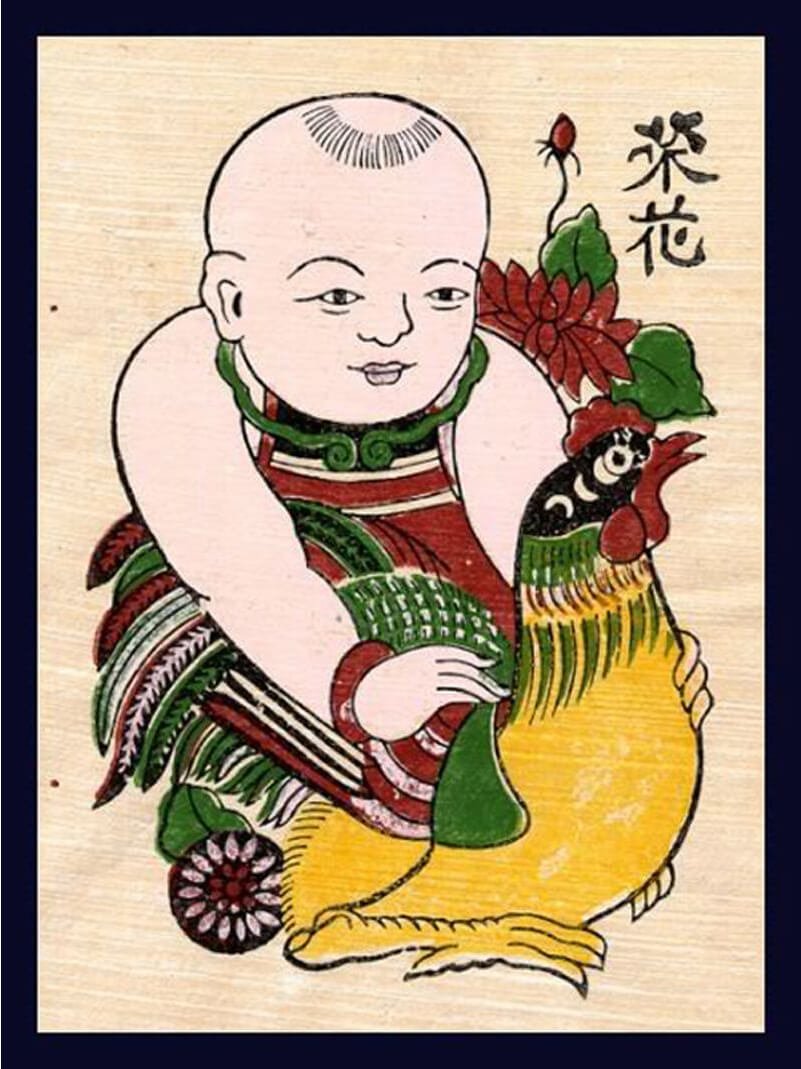
Đông Hồ art is slowly disappearing. The specific manner in which it is fading—quietly, without fanfare, slowly thinning out—mirrors exactly how many of the most precious elements of our lives abandon us: not with a sudden, violent snap, but as a thread that frays thinner with each passing year, until one day you look down and realize your hands are holding nothing but air.
One hopes that day will not arrive.