Giỗ Tổ Hùng Vương (Hung Kings' Commemoration Day) — The Holiday That Binds 100 Million People Together
A national holiday unlike any other in the world — people do not celebrate. They remember with gratitude.
Most nations around the globe observe their most significant national holiday with boisterous "celebration." Americans ignite fireworks on the Fourth of July, swelling with pride over their independence. The French parade down the Champs-Élysées on July 14th, commemorating the revolution that liberated them. Even the Chinese mark their National Day on October 1st with colossal military parades projecting immense state power.
But for the Vietnamese—on the single most important national holiday of the year, people do not celebrate. They go to a death anniversary.
There are no military parades. There are no grand fireworks displays. People ascend a mountain, light incense, and bow their heads in gratitude to a common ancestor.
The Proverb an Entire Nation Knows by Heart
Within the vast treasury of Vietnamese language, proverbs, and folk poetry, exceptionally few verses are memorized as universally as this one:
"Dù ai đi ngược về xuôi Nhớ ngày Giỗ Tổ mồng mười tháng ba." (Whoever goes backward or forward / Remember the Commemoration Day on the tenth of the third month)
No historian knows precisely when this folk poem first materialized. There is no authored signature. There is no recorded year of inception. It simply exists—surviving across centuries, outlasting dynasties, enduring through wars and political tectonic shifts—and one person passes it to another, requiring zero explanation because the meaning is implicitly understood by all.
The verse does not instruct you on what you must explicitly do during Giỗ Tổ. It issues no threats: "If you do not return, you will bear a sin." It merely serves as a gentle, absolute reminder: No matter where you are, no matter what you are doing, no matter if you are "going backward" or "going forward"—remember this day.
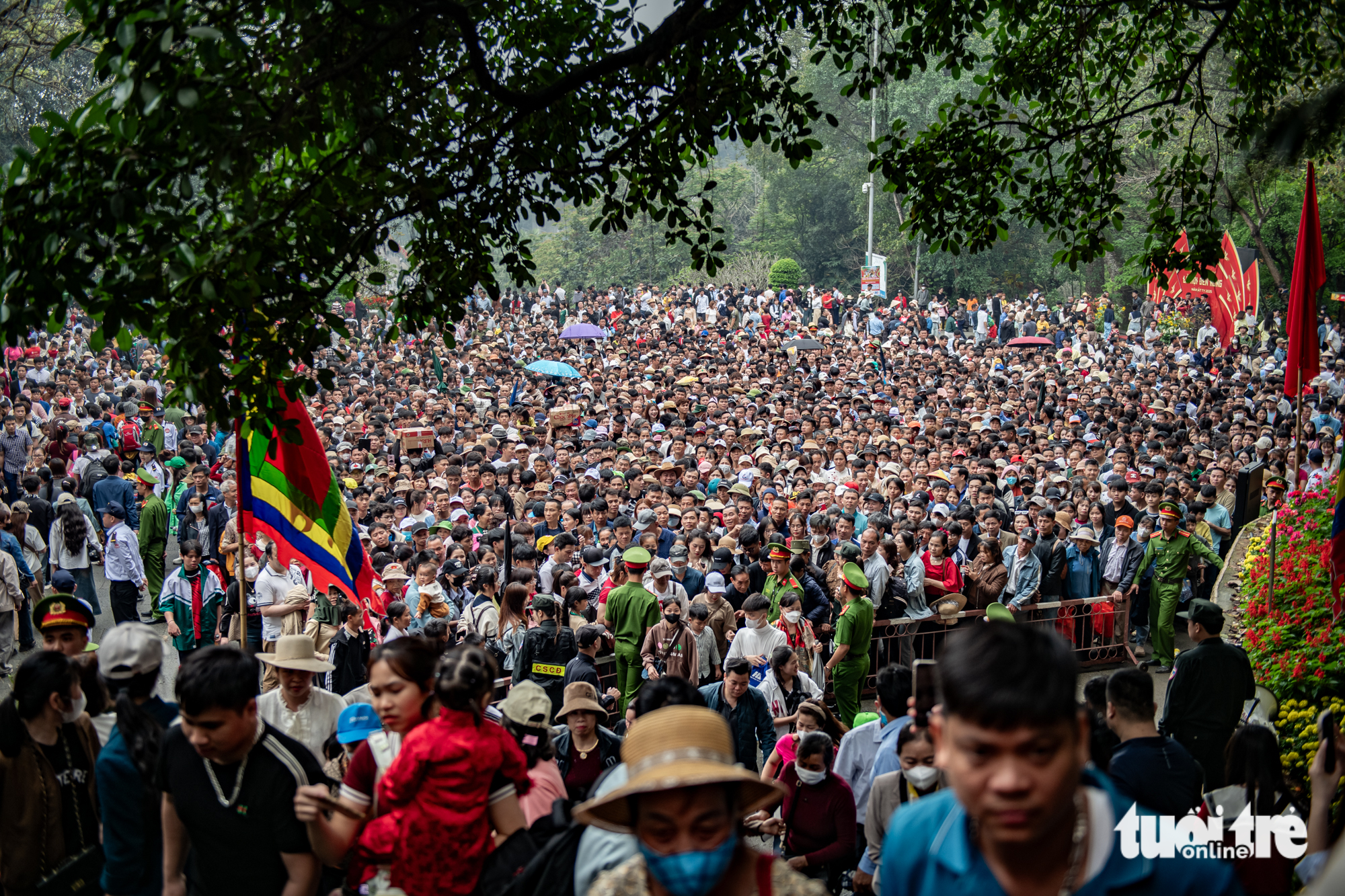
And millions of Vietnamese—from farmers to urban intellectuals, from the Northern highlands down to the deep South, from those who stayed behind to the Việt kiều (overseas Vietnamese) scattered across the globe—do remember. Every year, on the 10th day of the 3rd lunar month, they remember.
The Ancestral Land of Phú Thọ — Where Vietnamese Roots Begin
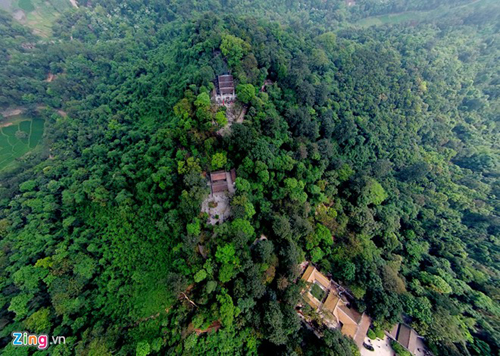
The Hung Temple complex is situated on Nghĩa Lĩnh Mountain in Phú Thọ province, roughly 85 kilometers northwest of Hanoi. This is the Ancestral Land—the site where, according to mythology, the Hung Kings established Văn Lang, the inaugural state of the ancient Vietnamese people.
Eighteen generations of Hung Kings reigned over this land. That number 18 is not to be taken as literal arithmetic—legend claims the Hung dynasty spanned over 2,600 years, meaning each king would have ruled for an average of over 140 years, an obvious biological impossibility. But the literal math is utterly irrelevant. The Vietnamese do not worship the Hung Kings out of a belief in chronological accuracy. They worship them because they function as the ultimate symbol: a common origin, a shared ancestry, a single bloodline.
The Hung Temple complex comprises multiple shrines ascending the mountain slope: the Lower Temple, the Middle Temple, and the Upper Temple—each dedicated to a different epoch of the Hung era. Nestled in between lies the Pearl Well, where legend dictates the Princess Tiên Dung used to gaze at her reflection. From the summit, looking down from the Upper Temple, one beholds a sweeping panoramic view of the verdant, ancestral cradle stretching out below.
Not Merely a Pilgrimage — It is Living Memory
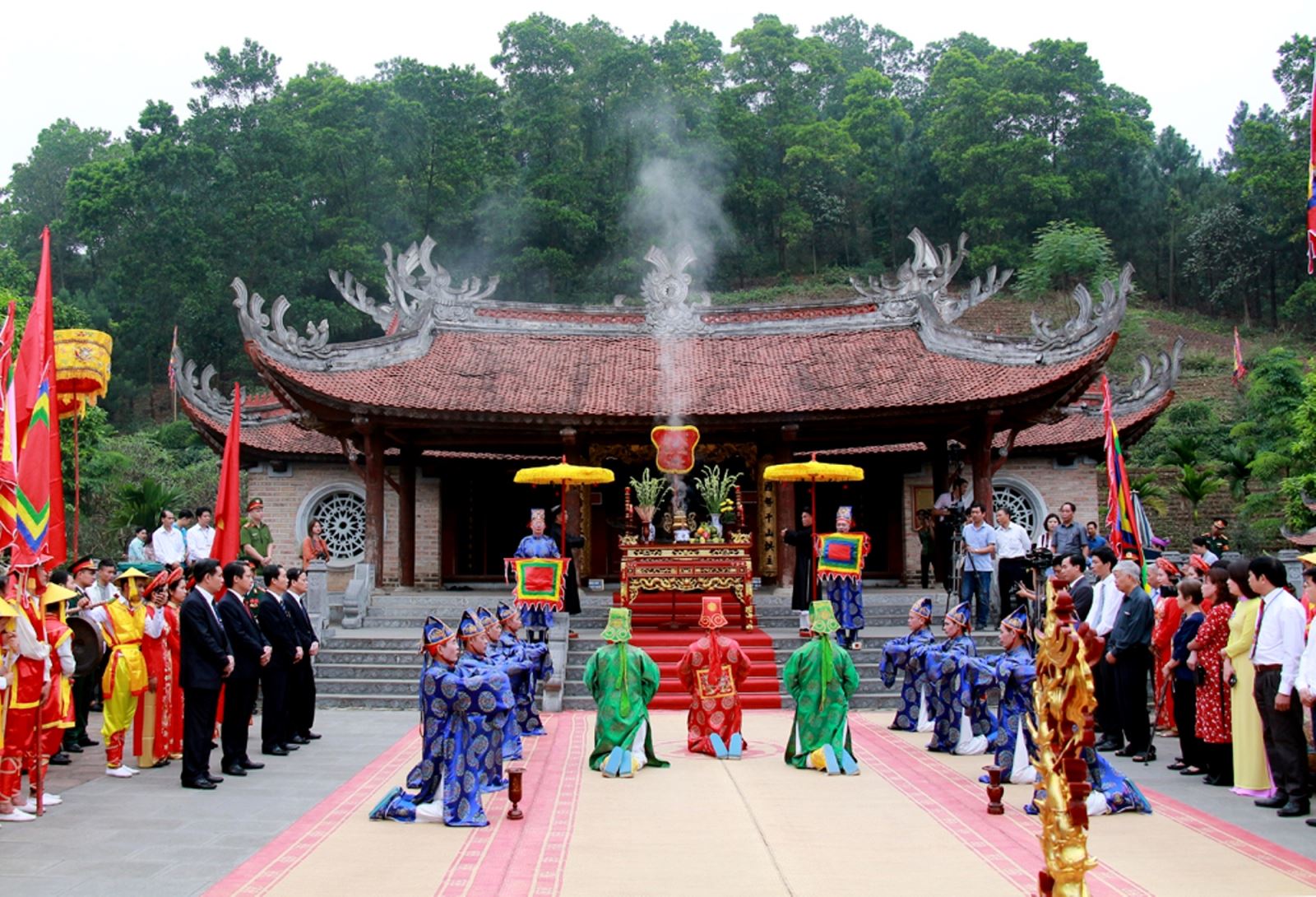
What fundamentally distinguishes Giỗ Tổ Hùng Vương from virtually any other national holiday globally is its profound psychological nature: this is not a day to celebrate a victory, but a day to honor the source.
People do not cheer, they do not launch raucous pyrotechnics. They ascend the mountain, navigating the stone steps with deliberate care, light a fragile stick of incense, and bow their heads in heavy silence. They do this alongside millions of others—strangers they have never met, hailing from disparate regions, belonging to different generations—yet all engaging in the exact same gesture, harboring the exact same emotion.
It is a remarkably rare collective experience.
Those who have participated in the pilgrimage to the Hung Temple on the 10th of March frequently articulate one specific observation: despite the crushing density of the crowds, despite having to scale a mountain under the sweltering March sun, despite waiting in line for hours—the atmosphere is never chaotic. A bizarre, profound stillness envelops the throng. It is as if, amid those millions of human beings, every single individual is stepping into an entirely private interior space—and that space is completely inviolable.
Bánh Chưng and Bánh Dày — The Culinary Philosophy of Statehood
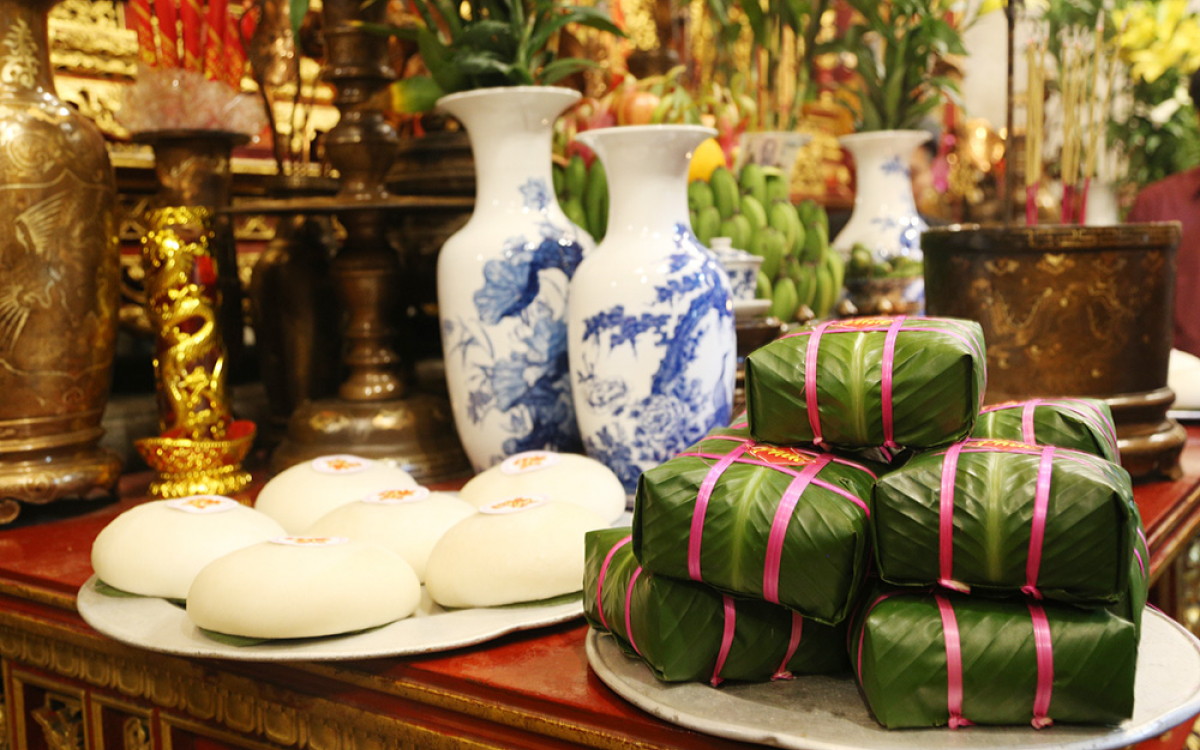
The mythology inextricably linked to the Commemoration Day features a highly specific culinary narrative: the legend of bánh chưng (square sticky rice cake) and bánh dày (round sticky rice cake).
The sixth Hung King, in his twilight years, sought a worthy successor and issued a decree: whoever presented him with the most magnificent offering would inherit the throne. The princes scattered across the realm hunting for the most exotic delicacies—tiger sinews, rhinoceros bones, swiftlet nests, shark fins—vying to secure the rarest and most bizarre ingredients.
Only Prince Lang Liêu—the poorest, devoid of political power, lacking supernatural abilities—received divine guidance in a dream: "There is nothing in this world more precious than rice. Rice sustains human life. Use rice to create your offering."
Lang Liêu crafted bánh chưng—square, wrapped in verdant dong leaves, filled with mung beans and pork, symbolizing the Earth. And bánh dày—round, pristine white, flawlessly smooth, symbolizing the Sky. The square and the circle. The Earth and the Sky. Yin and Yang.
The Hung King tasted them and required no further deliberation. Lang Liêu was chosen.
That story has survived for thousands of years not because of its dramatic tension. It endures because it encapsulates a silent philosophy that the Vietnamese intimately understand: the most enduring foundations are frequently located in the simplest, most familiar things. Not something you must hunt for in distant lands, but the very things beneath your feet—a plot of soil, a grain of rice, the calloused hands of a farmer.
"Children of the Dragon, Grandchildren of the Fairy" — The Most Sacred Concept in the Vietnamese Psyche
Giỗ Tổ Hùng Vương is permanently anchored to the legend of Lạc Long Quân and Âu Cơ—the narrative the Vietnamese continually tell themselves regarding their own genesis: Con Rồng Cháu Tiên (Children of the Dragon, Grandchildren of the Fairy).
Lạc Long Quân—the "Dragon" rising from the ocean. Âu Cơ—the "Fairy" descending from the high mountains. Two diametrically opposed worlds collided, fell in love, and birthed a sac containing one hundred eggs, which hatched into one hundred children—the absolute ancestors of the Vietnamese people. They eventually parted ways: fifty children followed their father down to the sea, fifty children followed their mother up to the mountains. The eldest son who followed his mother into the highlands became the very first Hung King.
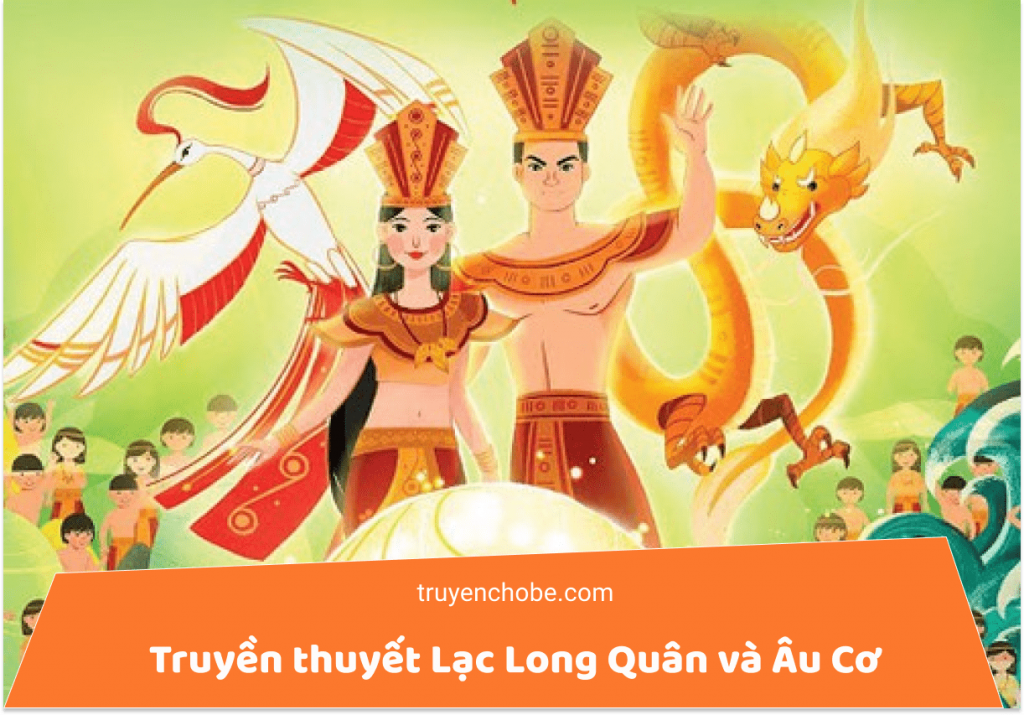
The deeper, more critical meaning of that narrative: The Vietnamese self-identify as originating from two distinct sources. The ocean and the mountains. Water and earth. Brute strength and ethereal grace. This is no accident—it is precisely how a nation situated at the geographical crossroads between the Pacific Ocean and the massive Asian continent, sandwiched between monumental civilizations, chooses to interpret its own profound complexity: "We are not monolithic. We are the synthesis of two entirely different worlds. And that is exactly where our strength lies."
Its Significance for Today
Giỗ Tổ Hùng Vương is not a fossilized ritual from antiquity. It is still living, still breathing, still carrying immense semiotic weight in the 21st century.
Within Vietnamese communities abroad—in Australia, the United States, France—the 10th of March is still observed, albeit on a smaller scale, lacking the physical presence of Nghĩa Lĩnh Mountain, devoid of the thick incense smoke drifting through the ancient forest canopy. Yet, people still light incense. They still bow their heads.
Because there remains one absolute truth that geography cannot obliterate: Human beings require an understanding of where they came from in order to know where they are heading. The Vietnamese nation, having been tested through countless brutal centuries, resolved that existential need in its own highly idiosyncratic manner—not by erecting arrogant, colossal marble monuments, but through a fragile stick of incense, a humble bowl of clear water placed upon an altar, and a proverb with no known author that has been passed from mouth to mouth for a thousand years without ever fading.
"Dù ai đi ngược về xuôi, nhớ ngày Giỗ Tổ mồng mười tháng ba."
They still remember.