Vietnamese Religion and Spirituality — Pagodas on Sunday, Church on Christmas, Shrines for the Earth God
The Vietnamese experience zero contradiction in simultaneously being Buddhist, offering incense to the God of Wealth, and feasting on Christmas. Every entity has its assigned coordinate
A standard resident of Saigon might execute the following operations within a single week: visit the Buddhist pagoda on the full moon, offer incense to the Earth God on Monday to secure commercial success, place fresh flowers on the ancestral altar daily, take their children to a Catholic church for Christmas (because it's "fun"), and consult the lunar calendar for optimal operational dates before signing a contract.
It is not that they lack awareness of what they are doing. It is not that they haven't processed the apparent contradictions. They have processed it—and executed a decision: different entities service different requirements, and choosing a single provider is unnecessary.
This is not a lack of religious sincerity. This is spiritual pragmatism—an operating system the Vietnamese have run for thousands of years before theologians engineered a formal label for it.
Vietnamese Buddhism — Not the Textbook Version
Theravada Buddhism in Thailand or Myanmar heavily prioritizes individual cultivation, deep meditation, and strict adherence to monastic protocols.
Mahayana Buddhism—the framework adopted in Vietnam—deploys a vastly different approach. And Vietnamese folk Buddhism diverges even further from the core academic texts:
Bodhisattva Quan Âm (Goddess of Mercy)—not Gautama Buddha—is statistically the most worshipped entity in Vietnamese pagodas. Quan Âm represents accessible compassion, possessing the capability to intercept and answer prayers—the vast majority of which request highly practical interventions: health, fertility, and baseline security.
Chanting and Offerings are exponentially more common than seated meditation within the standard Vietnamese Buddhist demographic. This is Buddhism optimized for a high-velocity population, for individuals requiring a spiritual anchor, not for monks who can allocate multiple hours daily to absolute stillness.
It is not "less profound." It is simply modified—calibrated to the environmental realities and practical requirements of the user.
Indigenous Religion — An Exclusive Vietnamese Compile
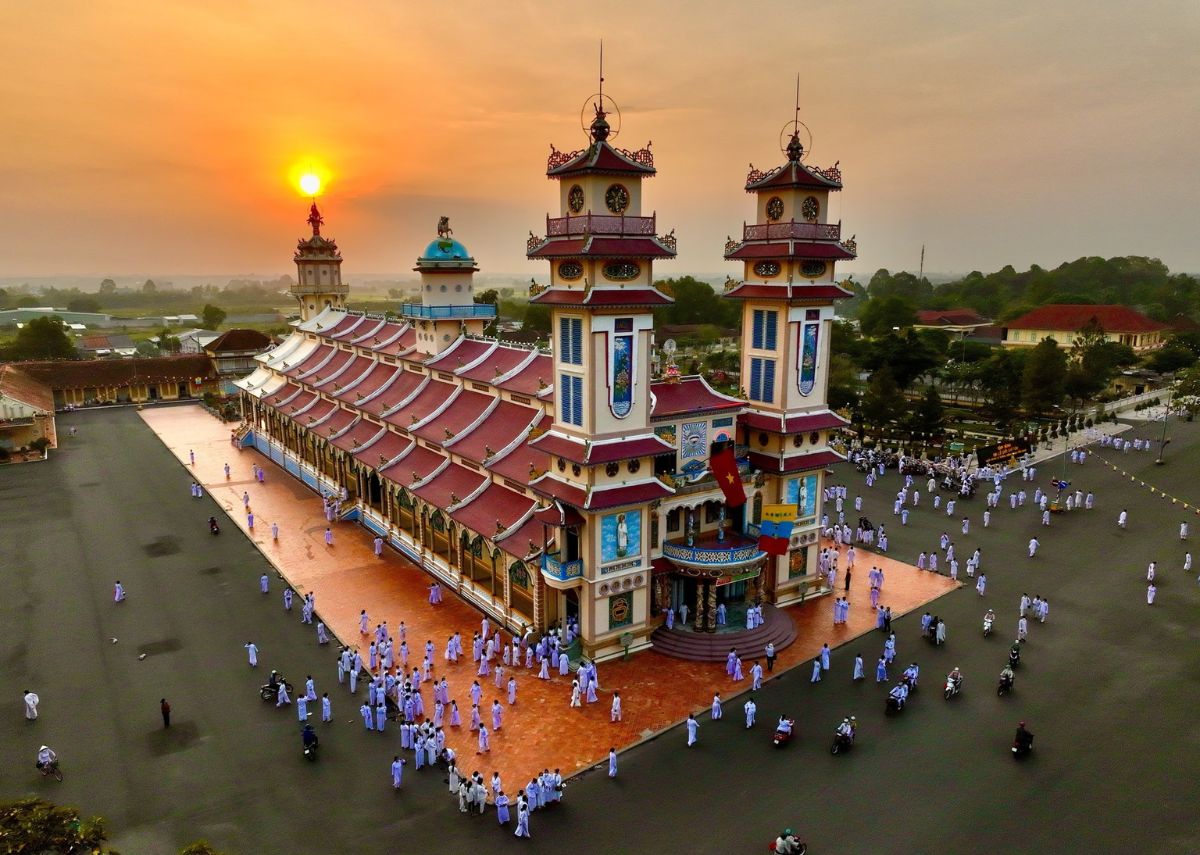
Vietnam engineered a religion that exists absolutely nowhere else on the planet: Cao Đài.
Formally established in 1926 in the South, Cao Đài synthesizes multiple global religious streams: Buddhism, Confucianism, Taoism, Catholicism, and specific Western philosophical elements. The primary divine triad consists of Gautama Buddha, Jesus Christ, and Laozi. Furthermore, registered within the Cao Đài pantheon of venerated saints: Victor Hugo, the French novelist—he is classified as a divine entity due to his massive contributions to humanity.
That data sounds bizarre from an external perspective. But from the Cao Đài perspective—every entity that is profound and beneficial in human history possesses a coordinate within the exact same spiritual matrix. That is the ultimate manifestation of the synthetic mentality the Vietnamese have deployed for a millennium.
The God of Wealth and The Earth God — The Non-Negotiable Retail Hardware
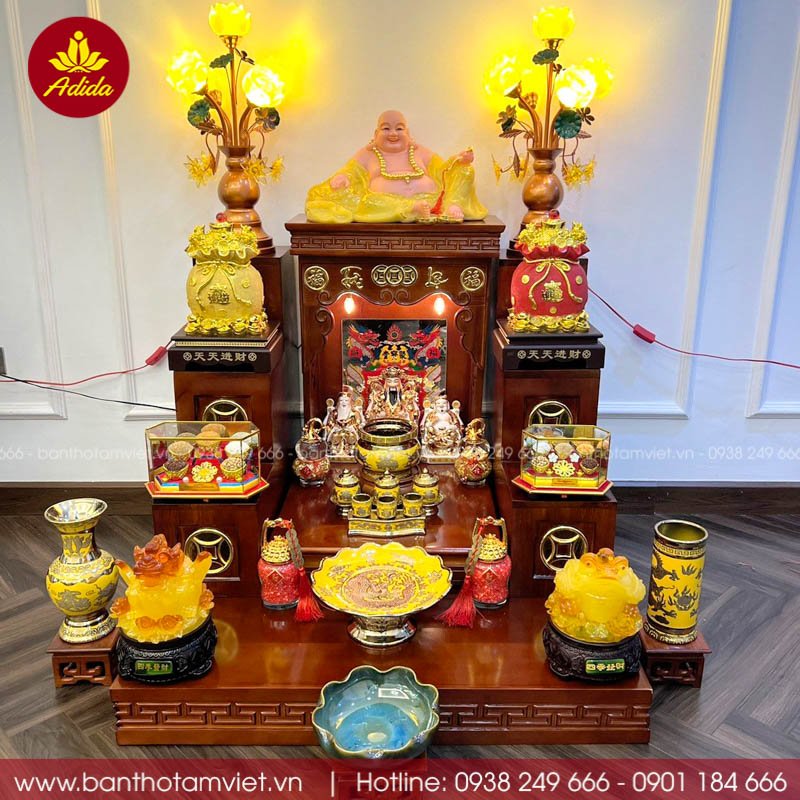
Penetrate any restaurant, convenience store, or commercial node in Vietnam—and scan the floor near the entrance. There is a massive probability you will detect a small shrine containing two statues, fruit, and water.
That is the shrine to Thần Tài (God of Wealth) and Ông Địa (Earth God). These are the dual administrators of commerce, overseeing the physical real estate of the business and ensuring the uninterrupted flow of revenue.
The shrine is installed at ground level because, according to the folk algorithm, wealth originates from the earth, and these deities operate from the ground up. Every morning before initiating retail operations, the owner burns incense, arranges fruit, and executes an offering protocol. On the 10th day of the Lunar New Year—the designated God of Wealth Day—merchants aggressively purchase gold and execute massive offerings.
You will observe this protocol executed by individuals who do not identify as Buddhist or subscribe to any formal religion. Folk spirituality does not require a religious label—it solely requires consistent operational practice.
Catholicism in Vietnam — Distinct and Deeply Rooted
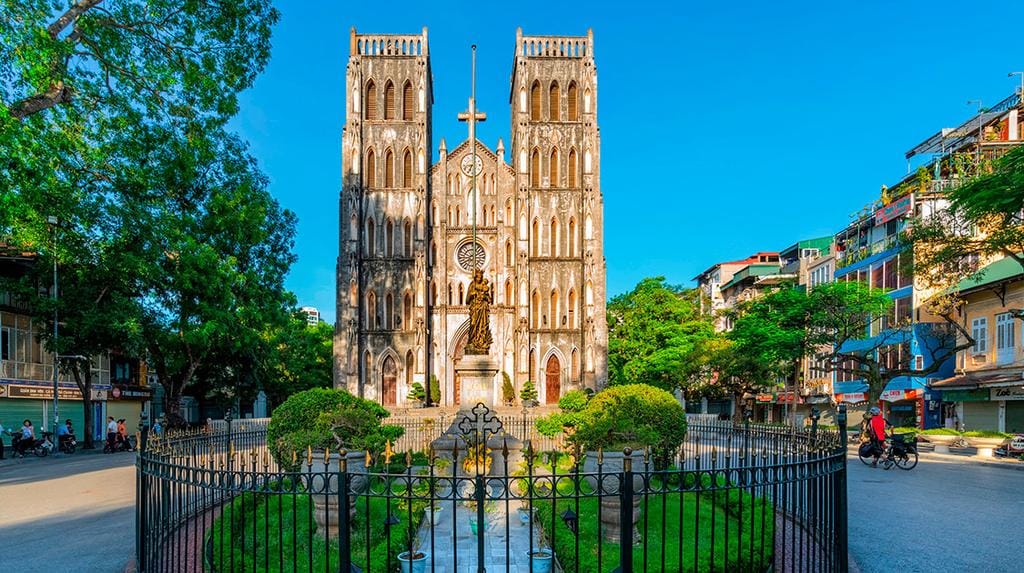
Vietnam hosts approximately 7 million Catholics—a relatively small percentage of the total population, yet operating as one of the most massive Catholic demographics in Southeast Asia.
Vietnamese Catholics maintain highly rigorous and structurally organized faith practices—the parish routinely functions as an incredibly powerful community anchor, particularly within the Central and Southern provinces.
And Christmas Eve in Vietnam—even among non-Catholic demographics—is a massive social event. The streets of Hanoi and Saigon become gridlocked with populations walking, photographing, and dining. Not because they are executing a religious sacrament—but because Christmas has been ported into a cultural festival that the majority of urban Vietnamese participate in, regardless of their spiritual backend.
That is yet another execution of Vietnamese spiritual pragmatism: a festival is a festival, joy is joy, and possessing the original religious source code is absolutely not a prerequisite for logging in.