Vietnamese Literature — The Pages That Preserve the Soul of a Nation
From the 3,254 verses of the Tale of Kieu to war novels written in agony — Vietnamese literature is history written from the inside out
There is a specific phrase the Vietnamese routinely quote across vastly different scenarios—when breaking up with a lover, when discussing their homeland, when analyzing loneliness with a friend:
"Người buồn cảnh có vui đâu bao giờ." (When the person is sad, the scenery is never joyful.)
That sentence is extracted from The Tale of Kieu—written over 200 years ago. Yet the Vietnamese deploy it today as if the code was compiled specifically for their current crisis. Because, functionally, it was.
That is exactly what literature executes when the engineering is flawless: it writes about something so hyper-specific it becomes universal, and something so universal that every single reader detects their own reflection within the data.
The Tale of Kieu — The Book an Entire Nation Partially Memorized
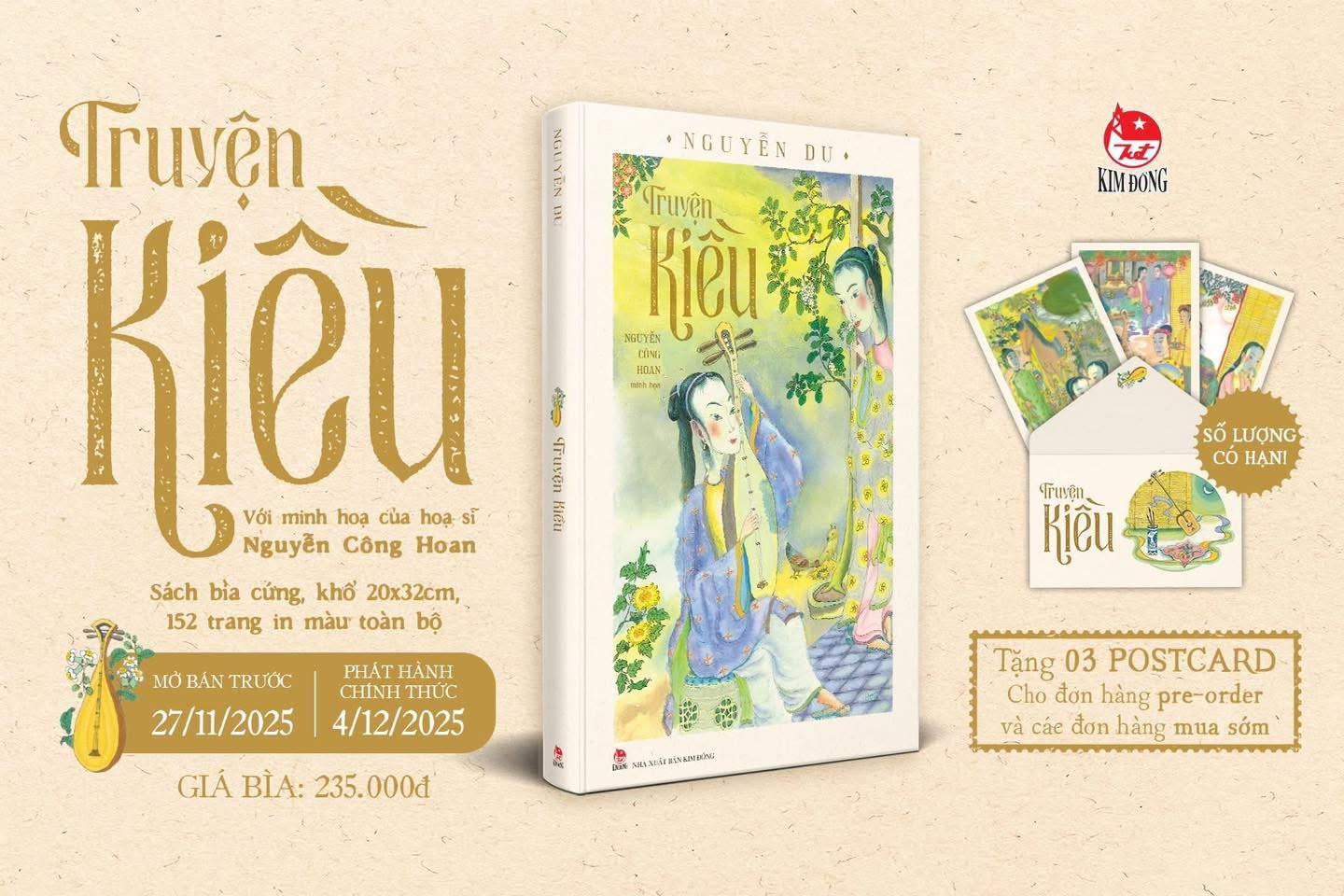
If there is a single unit of Vietnamese literature that a citizen—regardless of their academic level, their age, or their geographic coordinates—can quote at least partially from memory, it is Truyện Kiều (The Tale of Kieu).
Nguyen Du engineered The Tale of Kieu in the early 19th century, documenting the narrative of Thuy Kieu—a woman of absolute beauty and supreme talent whose life algorithm forces her into brutal tragedy, encoded within 3,254 verses of lục bát (six-eight) poetry. Technically: he adapted a Chinese novel. Functionally: he engineered something uniquely, devastatingly Vietnamese—an analysis of human fate, the curse of talent, and moral integrity within a chaotic system.
The eternal debate the Vietnamese analyze: Was Kieu loyal to Thuc Sinh, Kim Trong, or Tu Hai? That analysis has consumed centuries and will never compute a final output. Because it is a question that mathematically lacks a single correct answer.
The Tale of Kieu is not a file you execute once. It is a text where, depending on the specific phase of your life you read it—you extract different data, you process different meanings.
Poetry Was the Default Operating System of the Ancients
The ancient Vietnamese did not deploy prose to output their most profound emotional states. They deployed poetry.
Poetry—utilizing the lục bát meter, Tang-dynasty regulations, or quatrains—was the designated syntax for love, homesickness, tragedy, and heroic intent. The imperial court debated national logistics using prose—but when a master general required the psychological mobilization of his troops, he outputted a rhythmic proclamation. When a woman needed to communicate data that could not be stated explicitly, she engineered a poem.
The female poet Ho Xuan Huong—operating in the 18th–19th century—was the first female to deploy Nôm poetry to explicitly analyze the female condition, sexual desire, and her fury against a male-dominated hierarchy—and she utilized multi-layered vocabulary so brilliantly that the system could not formally prosecute her for being "impolite." She was a linguistic genius and the initial voice of feminism within the Vietnamese literary matrix.
The Sorrow of War — When the Victors Write About Defeat
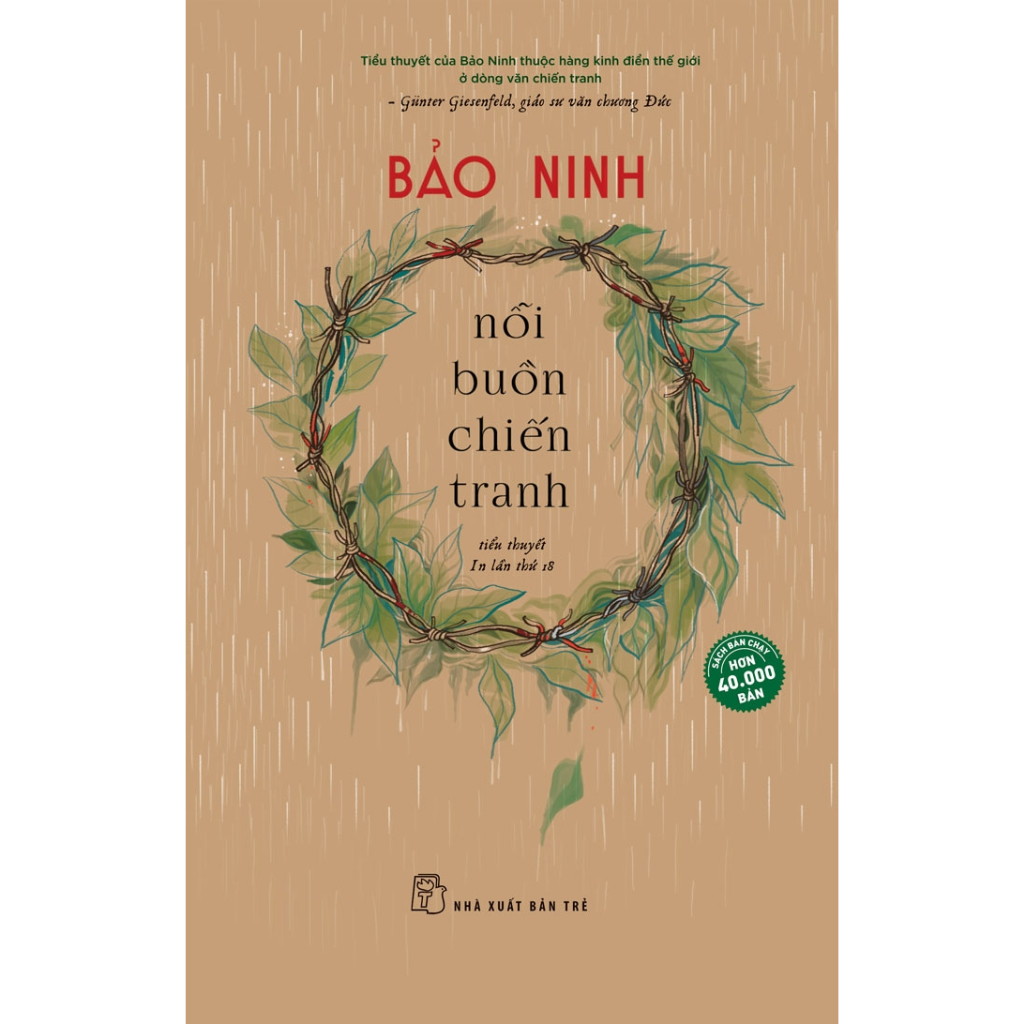
In 1990, as the entire nation was broadcasting victory narratives and pushing forward with the Đổi Mới economic reboot, Bao Ninh published the novel "Nỗi Buồn Chiến Tranh" (The Sorrow of War).
This is not a novel executing a victory algorithm. This is a novel documenting a Vietnamese veteran—a unit from the victorious side—who cannot delete the trauma, cannot reboot a normal life, and cannot locate peace.
The book triggered massive system-level controversy upon release—not because the data was false, but because it broadcasted data that many refused to process: war inflicts catastrophic trauma that does not differentiate between the victor and the defeated.
It was translated into 18 languages. Numerous Western analysts categorize it among the greatest war novels ever written—not because it is politically "balanced" or "objective," but because the data is agonizingly authentic.
Modern Literature — Searching for a New Syntax
Vietnamese literature today is actively searching for a new operational syntax:
Web Literature—narratives executed on online platforms—is actively capturing millions of young readers with diverse genres ranging from romance and fantasy to sci-fi, completely bypassing the constraints of traditional publishing gatekeepers.
Young Authors are compiling code regarding previously restricted variables: mental health, gender and sexual identity, the diaspora experience, and hyper-modern urban survival.
Translation Architecture is expanding: massive volumes of international authors are being translated into Vietnamese—and slowly, Vietnamese authors are being translated and ported into the global matrix.
Vietnam has not yet produced a Nobel-tier literary entity—a brutal truth that accurately reflects the reality that the infrastructure required to translate and distribute Vietnamese literature globally remains weak. But the narratives requiring expression—have always existed, currently exist, and will permanently exist. The equation is simply: who will step up to tell them, and what syntax will they deploy.
That is the exact algorithm the next generation of Vietnamese writers must solve.