Being a Guest in a Vietnamese Home — The Unspoken Rules Everyone Knows
Securing an invitation into a Vietnamese home is a legitimate privilege. Here is exactly how to ensure you do not squander it
When a Vietnamese person invites you to their home, it is absolutely not a casual social pleasantry. The Vietnamese home—particularly within a traditional family—is their most fiercely private and intimate sanctuary. The ancestral altar is located there. The family's historical memory is stored there. The components of their life they never broadcast to the public are contained there.
When they authorize your entry, they are explicitly stating: "I trust you enough to grant you access to this specific sector of my existence."
That authorization demands absolute respect.
Prior to Crossing the Threshold
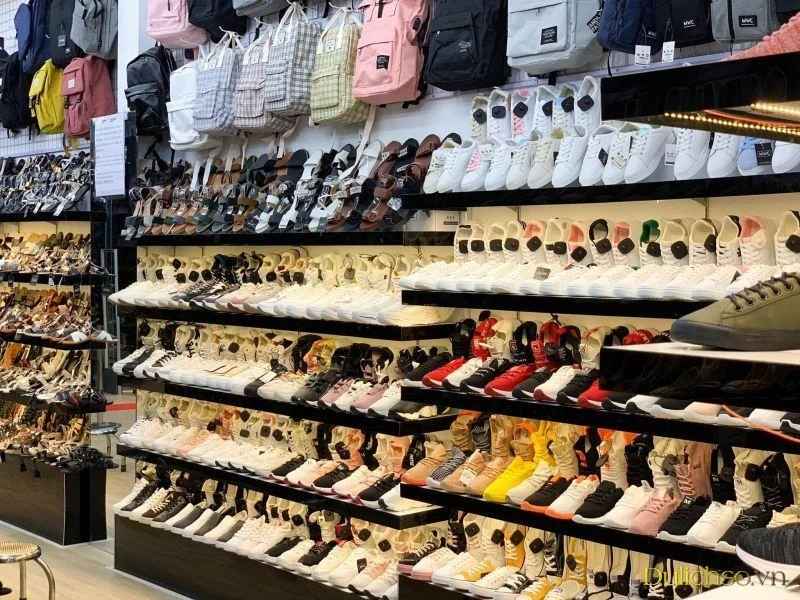
The Footwear Protocol: Visually scan the entrance area. If there is a line of shoes—remove your shoes immediately and add them to the queue. If you are uncertain—observe whether the host is wearing indoor slippers or walking barefoot. Execute whatever maneuver they are executing.
The Payload (Gifts): You must bring something. It does not require massive capital—a bag of high-quality fruit from the market, a box of imported sweets, or a specialty item from your home country is perfectly sufficient and highly valued. Present the item utilizing both hands. The host will almost never open the gift in your presence—this is a demonstration of politeness, not a lack of interest.
Contraband (Do Not Bring): Clocks or watches (symbolizing the ticking away of time/death), knives or scissors (symbolizing the severing of relationships), handkerchiefs (symbolizing funerals and weeping), or white/bright yellow chrysanthemums (flowers strictly reserved for funerals).
You do not need to memorize the entire contraband list—high-quality fruit is the mathematically flawless, failsafe option in 100% of scenarios.
Inside the House — Scanning the Environment
The Ancestral Altar: Typically positioned in the most dominant location—the absolute center of the living room, or occupying an entirely dedicated floor. This is a highly sacred zone. Do not touch it. Do not place your personal items (phone, keys, jacket) on it. Do not photograph it without requesting explicit clearance from the host.
The Seating Arrangement: Seating is typically designated or implicitly understood. Guests are routinely directed to the optimal seats—however, do not unilaterally occupy the head of the table or the seat directly facing the ancestral altar unless explicitly instructed to do so, as those coordinates frequently carry specific hierarchical meaning.
Exploring the Architecture: Unless the host explicitly initiates a tour, do not unilaterally wander around the house. The Vietnamese tube house features multiple levels—and each floor frequently operates as the private quarters for a different sub-family or generation.
The Meal — The Center of Gravity
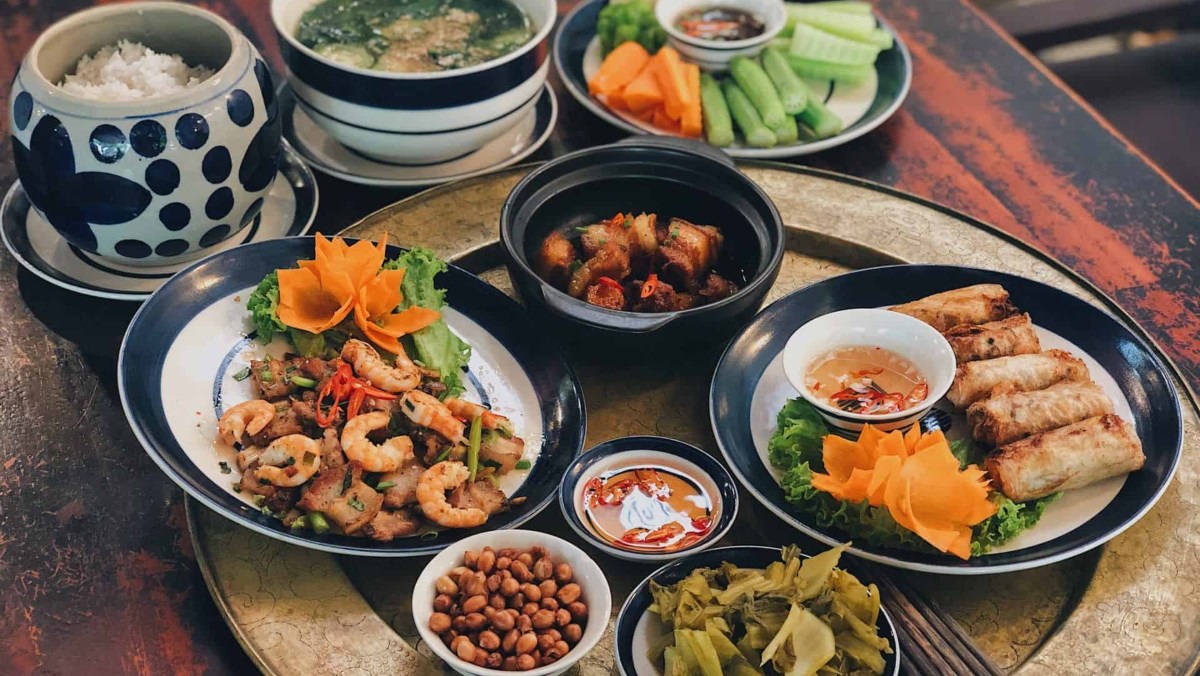
If you are authorized to stay for a meal—this is the absolute operational core of your entire visit:
The Pre-Meal Invitation: Before extracting any food, you must verbally "invite" the table to eat. A simple nod to the elders or a polite greeting is sufficient for a foreigner, but learning the specific relationship titles (uncle, aunt, older brother) to say "Mời cô chú xơi cơm" yields massive social points.
Serving Others: If you observe someone lacking a premium piece of meat, or you wish to invite them to try a specific dish, utilize your chopsticks (ideally the reverse ends if they are communal) to transfer a piece into their bowl. This is a high-level gesture of care—not a violation of their personal boundary.
The Consumption Metric: The Vietnamese—specifically the individual who cooked—experience severe psychological anxiety if a guest eats minimal amounts. The question "Why are you eating so little? Is the food bad?" is a genuine expression of panic. Eat until you are full, praise the food aggressively (it doesn't matter if it's true, as long as your delivery is sincere), and request at least one additional serving of rice.
Do Not Over-Thank: At a Vietnamese family table, continuously saying "thank you" after every single minor gesture (like someone passing the sauce) can artificially generate unnecessary social distance. A simple nod, a smile, or simply consuming the food immediately is a vastly more natural protocol.
Post-Meal — Calculating the Extraction
After the meal, the Vietnamese will typically clear the dishes and deploy a tea set. This is the visual signal transitioning the event into the conversation phase—it is absolutely not a signal that you are required to leave.
Remaining for an additional 30–60 minutes post-meal to engage in conversation is the standard operating procedure and is highly welcomed. Standing up to leave the second the meal concludes—before the tea is even poured—projects the image that you arrived exclusively to extract calories and lack any desire to connect.
When it is time to initiate your extraction, do not execute it abruptly. Provide a 5–10 minute warning—"I should probably head back soon"—allowing the host to mentally prepare and escort you to the door (a protocol that will almost certainly occur).
The Ultimate Directive — Absolute Presence
Rules and etiquette can be memorized. But the single most critical variable superseding all technical protocols is: being completely, genuinely present in that moment.
Put your smartphone face down on the table (or leave it in your pocket). Participate in the conversation despite the language firewall. Ask about the photographs displayed on the walls—who the individuals are, what the narrative is. Maintain eye contact with the elders when they speak.
The Vietnamese—like the vast majority of humans on earth—can instantly differentiate between a guest executing a polite social obligation and a guest who genuinely desires to connect. And that genuine desire, even if it cannot be expressed in flawless vocabulary, is perpetually detected and reciprocated.
A Vietnamese family dinner is not a restaurant transaction. It is an event where an individual unlocks the firewall to the most critical sector of their life. Treat the event with that level of gravity, and you will extract an experience vastly more valuable than any standard tourist itinerary.