Motorbikes — Not Merely Transportation. It Is a Way of Life
Over 74 million motorbikes for 100 million people — and every single vehicle is a story regarding freedom, livelihood, and the mechanics of conquering urban space
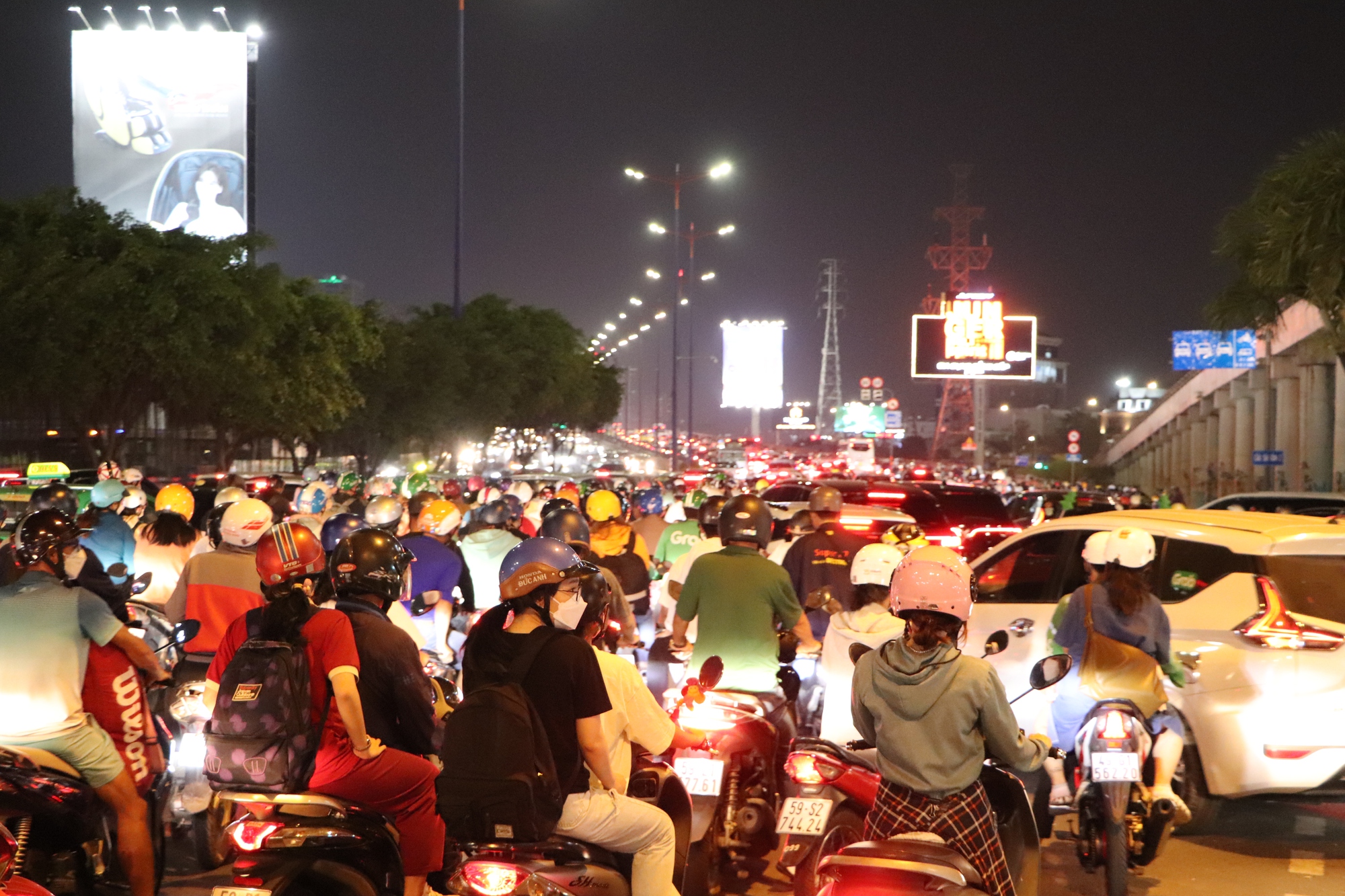
The exact moment a foreigner stands on the sidewalk of Hanoi or Saigon for the first time and observes the torrential river of motorbikes flowing past—is frequently the moment their cognitive processing halts. How exactly does one cross the street? When does a sufficient gap materialize? Are those vehicles actually planning to stop when the light turns red?
(The answer to the final question: It varies significantly depending on the intersection.)
The Vietnamese observe that exact same scene and do not perceive chaos. They perceive a system. Not a system operating according to rigid, European traffic manuals—but a system operating like water seeking the path of least resistance. It is highly fluid, capable of instantaneous adaptation, and it functions exclusively because every single participant understands the unwritten source code driving it.
74 Million Vehicles and the History Behind the Number
Vietnam was not perpetually a nation of motorbikes. During the Thời Bao Cấp (the subsidized command economy era prior to 1986), the bicycle was the absolute primary mode of transport—a motorbike was a staggeringly rare luxury asset.
The Đổi Mới reforms of 1986 detonated the economy. By the late 1980s and 1990s, Japanese and Taiwanese motorbikes began penetrating the market, followed rapidly by cheaper Chinese variants. And the Vietnamese populace—having endured decades of extreme material deprivation—began purchasing them aggressively.
Why the motorbike and not the automobile? Because the physical infrastructure at the time (and largely today) was fundamentally hostile to mass automobile adoption. Because the price point of a motorbike aligned with the emerging middle-class income. Because a motorbike can penetrate deep into microscopic alleyways that an automobile cannot physically enter. And because—most pragmatically—you do not require a massive parking infrastructure.
The motorbike is the flawless logistical solution to the terrain and economics of urban Vietnam. It is absolutely not a coincidence that 74 million of them are currently operational.
The Motorbike as an Economic Engine, Not Merely Transport
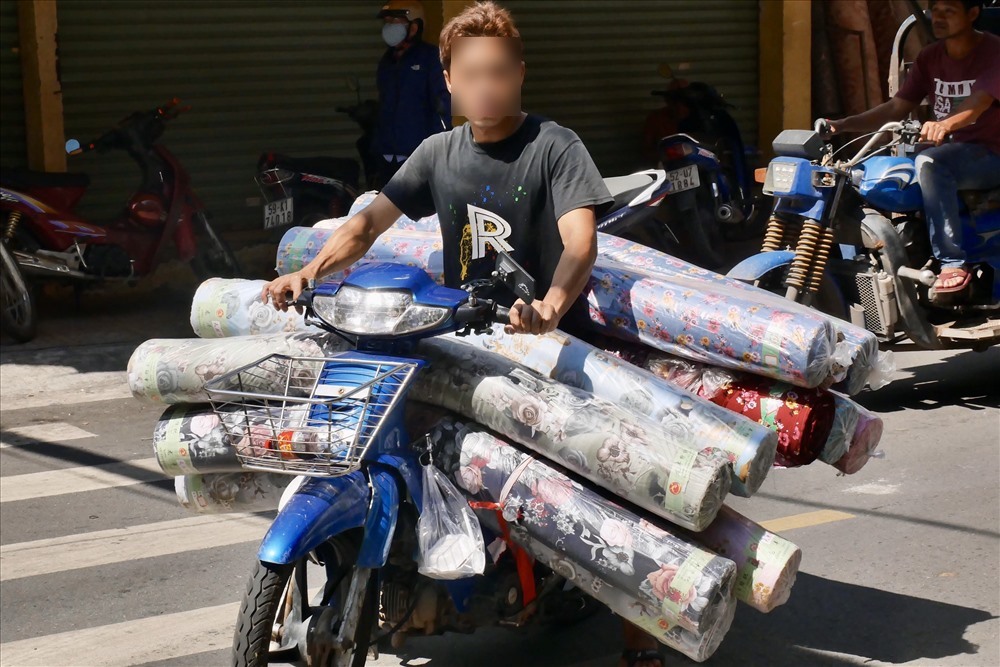
The visual documentation of the Vietnamese transporting impossible payloads on motorbikes is an entire genre of photography: an entire family of four (father, mother, two children) balanced on a single vehicle. A full-sized refrigerator strapped to the rear rack. A tower of merchandise towering above the rider's helmet. Live pigs secured in steel cages flanking the exhaust.
This is not reckless thrill-seeking. It is economic survival mechanics. For millions of individuals, the motorbike is not merely a vehicle to commute to an office—it is the commercial asset that generates their survival.
The traditional xe ôm (motorbike taxi)—long before the existence of Grab—financially sustained hundreds of thousands of families. Applications like Grab and Be have currently systematized the industry, but the core reality remains identical: the motorbike represents the lowest possible capital requirement for an entrepreneurial startup.
E-commerce deliveries exploding? Need to access a deeply recessed residential address? Transporting construction materials into a microscopic alley? The motorbike can execute all of these operations—and the pilot will engineer a method to make it fit.
The Tactical Art of Crossing the Street
If you arrive in Vietnam for the first time and require the ability to cross a street—this is the actual, functional operating manual:
Do not wait for the street to empty. On major arteries, the street will literally never be empty enough to grant you a Western-style crossing window.
Walk with a steady, predictable velocity. Do not stop abruptly in the middle of the flow. Do not run. Maintain a constant pace and trajectory so the riders can calculate their vectors around you.
Establish eye contact with the incoming riders. Look directly into the eyes of the pilot—it is a non-verbal tactical agreement: "I am proceeding; you acknowledge my presence."
Draft behind a local if possible. Simply shadow an elderly Vietnamese woman boldly stepping into traffic—you will survive.
After several successful operations, you will internalize the logic of the flow. It is not chaos—it is simply operating on algorithms that you were never previously taught.
When the Motorbikes Disappear — The Anxiety No One Openly Discusses
Numerous major urban centers—spearheaded by Hanoi—have initiated aggressive discussions regarding the restriction or total ban of motorbikes within the city core as a strategy to mitigate lethal traffic congestion and air pollution.
On paper, constructing metro lines, deploying rapid transit buses, and eliminating motorbikes is the correct trajectory for a modern metropolis.
However, the reality on the ground is brutally complex: 74 million motorbikes equate to 74 million engines of livelihood and mobility for the low- and middle-income demographic. A metro line successfully transports a human from Point A to Point B along a fixed axis—but it cannot replace the micro-flexibility of a motorbike diving into a 2-meter-wide alley at 6:00 AM to deliver inventory or extract a passenger.
This equation currently lacks a flawless solution. And the Vietnamese—who have integrated the motorbike into their biological rhythm since the 1990s—view this hypothetical future with profound, conflicted emotion.
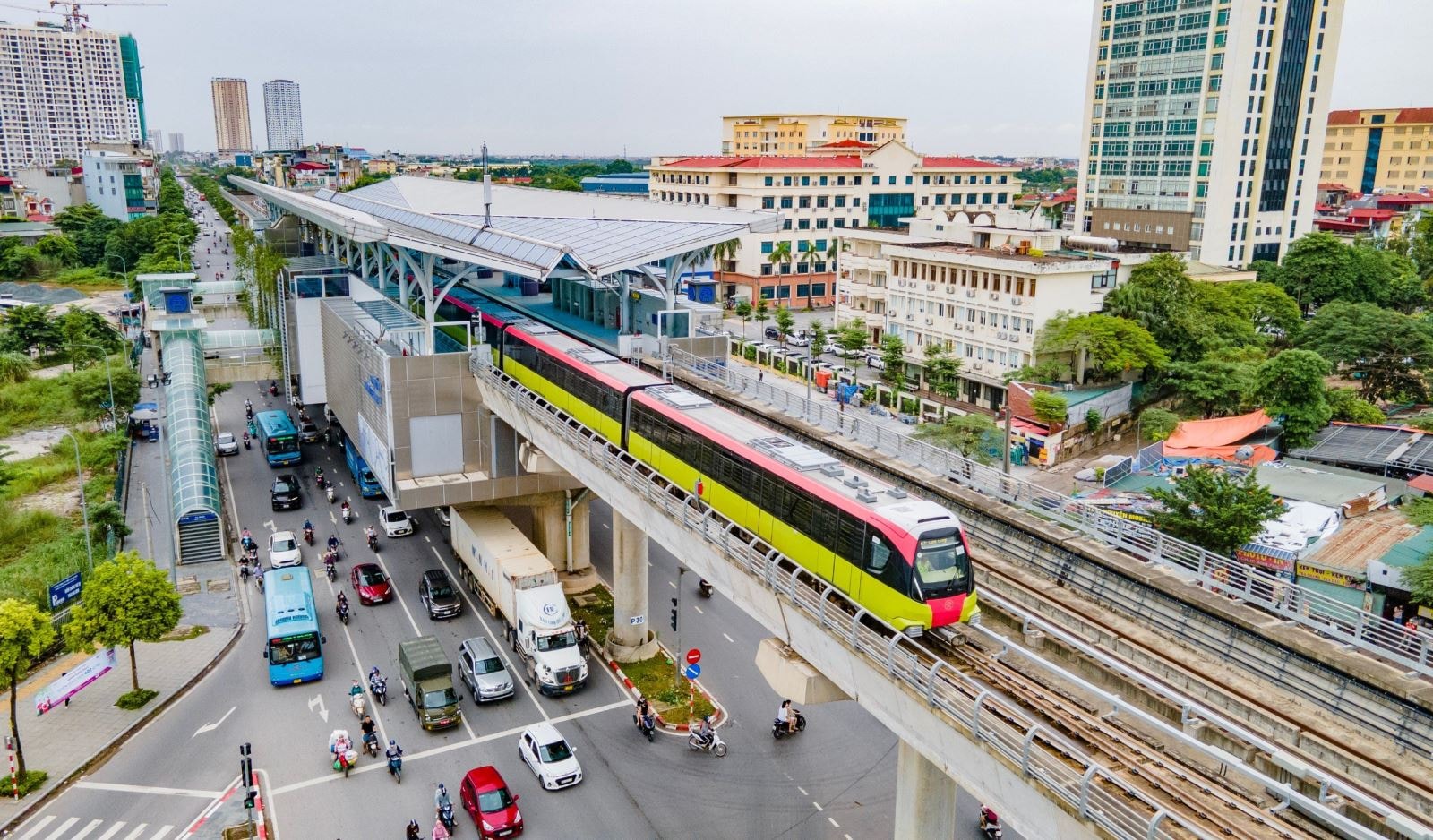
They desire a cleaner, less congested metropolis. But they simultaneously desire to retain the absolute freedom of mounting a vehicle and traveling anywhere, at any hour, via any route imaginable.
It is not an unsolvable paradox. But resolving it will require massive time, massive capital, and the fundamental understanding that traffic infrastructure is not merely concrete and steel—it is culture.