The Philosophy Behind Vietnamese Cuisine — It Is Not Just About Taste
Before eating, the Vietnamese ask: is this dish hot or cold, sour or sweet, fishy or rich? This is not a question of palate — it is a question of equilibrium
There is a silent examination that Vietnamese mothers administer to their prospective daughters-in-law—never formally announced, yet the results are occasionally more critical than any official conversation. It is the kitchen test.
It is not merely a test of whether she can cook delicious food. It is a test of: Does she understand exactly why she is cooking this specific ingredient?
Why must ginger accompany fish? (Because the "heating" property of ginger neutralizes the "cooling" property of fish.) Why is Thai basil absolutely mandatory in a bowl of spicy Hue beef noodle soup? (Because the soup is violently hot, and the basil provides the cooling balance.) Why do we eat sour soup in the blistering summer but rarely consume winter melon soup in the freezing winter? (Sour soup releases body heat, while winter melon is cold-natured and can induce illness if the body is already chilled.)
This is not folklore or superstition. This is a highly sophisticated, philosophical operating system for health and nutrition that the Vietnamese have engineered and ruthlessly refined over thousands of years.
Yin and Yang in a Rice Bowl
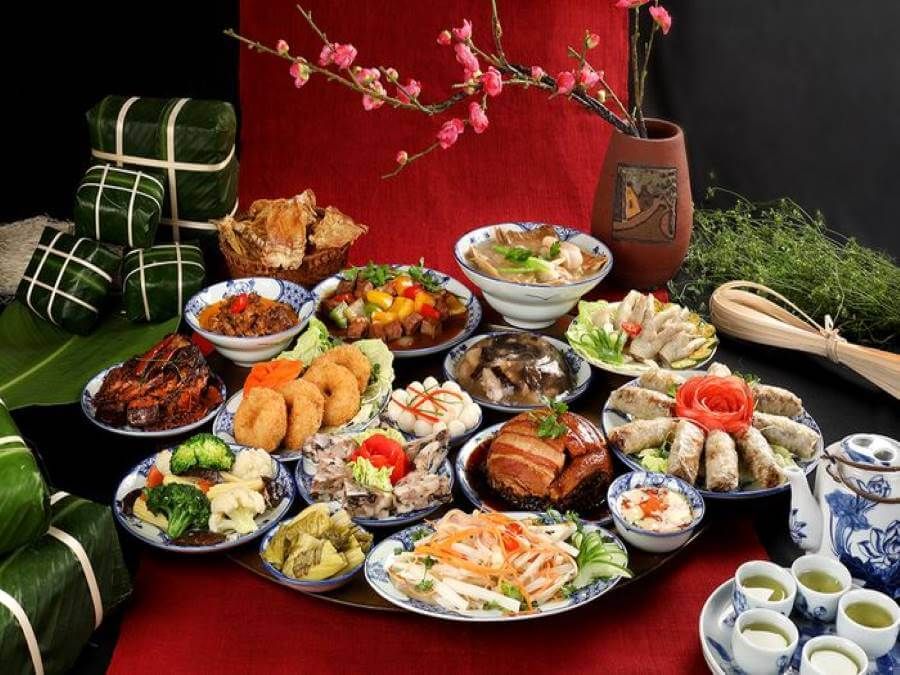
The foundation of Vietnamese culinary philosophy is not calculated in calories or macronutrients. It is calculated via Yin and Yang (Âm Dương)—the ancient Asian principle of opposing equilibrium, which the Vietnamese have forcefully adapted into daily culinary practice.
Everything consumed is strictly categorized:
Heating Foods (Yang): Ginger, garlic, chili, beef, dog meat, durian, lychee, longan. Excessive consumption triggers internal heat, acne, and a parched throat.
Cooling Foods (Yin): Water spinach, watermelon, crab, snails, winter melon, bitter melon. Excessive consumption induces stomach cramps, diarrhea, and severe lethargy.
The elite Vietnamese cook is the one who masterfully navigates this balance: pairing a "hot" ingredient with a "cool" counterpart, constantly adjusting the menu according to the macro-season (cooling foods in summer, heating foods in winter) and the micro-state of the human body (currently ill, recovering, or exhausted from physical labor).
They do not require a degree in traditional medicine. The Vietnamese absorb this through relentless observation—grandmothers teaching mothers, mothers teaching daughters—forged entirely in the kitchen, through decades of practical application.
The Five Flavors — A Symphony in a Single Bowl
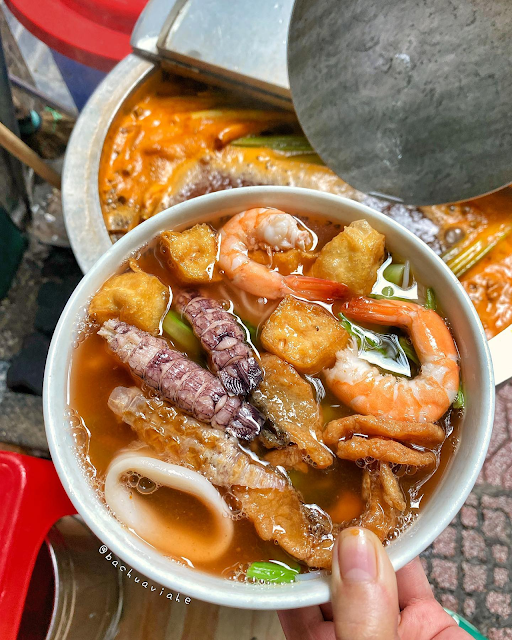
Vietnamese cuisine relentlessly pursues the Five Flavors (Ngũ Vị)—the foundational taste profiles—within a single dish or a comprehensive meal:
- Sour — derived from tamarind, lime, vinegar, star fruit, tomatoes
- Spicy — derived from chili, black pepper, ginger
- Salty — derived from fish sauce, salt, fermented soybean paste
- Sweet — derived from sugar, specific herbs, slow-simmered bone broth
- Bitter — derived from bitter greens, bitter melon, specific leaves
Consider a bowl of Pho: The broth delivers deep sweetness from hours of simmering bones and charred onions. Fish sauce and salt provide the sharp saline base. A squeeze of lime and pickled garlic introduce the sour acid. Fresh chili detonates the spice. Basil and cilantro add a slightly bitter, herbaceous high note. A flawless bowl of Pho is a synchronized symphony of all five elements—no single note dominates; they all surrender to the harmony.
This explains why the Vietnamese are so brutally critical regarding Pho broth. It is not culinary arrogance. They are actively evaluating a complex musical composition—did the chef achieve perfect equilibrium?
The Five Colors — Eating with Your Eyes Before Your Mouth
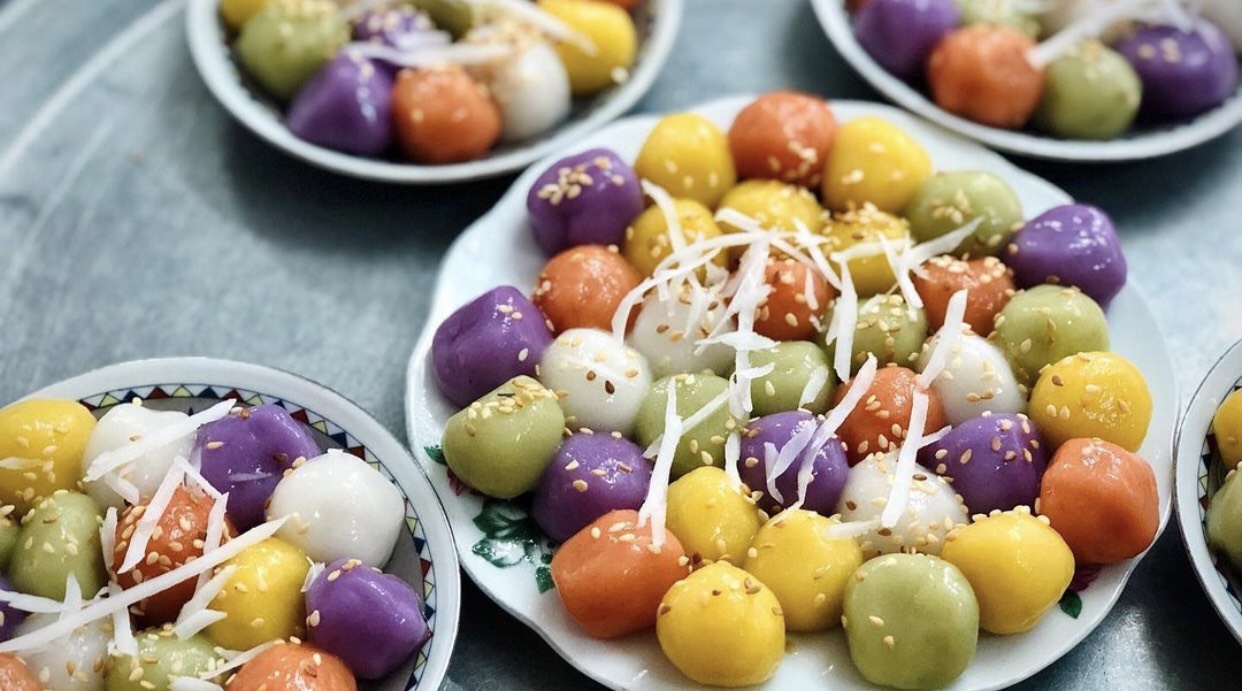
Mirroring the five flavors, Vietnamese cuisine also aggressively targets the Five Colors (Ngũ Màu)—five distinct visual hues representing the five vital organs and the five elemental energies in traditional medicine:
- Red — targets the heart and cardiovascular system
- Yellow — targets the spleen and stomach (digestion)
- Green — targets the liver
- White — targets the lungs
- Black/Purple — targets the kidneys
A meal boasting all five colors theoretically delivers comprehensive nutrition to the entire internal organ system. Surprisingly, this ancient philosophy operates remarkably close to cutting-edge nutritional science—a vast spectrum of vegetable colors directly correlates to a vast spectrum of vital phytochemicals.
A Vietnamese grandmother who has never heard the word "phytochemical" will instinctively instruct her grandchildren: "A meal must have all these different colors to actually keep you alive." And she is absolutely correct—it is merely a different translation of the exact same science.
Fresh Herbs — The Forgotten Soul of Vietnamese Cuisine
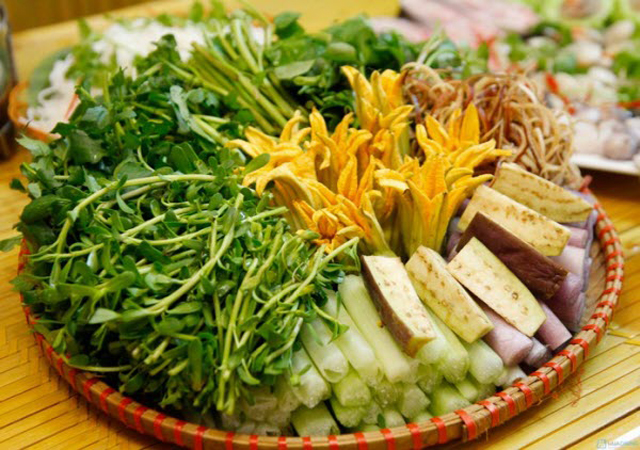
The singular element that most aggressively separates Vietnamese cuisine from almost every other global culinary tradition is not a cooking technique—it is the obsessive culture of fresh herbs (rau thơm).
A massive platter of raw, fragrant leaves accompanies virtually every Vietnamese meal: Thai basil, spearmint, perilla, Vietnamese balm, cilantro, fish mint, sawtooth herb. These are absolutely not decorative garnishes. They are structural, non-negotiable components of the dish—holding equal status to the meat or the fish sauce.
You do not simply eat Hue beef noodle soup—you eat it in active collaboration with a mountain of fresh herbs that you tear by hand and submerge into the boiling broth according to your exact personal specification. The dish is fundamentally incomplete without the herbs—and this dynamic explicitly grants the eater the power to customize their own sensory experience.
It is a profound culinary philosophy: the chef provides the foundation, but the diner executes the final masterpiece. You are not a passive consumer—you are an active participant in the final architecture of the flavor.
Eating According to the Season, Eating According to the Body
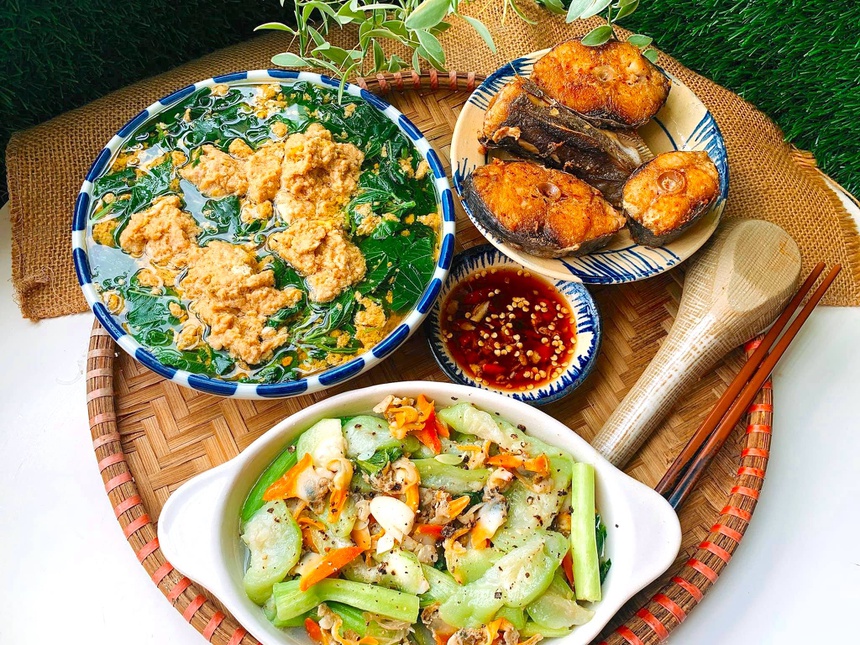
Long before globalized supermarkets permitted the purchase of watermelons in December and broccoli in July, traditional Vietnamese cuisine was ruthlessly tethered to the agricultural seasons. This was not due to a lack of options, but driven by a core philosophy: consuming exactly what nature produces at that specific moment is the ultimate method to synchronize the human body with the earth.
Summer: Sour soups, vibrant salads, massive quantities of raw greens, cooling fruits (watermelon, dragon fruit). The external environment is blazing hot—you consume "cool" items to neutralize it.
Winter: Boiling hot pots, ginger congee, heavy braised pork, slow-simmered bone stews. The external environment is freezing—you consume "hot" items to fortify the core.
Recovering postpartum: Mung bean porridge, chicken soup aggressively spiked with ginger and turmeric. The traumatized body requires gentle, warming sustenance.
A child battling diarrhea: Plain white rice congee with toasted sesame salt. Astringent, hyper-simple, easily digested.
That folk medical matrix—absent from official Western medical textbooks but ruthlessly tested and refined across hundreds of generations—operates vastly closer to modern nutritional science than anyone realizes.
Fish Sauce — The Gravitational Center of the Vietnamese Culinary Universe
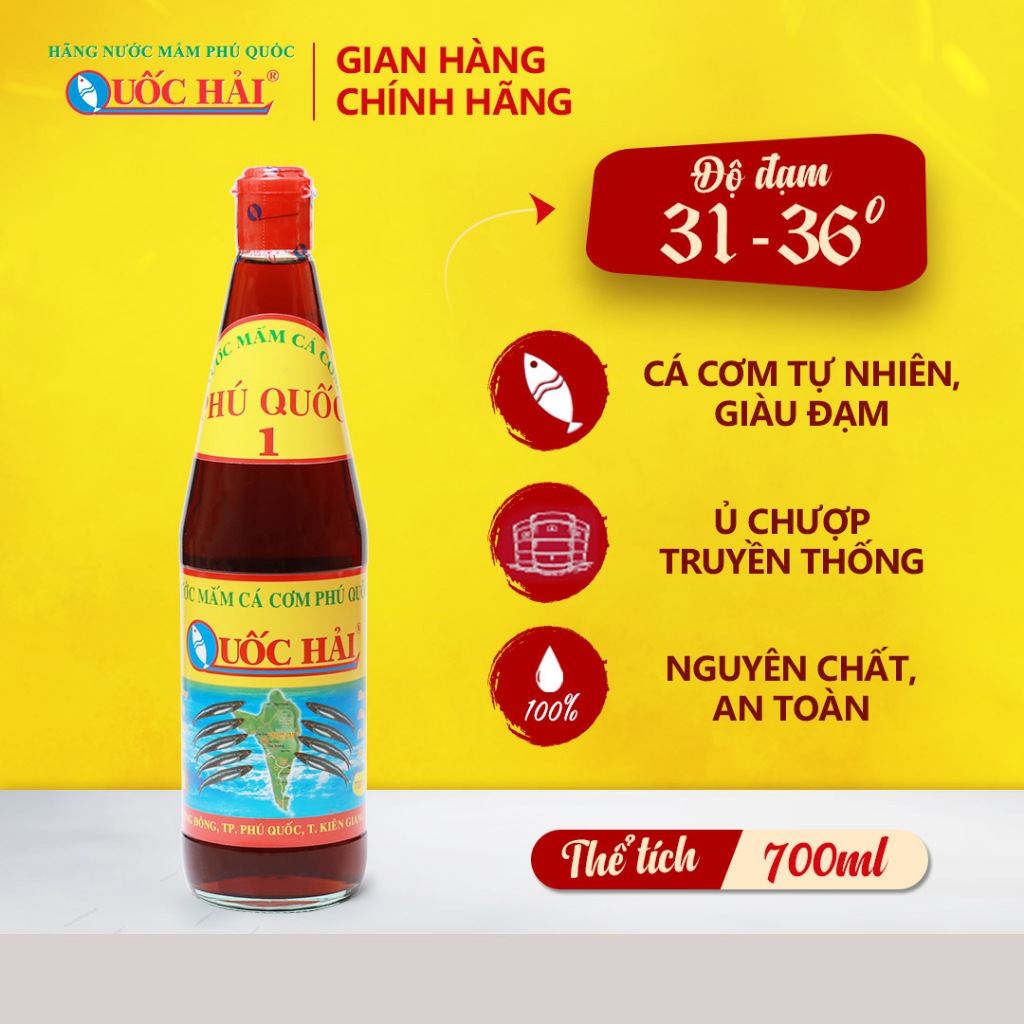
Any comprehensive discussion regarding Vietnamese cuisine that fails to center on fish sauce (nước mắm) is fundamentally fraudulent.
Fish sauce is the liquid extracted from anchovies aggressively fermented in sea salt over a massive span of time—a minimum of several months, with premium variants aging for one to two years. The mechanical process is primitive, but the biochemical result is staggering: a translucent, amber-colored liquid harboring the most profound depth of flavor in the entire Vietnamese arsenal.
It is salty, yes, but it is never merely salty. It possesses overwhelming umami—the elusive fifth taste that the Japanese formally identified, but which the Vietnamese had been utilizing centuries before the word existed. When premium fish sauce is introduced into a dish, it does not trigger the thought "this is salty"—it triggers the thought "my god, why is this so incredibly delicious?" without you being able to isolate exactly why.
Foreigners encountering pure, unadulterated fish sauce for the first time frequently experience a violent olfactory reaction. That is entirely understandable—it is an alien scent profile. But to those who are accustomed to it—and specifically to those who were raised on it—it is physically impossible to imagine their cuisine existing without it.
This is precisely why the Vietnamese diaspora will aggressively pack bottles of fish sauce in their luggage when traveling overseas. It is not because foreign countries lack salt or soy sauce. It is because fish sauce is not merely a condiment—it is a liquid memory. It is the exact scent of home.
Vietnamese cuisine is not merely a disorganized collection of delicious recipes. It is a highly sophisticated, interlocking philosophical system regarding health, the human body, and the brutal relationship between humanity, nature, and time. It is a philosophy documented not in leather-bound volumes, but across millions of dinner tables; taught not in universities, but in sweltering kitchens, passed relentlessly from one pair of hands to the next.
And that specific system, even if you are entirely ignorant of its terminology, is actively operating every single time you sit down to eat with a Vietnamese family and quietly realize: I have absolutely no idea why, but this is the most profoundly comforting food I have ever consumed in my life.