Why the Vietnamese Ask Your Age Within 5 Minutes of Meeting You
This is not invasive curiosity — it is a structural necessity before a genuine conversation can even begin
Imagine you have just been introduced to a Vietnamese person for the first time. Following the initial handshake or nod of greeting, before you even have the opportunity to offer another word, the other person asks:
"How old are you?"
If you were raised within a Western cultural framework, this is a question you typically only encounter in two highly specific scenarios: filling out an employment application, or being examined by a physician at a clinic. In standard, polite social interaction, bluntly asking someone's age is simply not done.
To the Vietnamese, however, this is a question of pure, unadulterated pragmatism. They do not need to know your age to judge you or out of idle curiosity. They need to know your age so they know what pronoun to use when addressing you.
And this is precisely the moment you begin to understand why the Vietnamese language perpetually forces foreign learners to pause and emit a long, exhausted sigh.
The Fundamental Problem: Vietnamese Lacks a Neutral "I" and "You"

English resolves social communication through a flat, democratic lens: I am "I", and you are "you." It is entirely irrelevant whether you are speaking to the Prime Minister or a five-year-old child—the pronouns remain "I" and "you."
The Vietnamese language operates on a fundamentally different architecture. Every single time you open your mouth to speak, you must simultaneously calculate:
- How much older is the person standing across from you?
- What is your precise relationship to them (family, friend, colleague, total stranger)?
- Is the context of this conversation formal or intimate?
The answers to those three variables dictate the pronouns you will utilize for the entirety of the conversation.
Here is an aggressively abbreviated list—covering only the most common scenarios:
| When speaking to... | You address them as | You refer to yourself as |
|---|---|---|
| Someone significantly older (grandparent generation) | Ông / Bà (Grandfather/Grandmother) | Con / Cháu (Child/Grandchild) |
| Someone older by a generation (parent generation) | Chú / Cô / Bác (Uncle/Aunt) | Con / Cháu |
| Someone slightly older | Anh / Chị (Older brother/sister) | Em (Younger sibling) |
| Someone the same age or younger | Bạn / Em (Friend/Younger sibling) | Tớ / Mình / Tôi (I) |
| A highly formal or completely alien context | Quý vị / Ngài (Sir/Madam) | Tôi (I) |
The "Bạn" Trap That Trips Up Foreigners
Foreigners studying Vietnamese are initially taught that "bạn" = "you" and "tôi" = "I". Technically, according to the dictionary, this is correct. However, in the reality of Vietnamese communication, utilizing "tôi" and "bạn" with absolutely everyone is not perceived as neutral—it frequently sounds cold, distant, and occasionally quite bizarre.
Imagine this scenario: You are 25 years old, conversing with a 70-year-old woman selling beef noodle soup (bún bò). If you say "Bạn cho tôi một tô" (You give me a bowl)—that sentence is grammatically flawless, but addressing that elderly woman as an equal "friend" is something no Vietnamese person would ever do. The culturally correct phrasing is: "Bà cho con một tô" (Grandmother gives child a bowl)—you address her as "grandmother" and refer to yourself as "child."
This may sound trivial. But every single time an individual deploys the correct pronoun, they are broadcasting a clear signal: "I recognize exactly who you are in relation to me. And I respect that hierarchy."
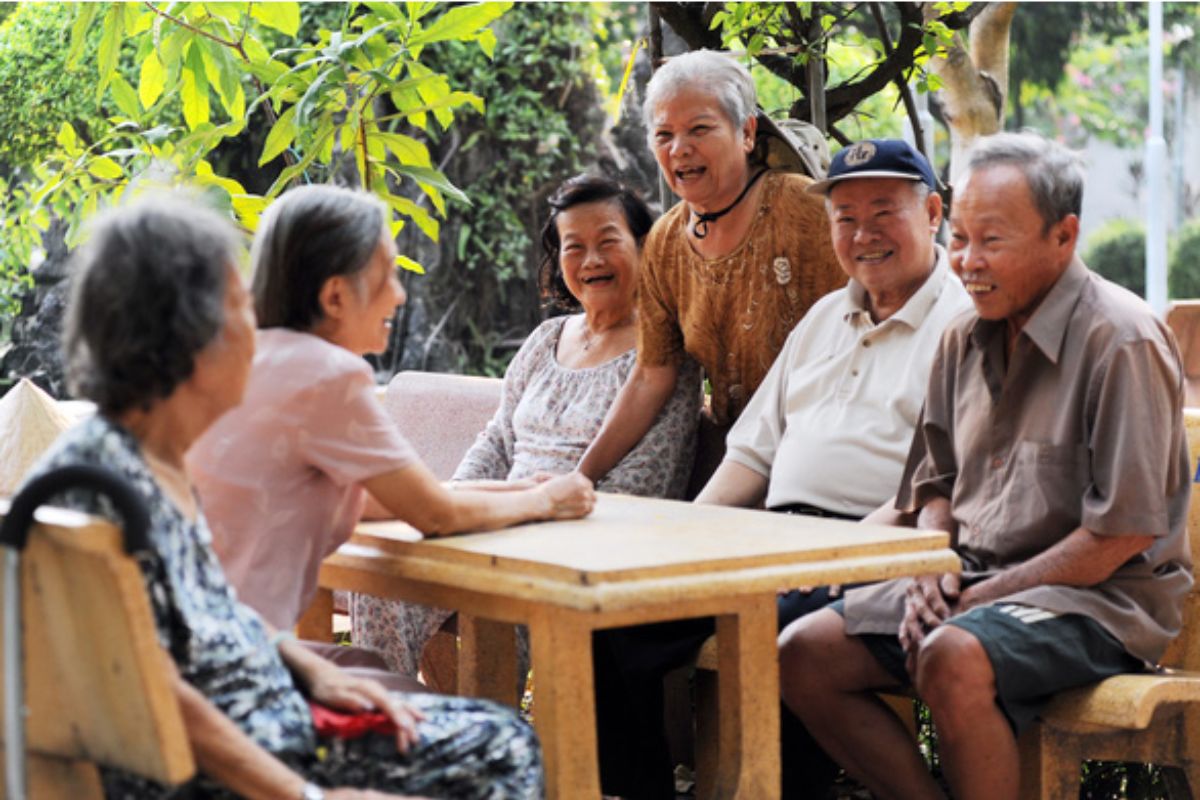
Conversely, every time the wrong pronoun is utilized—such as addressing an elder as "bạn"—no one will react with explosive anger. The Vietnamese are generally polite enough to refrain from correcting you to your face. However, there will be a subtle, discordant friction in the conversation that any socially astute observer can immediately detect.
Why the Entire Society is Transformed Into a Family
There is a much deeper sociological explanation as to why this pronoun system exists—and it transcends mere linguistics.
Traditional Vietnamese society is not organized around the individual; it is organized around an intricate network of relationships. You are not an independent, isolated atom—you are a node within a web of reciprocal obligations and privileges.
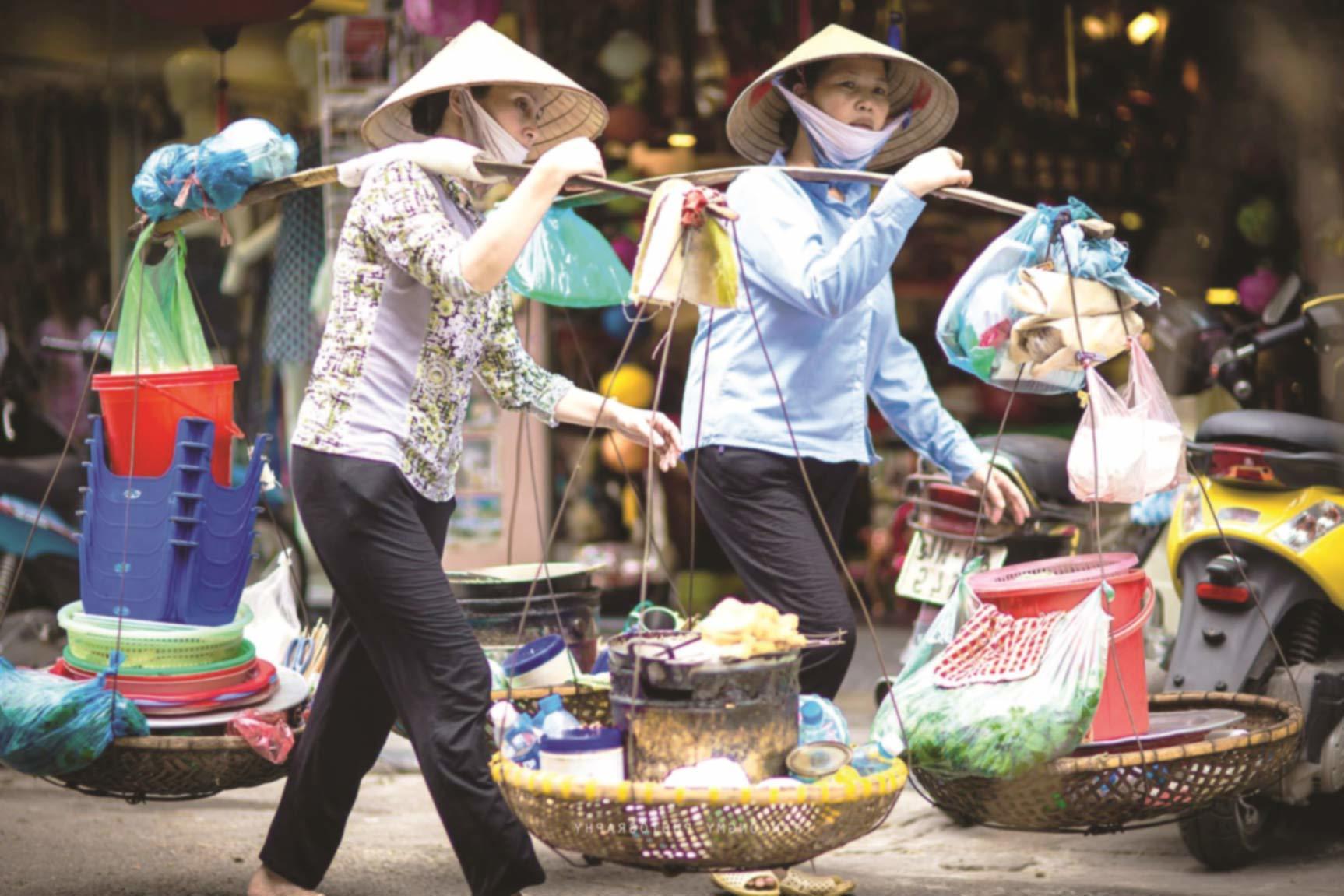
When you address an elderly street vendor as "cô" (aunt) or "chú" (uncle)—you are not simply deploying a pronoun. You are actively placing them within that network, implicitly stating: "I am acknowledging you as a member of my extended human family, not as an alien stranger."
And the fascinating psychological byproduct is: when you address a stranger selling goods as "chú", the probability is exceptionally high that they will serve you better and with greater warmth. Not because they are being manipulated. But because that specific term of address genuinely triggers a latent sense of responsibility toward a "nephew" or "niece"—even if the transaction only lasts for three minutes.
What Happens When You Don't Know Each Other's Age
And this precisely explains the "How old are you?" question within the first five minutes: the Vietnamese require that specific data point to initiate the conversation correctly.
If they do not know your age, they are forced to guess—and guessing incorrectly can trigger extreme awkwardness. Addressing someone older than you as "em" (younger sibling) is disrespectful. Addressing someone younger than you as "anh/chị" (older sibling) is... not technically an insult, but it is deeply weird.
Therefore, asking your age directly is the fastest, most ruthlessly pragmatic solution. There is zero hidden agenda behind the question. It is purely an acquisition of data.
The practical takeaway for foreigners: The Vietnamese fully understand that you were raised under a different set of rules. They will not be offended if you reply, "I'm not comfortable sharing my age"—they will mentally recalculate and find a workaround. But if you answer the question directly, it sends a highly positive signal: you are comfortable engaging with their communication style, and the social door swings open just a little bit wider.
A Brief Survival Guide for Foreigners
If you only manage to remember one single rule: Use both hands when giving or receiving absolutely anything—a business card, money, a gift. This is a universal gesture of respect across nearly all social interactions.
If you have the capacity to remember one more: When interacting with someone who is visibly significantly older than you—address them as "anh/chị" (if older by a few years) or "chú/cô/bác" (if older by a generation). Refer to yourself as "em". They will be absolutely delighted.
And if you find yourself utterly confused—just ask directly: "What should I call you?" (Tôi nên gọi bạn là gì?). No one will perceive that as a strange inquiry. The Vietnamese value sincerity and the visible effort to learn far more than they value grammatical perfection.