Visiting Pagodas and Temples in Vietnam — What to Do and What Not to Do
A practical guide to avoid inadvertently committing offenses in the most sacred spaces of the Vietnamese people
Unlike a museum or a standard tourist attraction, pagodas and temples in Vietnam are actively being used. Every single day, millions of Vietnamese step inside to light incense, pray, sit in absolute silence for a moment, and then leave. Not to take aesthetic photos for social media. Not to write travel reviews. But because this is where they go when they need to converse with something larger than themselves.
What that means is, when you step inside a Vietnamese pagoda—you are not merely visiting a historical relic. You are entering a living space, a space currently being utilized for its authentic, original purpose. And that reality demands a specific baseline of respect.
First: Distinguishing Between a Chùa, Đền, Đình, and Miếu
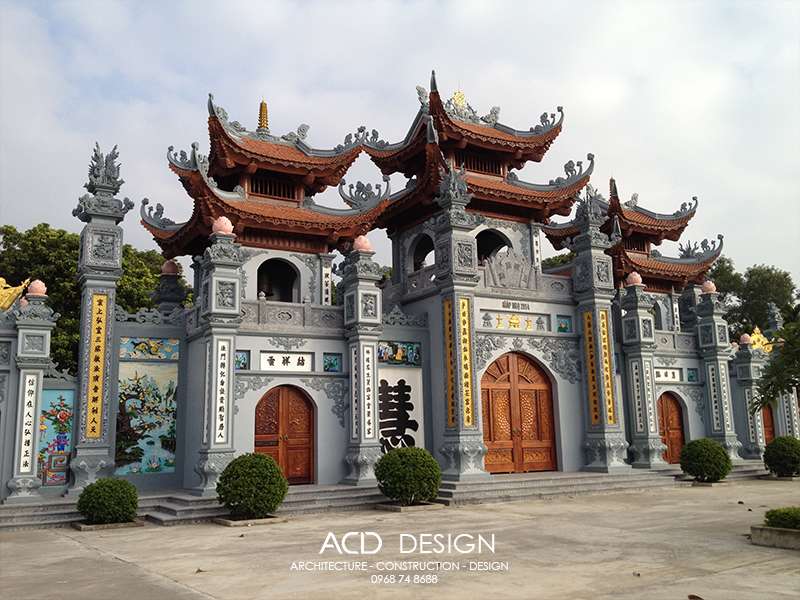
Foreigners frequently refer to all Vietnamese religious structures simply as "pagodas" or "temples"—but in reality, they differ fundamentally:
Chùa (Pagoda): Worships the Buddha. The architecture typically features a bell tower, houses Buddhist statues inside, and is managed by resident monks or nuns. The incense smoke is usually heavier, the atmosphere far more tranquil and subdued.
Đền (Temple/Shrine): Worships deities or historical figures whose immense contributions to the nation resulted in their deification (such as General Trần Hưng Đạo, the Trưng Sisters, or the Mother Goddesses). The architecture can be grander, more majestic, and heavily features the colors red and gold.
Miếu (Small Shrine): Smaller than a đền, usually dedicated to local spirits, earth gods, or mountain deities. You might encounter them on a street corner, at the entrance to a village, or deep in a forest.
Đình làng (Communal House): The epicenter of community life in ancient Vietnamese villages—it worships the Village Tutelary God (Thành Hoàng làng) and functions as the village meeting hall. The đình is the "headquarters" of communal memory.
Understanding the difference helps you realize exactly where you are standing and who you are visiting—even if you cannot see them.
Attire — A Simple But Critical Rule
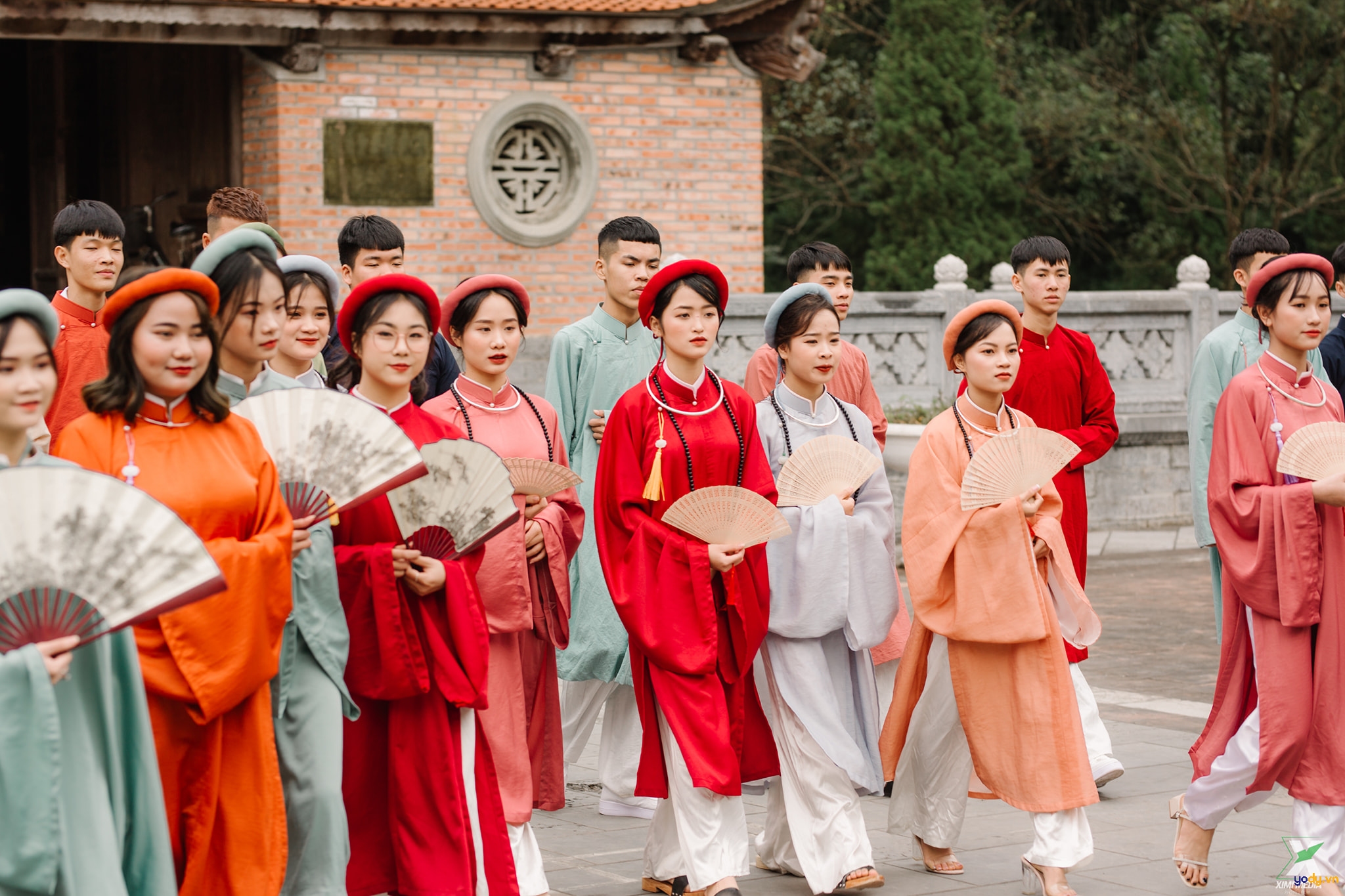
This is the most universal rule, and easily the one violated most frequently:
Cover your shoulders and cover your knees. Do not wear off-the-shoulder tops or tank tops, and do not wear short shorts. If you arrive at a pagoda wearing summer tourist attire, many major temple gates will offer shawls or wraps to borrow. But it is infinitely better to come prepared.
You do not need to wear specific colors. You are not required to wear white or the brown robes of the monks. Standard, modest street clothing is perfectly sufficient.
Do not wear clothing with offensive imagery or text. A t-shirt emblazoned with a skull and crossbones, or featuring profanity in English—even if you assume no one can read it—is entirely inappropriate.
Stepping Into the Sacred Space — What You Must Do
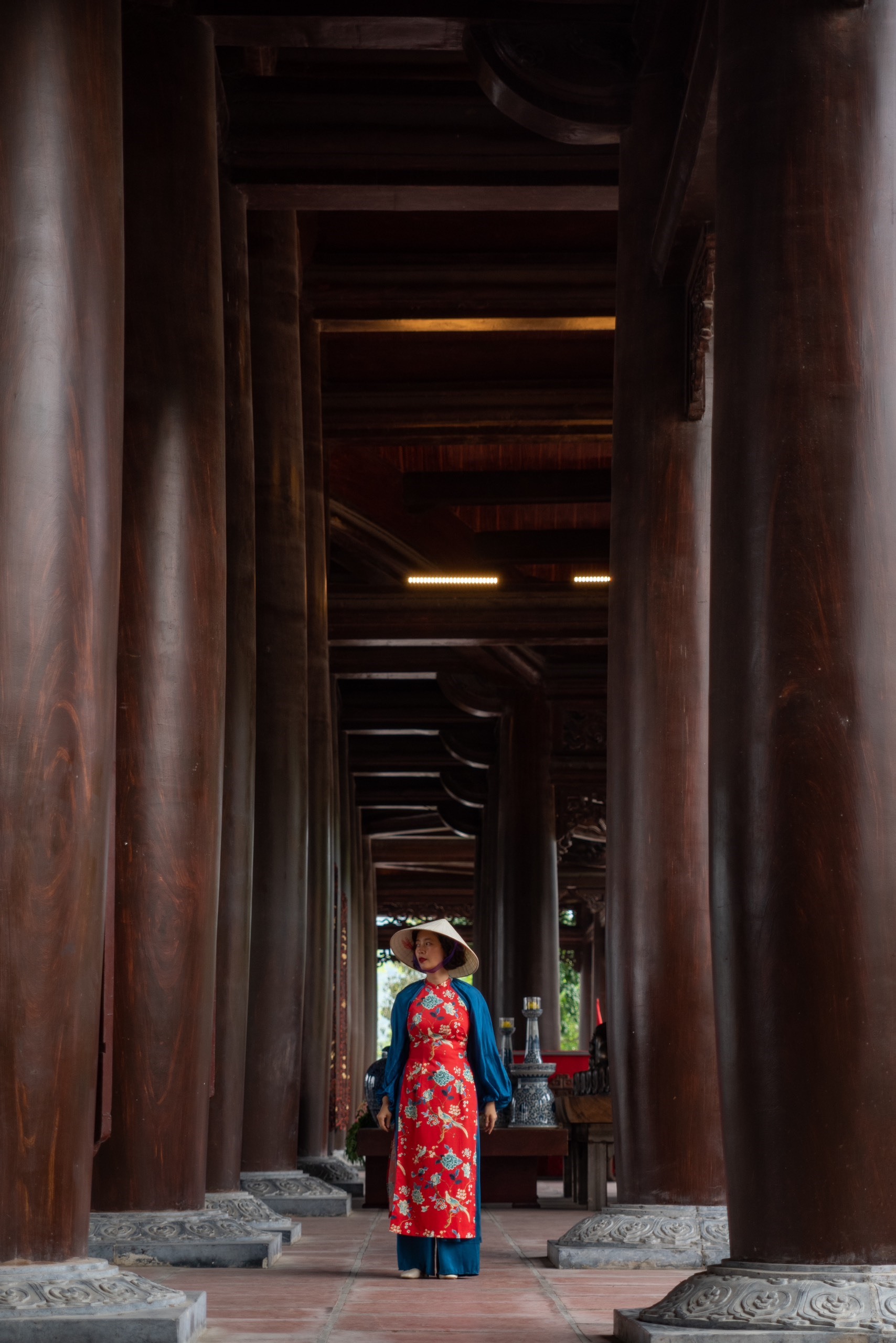
Remove your shoes: Many pagodas and temples mandate the removal of footwear at the entrance to the main sanctuary. Look down at the floor outside the door—if you see a line of sandals and shoes neatly arranged, you know exactly what is required. If you are unsure, just take them off—no one will be surprised.
Step OVER the threshold: Vietnamese tradition dictates that you never step ON the raised wooden threshold (ngưỡng cửa) at the base of the doorway. According to folk belief, this is where the threshold deities reside. Step over it, never onto it.
Do not point your finger at the Buddha or deities: In many Asian cultures, pointing a direct finger at a sacred statue is considered an aggressive, disrespectful gesture. If you wish to take a photograph, ask permission first or gesture with an open palm.
Bow your head or clasp your hands: When standing before an altar or a statue, the Vietnamese will typically press their palms together in front of their chest and bow their head slightly. You are not required to do this—but if you understand the meaning and wish to display respect, it is a highly appropriate gesture.
Lighting Incense — A Ritual You Are Welcome to Join
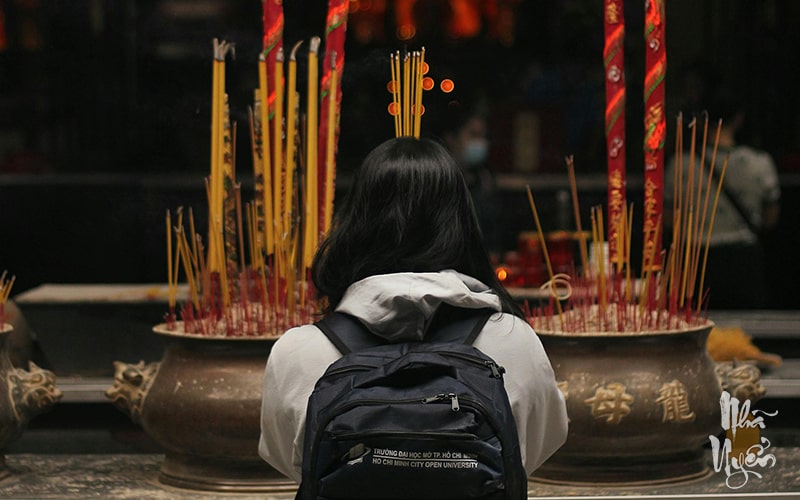
If you wish to light incense—that is entirely welcomed. Here is how to do it properly:
- Acquire incense at the pagoda/temple entrance (it is usually sold for a nominal fee or offered for free)—typically a small bundle of sticks.
- Ignite the tip of the incense using the provided oil lamp or lighter until it catches a real flame, then gently waft it to extinguish the flame (do not blow it out with your mouth—blowing with your breath is considered disrespectful).
- Hold the incense with both hands, clasping it between your pressed palms at chest level.
- Bow your head, and either speak or silently focus on what you wish to pray for.
- Plant the incense into the burner—ensuring it stands straight up.
What you pray for: is entirely your prerogative. The Vietnamese typically pray for health, peace, prosperity, success in exams, or simply to express gratitude for a safe year. There is no mandatory script or formula.
Note: Do not extinguish the incense once it is planted. Allow it to burn down naturally to the end.
What You Should NEVER Do
Do not take photographs indiscriminately: Many main sanctuaries strictly prohibit photography—the warning sign is usually hung right at the entrance. Read the rules or ask the caretaker first. In areas where photography is permitted, turn off your flash and absolutely do not strike "tourist poses" directly in front of the altar.
Do not speak loudly, do not laugh raucously: Inside the main sanctuary, the atmosphere is usually deeply silent. You are not absolutely forbidden from speaking, but keep your voice to a hushed whisper.
Do not touch the statues or altar objects: Especially ancient statues and precious artifacts—beyond being deeply disrespectful, you could cause irreparable physical damage.
Do not sit on the steps or the altars: This sounds glaringly obvious, but a surprising number of people choose the raised steps of the pagoda or the base of a statue as a convenient place to rest their feet.
Do not bring food into the sanctuary.
When Witnessing a Ceremony — Should You Watch or Join?
There will be occasions when you visit a pagoda and stumble upon an active ceremony—monks chanting, a hầu đồng spirit medium ritual, or a massive communal offering. Here is what you should do:
Stand or sit at a distance, observing from the perimeter. Do not bulldoze your way into the center of the praying crowd just to get a close-up photograph.
Silence your phone. Absolutely no one wants the abrasive ringtone of a smartphone to shatter the atmosphere right in the middle of chanting the Buddha's name.
If you are invited to join: Accept the invitation. The Vietnamese are usually deeply thrilled when a foreigner is willing to participate in their rituals with genuine sincerity. This is the definition of building a cultural bridge.
The Most Frequently Asked Questions
"I am not a Buddhist — am I allowed to enter the pagoda?" Absolutely. Vietnamese pagodas do not demand adherence to the faith. You are merely required to dress modestly and behave respectfully.
"Do I have to bow and light incense?" It is not mandatory. But if you choose to do so, it is a gesture of respect that will be highly appreciated.
"Is it free to enter the pagoda?" The vast majority of pagodas and temples do not charge an admission fee—but there is almost always a donation box (thùng công đức). Slipping a small bill inside is standard custom and helps maintain the facility.
"What is the best time to visit?" Early morning (5–8 AM) or early evening (5–7 PM) are the most beautiful, tranquil times. Midday is usually empty. The full moon and the first day of the lunar month will be packed—it is far more chaotic, but vastly more fascinating if you wish to witness the authentic atmosphere.
Step into a Vietnamese pagoda with genuine curiosity and a respectful demeanor—and you will never be an unwelcome guest there.