Inside a Vietnamese Home During Tết
From the ancestral altar to the traditional feast — the profound meanings invisible to the naked eye
There is an architectural feature in a Vietnamese home that foreign guests frequently overlook without comprehending its significance: the altar.
This is not a Buddhist altar—that is a separate entity, often situated in a private room. This is the ancestral altar—typically positioned squarely in the center of the living room, perpetually enveloped in incense smoke, perpetually displaying photographs of the deceased, perpetually adorned with fresh fruit and clean water.
When the Vietnamese declare, "The grandparents are returning for Tết," they are not employing a metaphor. They literally believe the deceased manifest in the household during momentous occasions. And the altar serves as the nexus where the two realms intersect.
Once you grasp that, you will understand why every single preparation in a Vietnamese home during Tết is executed quite literally: to welcome the returning.
Cleaning the House — It's Not Just About Hygiene
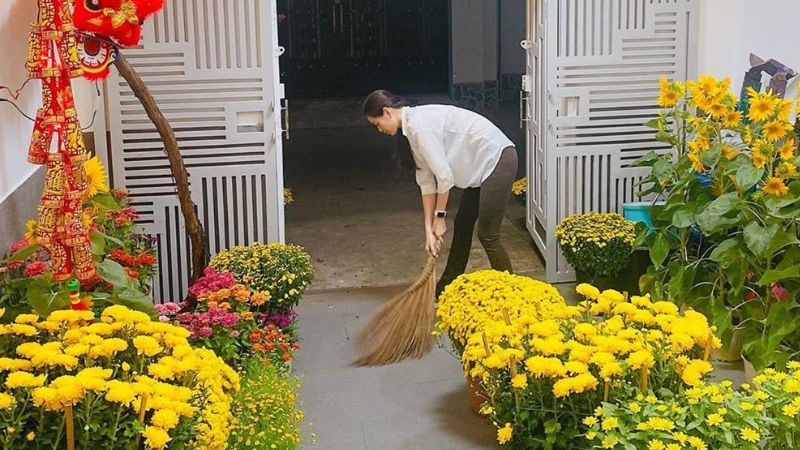
Westerners clean their homes to eradicate dirt. The Vietnamese execute a deep-clean before Tết for an entirely divergent reason: to prevent the dust of the old year from contaminating the new year. To ensure the house is pristine to receive the ancestors. To create a vacuum for new prosperity to enter.
This explains the borderline obsessive intensity of pre-Tết cleaning: it is not a superficial sweep. It involves scrubbing every concealed corner, every crevice, every cabinet joint. The altar is meticulously purified—usually by the eldest member of the household, as this is a sacred duty. The ritual vessels, the incense burner, the water bowls—all are cleansed and refreshed.
This is also precisely why, immediately following New Year's Eve, no one sweeps the floor for a minimum of three days—new prosperity has just entered, and sweeping would literally sweep it out the door. Many households maintain this taboo until the Seventh Day.
The Ancestral Altar During Tết — The Most Critical Feast of the Year
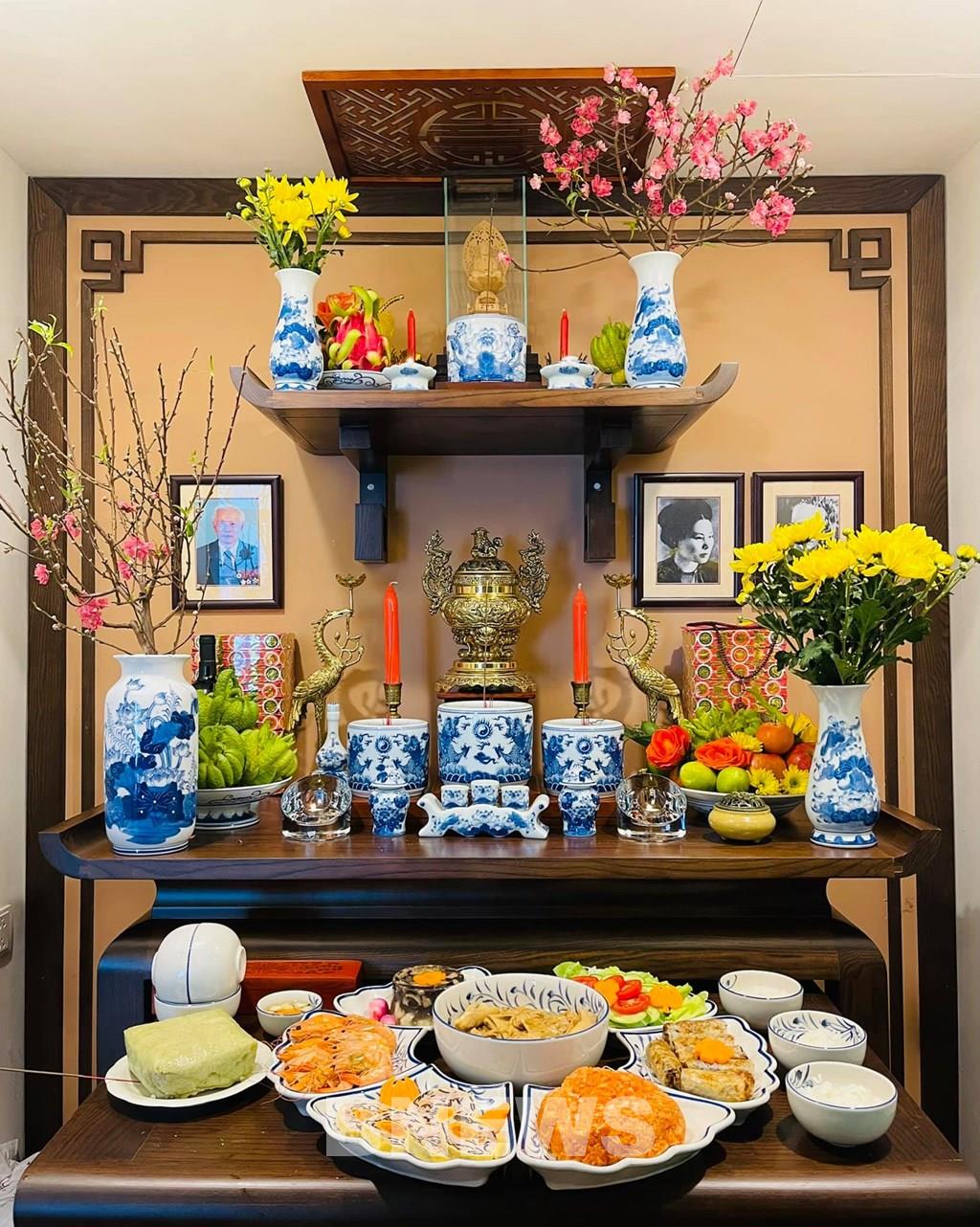
The altar is meticulously maintained year-round—but during Tết, it receives a spectacular "upgrade":
The Five-Fruit Tray (Mâm ngũ quả): Five distinct fruits arranged in a pyramidal structure on a large platter. Northerners typically utilize: pomelo, bananas, persimmons, kumquats, and apples—chosen for their vibrant aesthetics and their representation of the five elements. Southerners operate differently, frequently selecting fruits based on phonetic wordplay: cầu vừa đủ xài (praying for just enough to spend) = soursop (mãng cầu), coconut (dừa - sounds like vừa), papaya (đu đủ), and mango (xoài - sounds like xài). Northerners hearing this logic often... lose their voices in sheer bewilderment.
Bánh chưng or bánh tét: Placed in odd numbers—3, 5, or 7 cakes. Even numbers are exclusively associated with funeral rites.
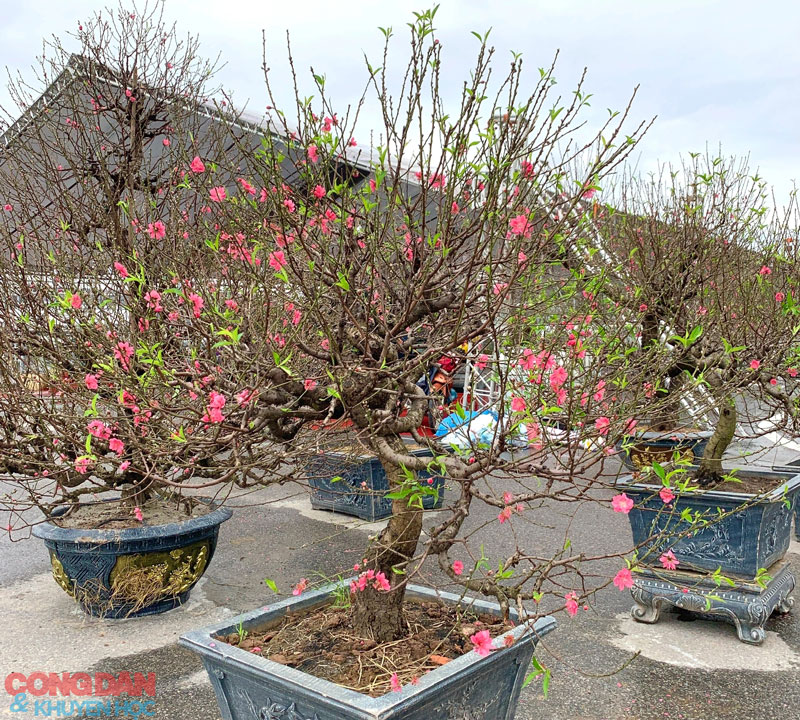
Peach branches (North) / Apricot branches (South): Placed adjacent to the altar or prominently in the house. They signify the arrival of spring and the exorcism of malevolent spirits. Hanoians purchase vivid pink peach blossoms from Nhật Tân. Saigonese procure brilliant yellow apricot blossoms from Bình Chánh nurseries.
Incense (Nhang): Perpetually burning. The Vietnamese believe incense smoke acts as the "telecommunications line" to the ancestors. An incense stick extinguishing midway is not viewed as an auspicious sign—though it is not considered a catastrophic omen either. One simply relights it.
The Tết Kitchen — Where Vietnamese Women Shine (and Exhaust Themselves)
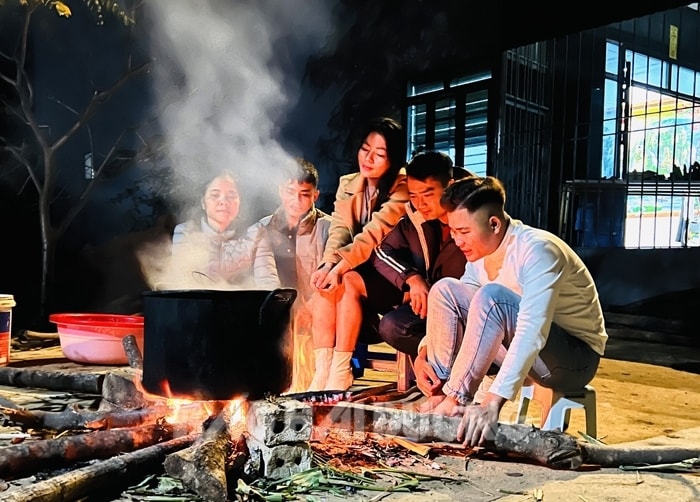
Let us address a reality that many Vietnamese acknowledge but rarely articulate aloud: Tết is magnificent for the guests—but for the women commandeering the kitchen, it translates to a minimum of one week of relentless, grueling labor.
Preparing the feast for New Year's Eve. Then the feast for the First Day. Then hosting a continuous stream of visiting guests—each arrival necessitating a fresh spread of food. Then dining at the paternal and maternal households. And upon returning home, managing the leftovers, washing mountains of dishes, and prepping for the ensuing day.
The modern generation is gradually recalibrating this dynamic—many families now order pre-cooked feasts, divide culinary duties among the entire household, or simply dine at restaurants rather than cooking entirely at home. However, in countless households, particularly in the North, the home-cooked feast remains the gold standard—and the woman in the kitchen continues to shoulder the overwhelming bulk of that responsibility.
If you visit a Vietnamese home during Tết and are treated to a phenomenal meal—do not merely compliment the host who invited you. Locate the individual who has been tethered to the stove for the past three days and thank them.
The Tết Feast — How the North Differs from the South
This is a point of perennial, good-natured debate between Hanoians and Saigonese every Tết—not fiercely acrimonious, but sufficient for each side to rigidly defend their culinary superiority:
The Northern Tết Feast: - Square bánh chưng (perfectly symmetrical, wrapped in dong leaves) - Giò xào — pork, shiitake mushrooms, and wood ear mushrooms compressed in a mold - Fried spring rolls (nem rán) — filled with minced pork, glass noodles, wood ear mushrooms, and carrots - Bamboo shoot and glass noodle soup — pork bones simmered with dried bamboo shoots and noodles - Red gấc sticky rice — deriving its vibrant orange-red hue from the gấc fruit, symbolizing luck - Jellied meat (thịt đông) — pork and skin congealed into a gelatinous block in the cold weather (a dish exclusive to the North, as it requires frigid temperatures to set)
The Southern Tết Feast: - Cylindrical bánh tét (elongated, wrapped in banana leaves rather than dong leaves) - Thịt kho tàu — pork belly and duck eggs braised in coconut water, achieving a stunning reddish-brown hue - Stuffed bitter melon soup (canh khổ qua) — bitter melon stuffed with minced pork; Southerners consume the bitter (khổ) so that the hardship will pass (qua), yielding a sweeter new year - Pickled vegetables (dưa món) — pickled scallion heads and carrots, balancing sweet and sour profiles - Cold cuts and chả lụa (pork roll)
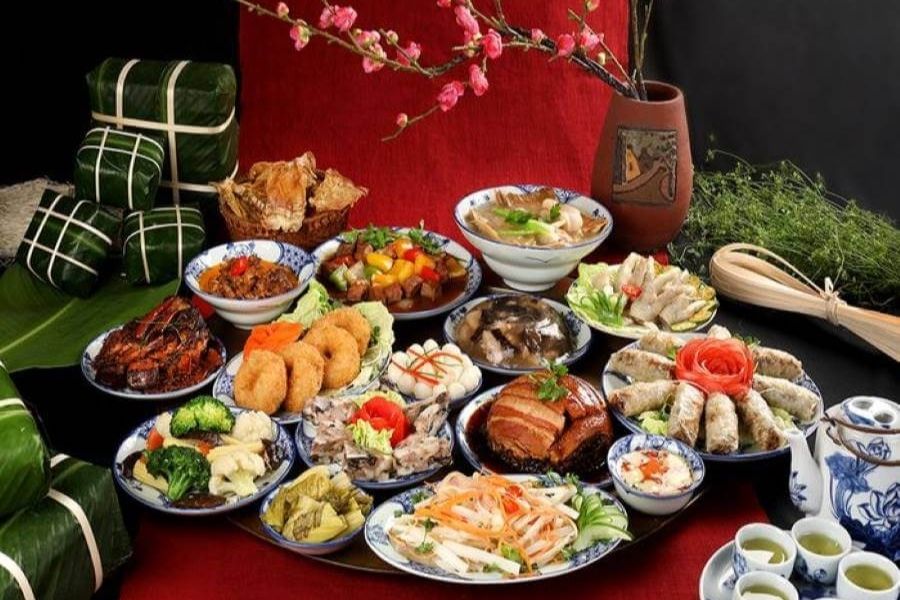
A Northerner tasting Southern thịt kho tàu for the first time often finds it disconcertingly sweet. A Southerner confronting Northern jellied meat for the first time will invariably poke it and ask, "Wait, what exactly is this called?" with profound skepticism.
Neither is superior. It simply serves as another testament: "Vietnamese Tết" is not a monolithic entity—it is at least three distinct cultural experiences depending on your latitude.
The Small Things That Carry Massive Significance
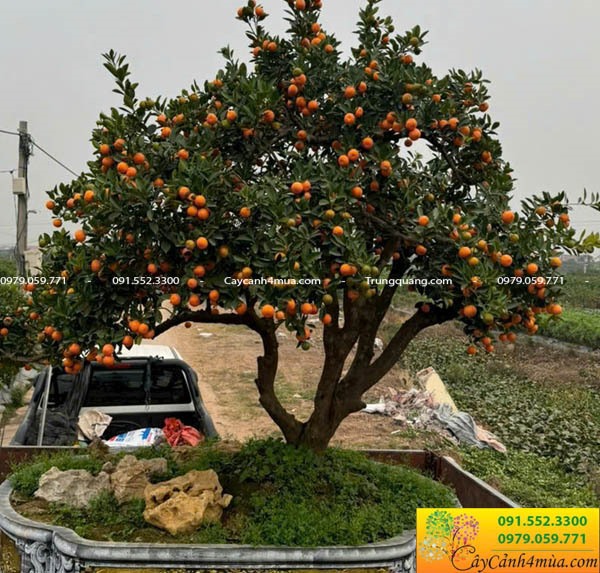
The Kumquat Tree (Cây quất): Families purchase kumquat trees to place indoors or flanking the front door. The tree must be heavily laden with fruit and vibrantly green—the denser the fruit, the better. Kumquats symbolize financial prosperity and a house brimming with children and grandchildren. Selling kumquat trees is the most lucrative profession in Hanoi during Tháng Chạp.
Potted Flowers: Specific flowers harbor specific symbolism—yellow chrysanthemums (longevity), narcissus (purity), gladiolus (smooth sailing). But the undisputed monarchs are peach and apricot blossoms—flowers blooming exactly during Tết is a highly auspicious omen, while premature wilting is viewed with dismay (though the weather tends to remain completely indifferent to these anxieties).
Tết Calendars: Every household receives dozens of wall calendars gifted by corporations, banks, and business partners. This is a traditional form of marketing in Vietnam—the more exquisitely designed the calendar, the higher the probability it will be displayed rather than discarded. The calendar cabinet in many homes at the beginning of the year resembles an unsolicited art exhibition.
Tết inside a Vietnamese home transcends mere feasting. It is the ultimate assembly of the entire family—both the living and the departed—to collectively reaffirm: we are still here, we are still us.
Every stick of incense ignited, every platter of fruit presented upon the altar, every meticulously wrapped bánh chưng—these are all micro-actions feeding into a macro-commitment: no one is left behind, whether they walk among the living or have passed on.
That is the absolute nucleus of Tết culture. And that is precisely why the Vietnamese, regardless of wealth or poverty, regardless of how frantic their schedules, regardless of where they are scattered across the globe—will perpetually strive to return home for this occasion.