The Mongols Invaded Three Times — Vietnam Won All Three
The largest empire in human history crumbled before a nation 1/30th the size of Mongolia
In the 13th century, the Mongol army was the most terrifying force the earth had ever produced. They had subjugated China—an entire empire of hundreds of millions. They swept through Poland and Hungary, and massacred Baghdad—then the capital of the Islamic world. Their cavalry mobilized with such breathtaking velocity that many nations fell before they could even muster an army. They lost to no one, nowhere, for over a century.
Then, they arrived in Đại Việt (ancient Vietnam).
Three times. The result: they lost all three.
The First Invasion — 1258: Defeated in 9 Days
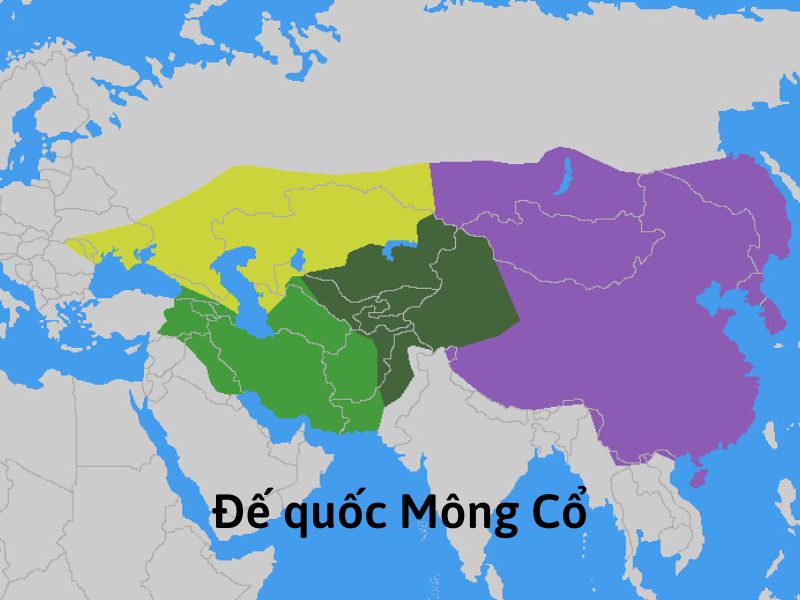
In 1257, Kublai Khan—grandson of Genghis Khan, who would later become Emperor of the Yuan Dynasty—demanded that Đại Việt grant passage for the Mongol army to assault the Kingdom of Dali (modern-day Yunnan, China). The Trần royal court refused.
In January 1258, a vanguard Mongol force commanded by the general Uriyangkhadai surged southward. They struck with characteristic lightning speed, capturing Thăng Long (modern-day Hanoi) in mere days.
But they encountered something they had not anticipated: an empty city. Emperor Trần Thái Tông and the royal court had orchestrated a premeditated retreat—evacuating all provisions and leaving behind a hollowed capital and scorched earth. The Mongols captured the citadel but possessed nothing to eat. Their rations evaporated rapidly in the humid, tropical climate—an environment entirely alien to them.
Nine days after seizing Thăng Long, the Mongols retreated. The official rationale: disease, famine, and a fierce counter-attack by Trần forces at Đông Bộ Đầu. But stripped of all rhetorical embellishment, the reality was stark: the Mongols had lost.
The Second Invasion — 1285: The Greatest Clash
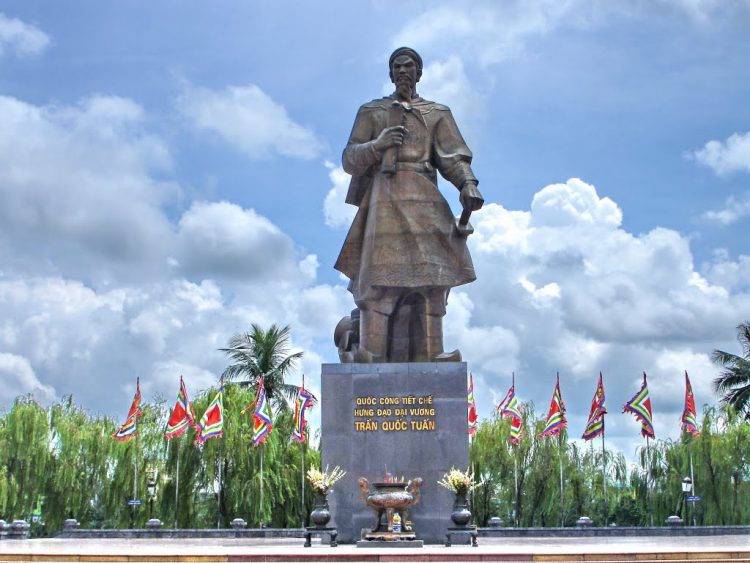
This time, the Mongols were not experimenting. In 1285, Toghon (Thoát Hoan)—son of Kublai Khan—led a massive invasion force of 500,000 troops (according to Vietnamese chronicles; while actual numbers may have been lower, it remained a gargantuan force) crashing down from the North. Simultaneously, the Kingdom of Champa was coerced into attacking from the South.
It was the perfect pincer movement.
The man entrusted with commanding the resistance was Trần Hưng Đạo—and this aging general (roughly 60 years old at the time) would cement his legacy as one of the greatest military strategists in Asian history.
Trần Hưng Đạo did not attempt to hold the citadel. The royal court retreated once more. They abandoned the land again. They surrendered the flat deltas to the Mongols—a terrain the invaders did not know how to navigate.
And then, he waited.
The Mongols excelled at steppe warfare, mastering rapid cavalry maneuvers and encirclements. But in the swamps, the labyrinthine river networks, and the dense tropical jungles of Northern Vietnam—they bogged down. Disease ravaged their ranks, and their supply lines were systematically severed day by day.
After several agonizing months, the combat efficacy of the Mongol army was utterly depleted. Trần Hưng Đạo launched a massive counter-offensive. The Mongol forces disintegrated. Toghon fled back to China—according to Vietnamese lore, hiding inside a bronze cylinder to evade poisoned arrows.
The Proclamation to the Officers — An Immortal Decree
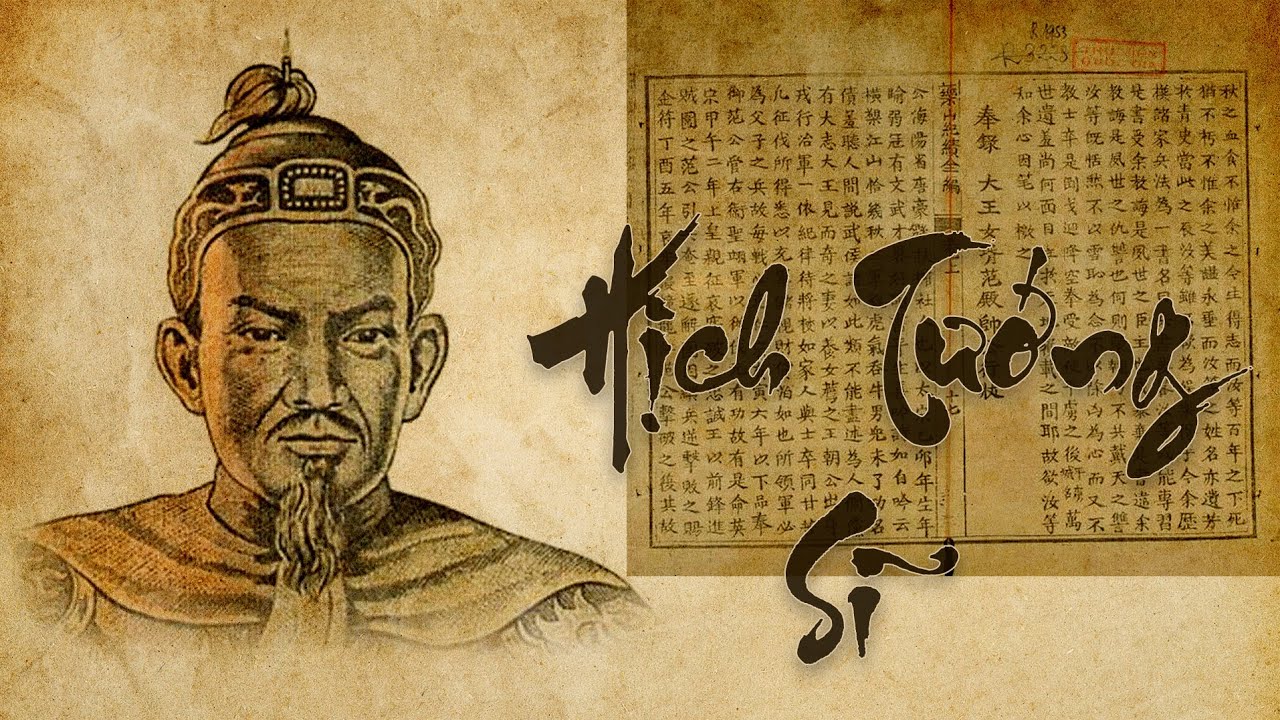
Prior to the second invasion, Trần Hưng Đạo authored the Hịch Tướng Sĩ (Proclamation to the Officers)—a rallying cry dispatched to the entire military. It stands as one of the most magnificent pieces of martial literature in Asia.
He dispensed with hollow platitudes about nationhood and lofty ideals. He struck directly at the heart:
"I often forget to eat at mealtime, and in the middle of the night I pat my pillow, my intestines aching as if cut, tears drenching my face; I am only enraged that I cannot yet flay their skin, swallow their livers, and drink the blood of the enemy. Even if my hundred bodies were to be exposed on the grass, or my thousand corpses wrapped in horsehide, I would be willing."
He concluded by bluntly warning his soldiers: if they maintained an attitude of indolence, when the enemy arrived, the wealth and comforts they currently enjoyed would not save them—absolutely nothing would save them.
It was brutally pragmatic policy articulated in the language of raw emotion. And it worked.
The Third Invasion — 1288: Bạch Đằng, Again
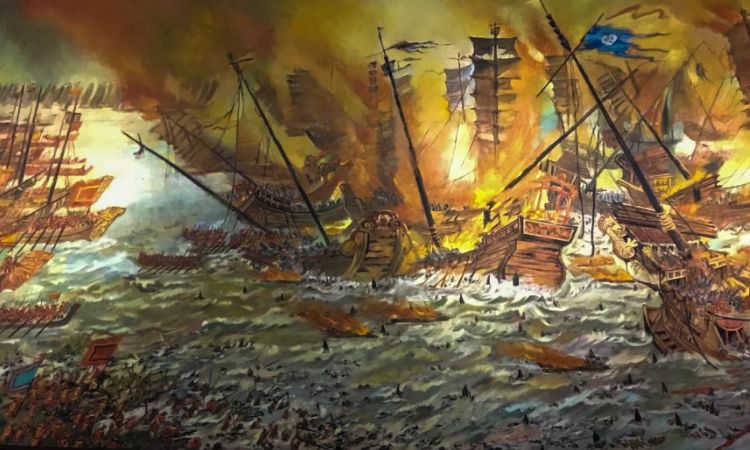
The Mongols returned for a third time in 1288. They deployed a massive naval fleet down the Bạch Đằng River to secure supply lines.
Trần Hưng Đạo borrowed a page from Ngô Quyền—the general who had utilized this exact river to annihilate the Southern Han army in 938.
The stratagem was reprised: iron-tipped wooden spikes were driven into the riverbed. The enemy fleet was lured in during high tide. The Vietnamese retreated as the tide ebbed. The Mongol armada was impaled and torn to pieces.
Following this third catastrophic failure, Kublai Khan plotted a fourth invasion. But he perished in 1294 before the plan could materialize. His successor lacked the same resolve—or perhaps, had finally absorbed the lesson.
Đại Việt was never conquered by the Mongols.
How Did Vietnam Prevail?
The question historians continue to debate: how did a small nation defeat the largest empire in human history not once, not twice, but three times?
Topography: Mongol cavalry tactics achieved maximum lethality on open steppes. In the river-laced, swampy, densely forested terrain of Northern Vietnam—they were stripped of their greatest tactical advantage.
Climate: The Mongols were unaccustomed to the tropics. Disease—particularly dysentery and malaria—slaughtered more soldiers than actual combat.
Calculated Retreat: Rather than fiercely defending every inch of soil—which they lacked the manpower to achieve—the Trần army employed a strategy of conceding territory, drawing the enemy deep into unfamiliar terrain, and severing their logistics. It was a war of attrition that the Vietnamese would reprise repeatedly in subsequent centuries.
Solidarity: The Trần royal court convened the Diên Hồng Conference—summoning elders and representatives from across the populace to debate the strategy: fight or surrender? The unanimous roar: Fight! This did not merely resolve a technical military dilemma. It forged a visceral, grassroots unity that no imperial edict from the top down could ever manufacture.
A Lesson That Endures Today
"Using weakness to defeat strength, using the few to overcome the many."
Trần Hưng Đạo uttered these words regarding 13th-century military strategy. Yet that phrase also serves as the quintessential description of the Vietnamese people across the entirety of their history.

Vietnam has never been the largest or the most powerful nation in its region. Yet they boast a staggering win rate against adversaries possessing overwhelming military supremacy. That is not an accident. It is the consequence of a millennium spent being forced to invent alternative methods of waging war.
When the Americans arrived in Vietnam in the 20th century armed with the world's most advanced military technology—they were not the first adversary to believe that sheer material might would secure victory. And the Vietnamese, intimately familiar with that equation, deployed the exact same strategic toolkit that Trần Hưng Đạo had utilized seven hundred years prior.
It is no coincidence that numerous military academies worldwide continue to teach the 1288 Battle of Bạch Đằng as a masterclass in asymmetric warfare.