Why the Vietnamese Are Hard to Define — And Why That Is a Good Thing
A nation where even the locals cannot reach a consensus about themselves
Try asking ten Vietnamese people this question: "What is the most defining characteristic of the Vietnamese?"
You will receive ten divergent answers. And some of those answers will contradict each other entirely.
The Hanoian will profess: "The Vietnamese are industrious, resilient, and revere proper etiquette." The Saigonese will claim: "The Vietnamese are open-minded, adaptable, and highly pragmatic." The Central Vietnamese will assert: "The Vietnamese are unyielding, frugal, and never surrender." The overseas diaspora will sigh: "The Vietnamese... well, it’s complicated."
They are all correct. And it is precisely this collective "correctness" that ensures anyone attempting to define "the Vietnamese" in a single sentence is destined to fail.
The S-Shaped Land — And All That It Entails
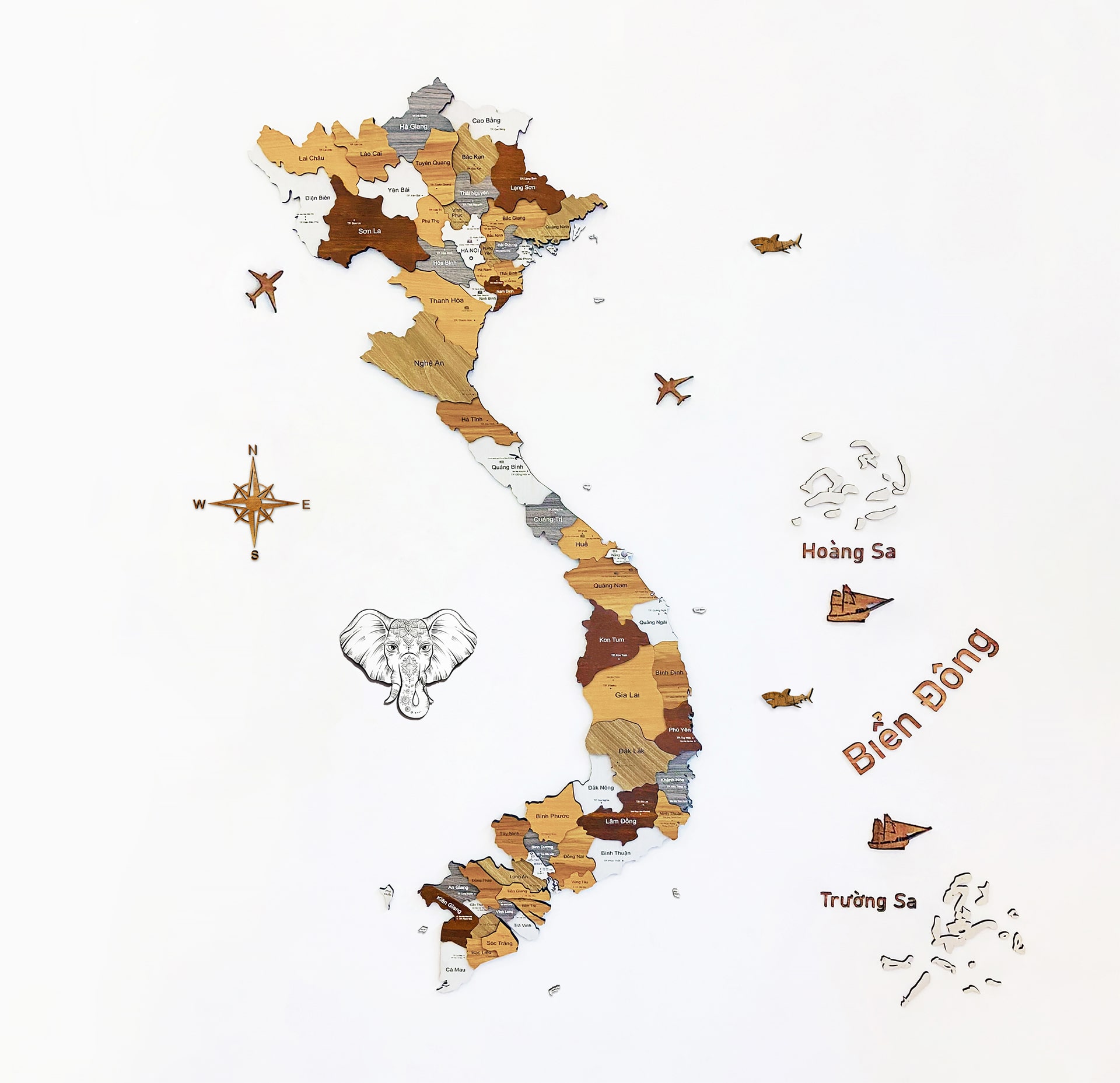
Let us begin with geography. Vietnam stretches 1,650 kilometers from North to South—roughly the distance between London and Rome. Yet its average width is a mere 50 kilometers, narrowing to exactly that in certain provinces. It is the most laterally compressed nation relative to its length in Asia.
The consequence? The North experiences a genuine winter—Hanoians venture out in puffer jackets and thick scarves, battling annual colds like clockwork. The South stews in year-round heat—Saigonese consider 22°C (71°F) "freezing" and don jackets in over-air-conditioned restaurants.
When a Hanoian travels to Saigon in December and observes locals wearing sweaters in 27°C weather, the standard reaction is an uncontrollable bout of laughter.
When a Saigonese travels to Hanoi in January and encounters the authentic Northeast monsoon, they suddenly understand why Hanoians appear... somewhat less generous with their smiles.
Three Cultural Hemispheres in One Signature
Here is a reality few outsiders grasp: Vietnam is fundamentally three vast cultural spheres stitched together by history and a central government, rather than by natural homogeneity.
The North (Bắc Bộ) — Bore the heaviest imprint of Chinese influence following a millennium of Northern domination. It places a premium on ritual, hierarchy, and erudition. This is where Confucianism took its deepest root. Northerners possess a propensity for speaking obliquely, preserving face, and remaining acutely aware of how they are perceived.
The Center (Trung Bộ) — This is the most geographically unforgiving territory (mountains on one flank, the sea on the other, pummeled by annual typhoons), and its inhabitants are famously the most... stubborn. Not in a pejorative sense. In the sense that when a typhoon strikes, they rebuild their homes and reopen their shops the very next day. Without complaint. Without despair.
The South (Nam Bộ) — The most recent addition to Vietnamese history, thoroughly settled less than 400 years ago. The frontier spirit endures—they are more welcoming to strangers, less bound by rigid etiquette, vastly more pragmatic, and highly adaptable.
So, who is the "typical Vietnamese"? It is akin to asking what the "typical European" looks like. The German and the Italian are both European. But try transplanting German workplace culture into Porto.
The Paradoxes That Baffle Outsiders
This is the fascinating part—a catalog of contradictions that the Vietnamese navigate simultaneously and with complete naturalness, while foreigners watch and wonder, "Wait, why?"
Paradox 1: Intensely hospitable, yet reluctant to invite you inside
A Vietnamese person will feed you, pour you drinks, and surrender their bed to you if necessary. But in many families, particularly in the North, not everyone is comfortable inviting an outsider into their home. The home is the sanctuary of the family, of the ancestors resting upon the altar, of matters not meant for external consumption.
You may be treated to a lavish feast at a restaurant, yet never cross the threshold of their living room. This is not coldness. It is the delineation of boundaries.
Paradox 2: Saying "It's fine" when it is definitively not fine
Ask a Vietnamese person "Are you okay?" after inadvertently doing something that inconveniences them. The answer is almost guaranteed to be, "Yes, it's fine" (không sao).
"It's fine" does not mean it is fine. It translates to: "I do not wish to complicate matters further right now, but I will remember this."
An American or Australian might exhale in relief and carry on. Another Vietnamese person hears those words and understands immediately that this conversation is far from over.
Paradox 3: Pinching pennies but bleeding wealth for weddings
A Vietnamese person might haggle for thirty minutes to save 10,000 VND (about 40 cents) when buying vegetables. But a child’s wedding—that is an entirely different echelon of existence. Families will borrow money to ensure there are enough banquet tables, enough guests, and that invitations are dispatched without omission. Because a wedding is not merely a party. It is a public declaration of the family's standing before the community.
The stark statistics: according to a 2023 survey, the average wedding cost in Vietnam ranges from 150 to 300 million VND ($6,000–$12,000 USD). Many middle-income families spend one to two years saving exclusively for a wedding. And it is not uncommon for couples to emerge from their own nuptials heavily in debt.
Paradox 4: Resenting personal questions while interrogating others as easily as breathing
The Vietnamese, especially the older generations, will interrogate you (the foreigner) with a level of detail considered shockingly rude in the West: How old are you? What is your salary? Why aren't you married? Have you bought a house? How much did it cost?
Yet, if someone were to reverse the interrogation and ask them those exact questions with equal bluntness—they would find it deeply uncomfortable.
This is not a double standard. This is a disparity in context. Asking about another’s affairs is a manifestation of care, not an invasion. Being cross-examined, however, is a different sensation entirely.
Why It Is Hard to Define — And Why That Is Beautiful
Nations that are easy to define are often those that have experienced minimal upheaval or have opted for homogeneity by erasing internal friction.
Vietnam is the antithesis. They have endured too much—occupied, partitioned, cast onto opposing sides of Cold War conflicts, reunited, opened up, and integrated—to the point where being "Vietnamese" is an identity that must be continuously negotiated and redefined.
A 22-year-old UX designer in Saigon's District 7, who listens to lo-fi beats and occasionally travels to her grandmother’s village in Dong Thap to burn incense for the ancestors—she is Vietnamese. A 65-year-old man in Hanoi's Old Quarter, who drinks egg coffee every morning, reads a physical newspaper, and plays Chinese chess on the sidewalk every afternoon—he, too, is Vietnamese.
Those two could sit together and find absolutely nothing to converse about save for the weather. But both possess the quiet certainty that they belong to something shared.
It is an identity capacious enough to contain everyone, without demanding that anyone abandon themselves to fit inside. And I believe that is one of the most admirable qualities of Vietnam—even if it is rarely spoken aloud.