54 Ethnic Groups of Vietnam — One Country, Many Faces
There is a Vietnam you have never seen on Instagram
Most travelers arrive in Vietnam and see a singular country. They see the backpacker streets of Hoi An, the swarming motorbikes of Saigon, the plates of cơm tấm (broken rice), phở, and bánh mì. They see the Kinh people—the majority ethnic group comprising nearly 90% of the population, the very faces that have defined Vietnam’s image to the world.
And then, if they venture up to Sapa on a misty early morning, they witness H'mong women in vibrantly embroidered garments selling vegetables at the market—and wonder: Are these people Vietnamese too?
The answer is yes. And that is where the true story begins.
54 Is a Number — But Reality Is More Complex
The number 54 is the official count recognized by the Vietnamese state since the 1970s. Yet, truth be told, even anthropologists do not entirely agree with this taxonomy.
Some "ethnic groups" on the list are, in reality, sub-groups with close affinities that can mutually comprehend each other's dialects. Others harbor internal distinctions greater than the differences between themselves and outsiders. Nevertheless, 54 remains the official metric, and it serves adequately to illustrate that Vietnam is far from the monolithic red expanse drawn on a map.
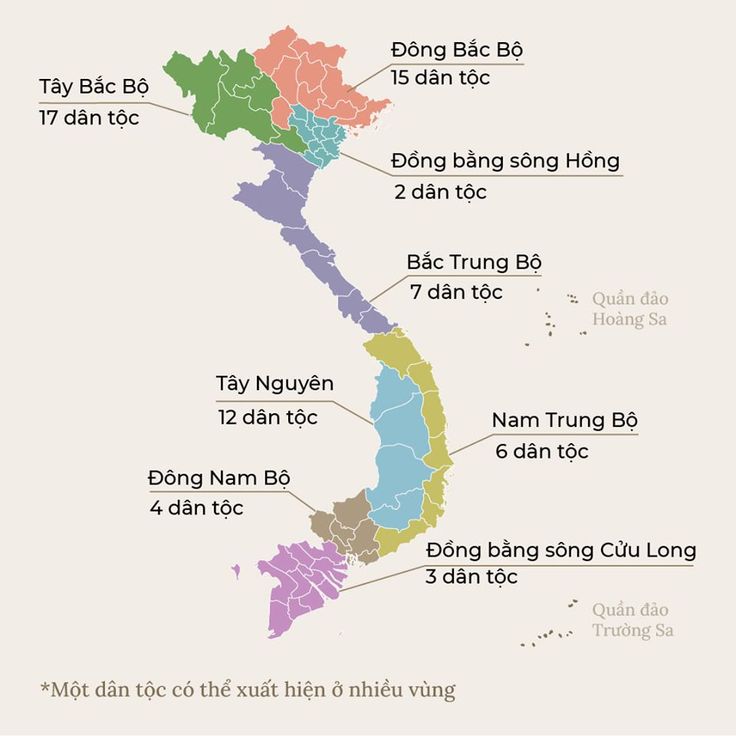
To visualize this, it is best to divide the country geographically:
The Northern Mountains — This is the epicenter of ethnic diversity. The Tày, Nùng, H'mong, Dao, Thái, Mường, Lô Lô... they inhabit the mountain ranges stretching from Dien Bien Phu to Ha Giang, Cao Bang, and Lang Son. Each group possesses its own attire, its own language, and its own unique paradigm of community organization.
The Central Highlands (Tây Nguyên) — The Ê Đê, Jarai, Ba Na, Mnông, Stiêng... These peoples maintain matrilineal traditions, live intimately bound to the forest, and are the custodians of the gong music heritage recognized by UNESCO.
The Mekong Delta — The Khmer Krom form the most populous minority community here, alongside Cham Muslims and ethnic Chinese who settled centuries ago.
The Tày — The Second Largest Community No One Talks About
If the Kinh represent the Vietnamese narrative the world knows, the Tày represent a narrative that even the Kinh sometimes overlook.
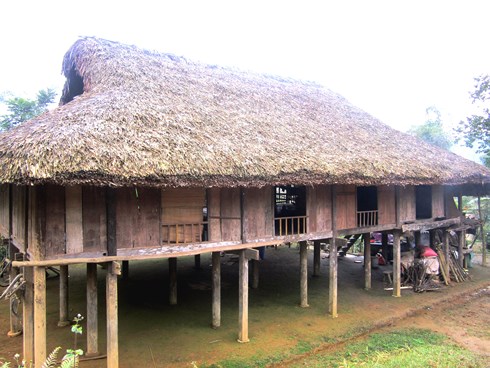
Numbering nearly 1.9 million, the Tày are the second largest ethnic group. They reside predominantly in the Northeast—Bac Kan, Thai Nguyen, Lang Son, and Cao Bang. Wooden stilt houses. Terraced fields. Cultivators of wet rice and maize.
The Tày language belongs to the Tai-Kadai family—a distant cousin of Thai and Lao, bearing no linguistic relation to Vietnamese. Should an elderly Tày person converse with a Kinh who lacks knowledge of the Tày language, the two would find each other utterly unintelligible.
Yet, ask a Tày person "what are you?" and the answer is invariably: "I am Tày, I am Vietnamese." Both. Without contradiction. That is the elegance of identity—it does not demand a singular choice.
The H'Mong — A People Without Borders
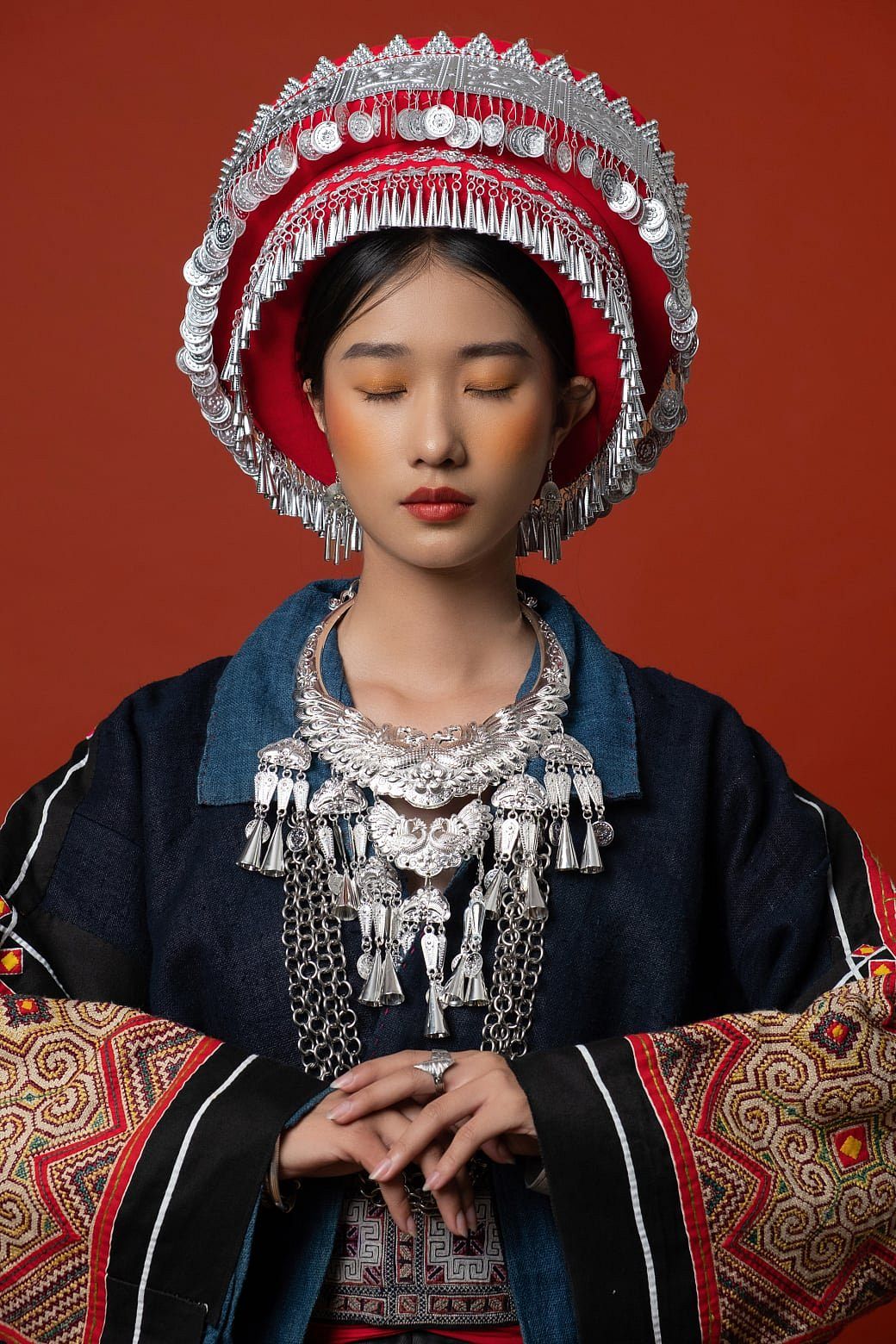
The H'Mong are among the world’s least ubiquitous yet most widely dispersed peoples. In Vietnam, they number roughly 1.4 million, clustered in Ha Giang, Lao Cai, and Son La. But the H'Mong also inhabit China, Laos, Thailand, Myanmar, the United States (with significant communities in California and Minnesota), and France.
The H'Mong possess no sovereign state of their own. For centuries, they migrated through mountain passes, fleeing conflict and seeking new arable land. They are a people of high altitudes and prolonged exoduses—and they carry the entirety of that identity in every stitched thread of their traditional skirts.
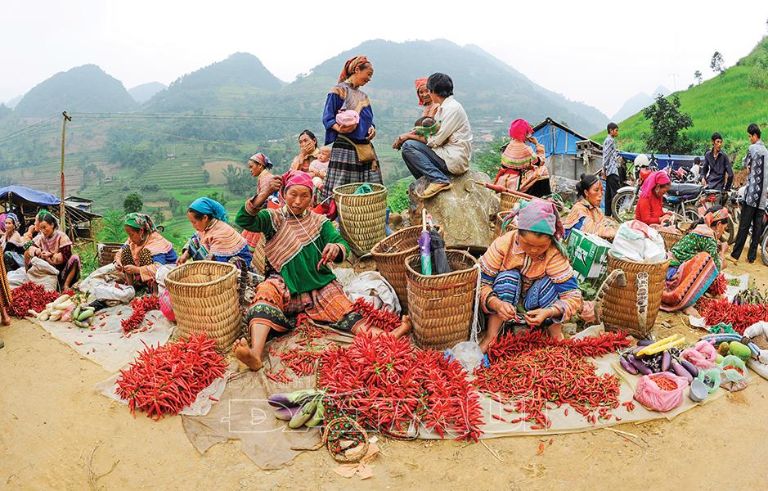
When you encounter a H'Mong woman at the Dong Van market, the skirt she wears may have taken a month to embroider. Each stitch is a cipher signifying something profound—about family, the harvest, or communal memory. It is not mere ornamentation. It is not solely for aesthetic appeal. It is a language.
The Central Highlands — The Forgotten World
If the Northern mountains are the facet tourists recognize, the Central Highlands are the realm that even lowland Vietnamese occasionally struggle to comprehend.
The five provinces of the Central Highlands—Kon Tum, Gia Lai, Dak Lak, Dak Nong, Lam Dong—form a vast basalt plateau. It is here that Vietnam’s Robusta coffee is cultivated, and where indigenous ethnic communities thrived for millennia before the Kinh ever set foot.
The Ê Đê, Jarai, and Ba Na—they operate under a matrilineal system. Land and wealth are inherited through the mother's line. Upon marriage, the husband moves into the wife’s home—a stark inversion of Kinh customs. Ê Đê matriarchs wield a societal status that many urban Kinh women might find elusive.
They also possess the gong—a bronze percussion instrument passed down through generations, utilized in every critical communal rite from naming ceremonies to the abandoning of tombs. In 2005, UNESCO recognized the Space of Gong Culture in the Central Highlands as a Masterpiece of the Oral and Intangible Heritage of Humanity.
The Cham — Legacy of a Lost Kingdom
If you visit My Son near Da Nang and behold the enigmatic red brick towers standing silent in the jungle, you are gazing upon the legacy of the Cham—a people who once commanded a formidable kingdom that spanned centuries, from Quang Binh down to Binh Thuan.
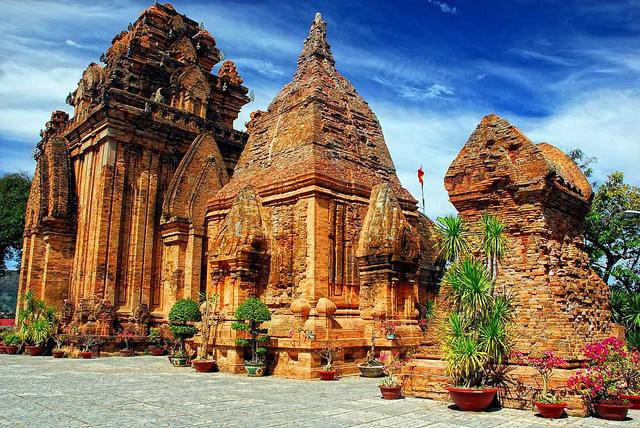
The Kingdom of Champa gradually collapsed over centuries of conflict with the Kinh and the Khmer. The Cham today number roughly 160,000, residing primarily in Ninh Thuan and Binh Thuan (the Hindu-influenced group) and pockets within the Mekong Delta (the Islamic group).
They are Vietnamese citizens—but if asked, they will tell you they are Cham first. And those brick towers in My Son—enshrined on UNESCO's World Heritage list—stand as testament that memory is not easily erased, regardless of the passage of time.
Why This Matters to Foreigners
You might ask: I only wish to visit Vietnam for a few weeks, why do I need to know this?
The answer is: because how you perceive a country dictates how you engage with its people.
If you presume "the Vietnamese" are a homogeneous monolith—all eating phở, practicing Buddhism, and speaking Vietnamese—then encountering a H'Mong person lacking fluency in the national language will leave you bewildered. Seeing a Cham individual wearing a headscarf in adherence to Islamic custom will surprise you. Hearing Khmer people in Soc Trang converse in Khmer will strike you as anomalous.
But if you understand that Vietnam is a mosaic of 54 ethnic groups, each with its own history and culture—then none of these encounters are "strange" anymore. They become fragments of a much larger, infinitely more captivating narrative.
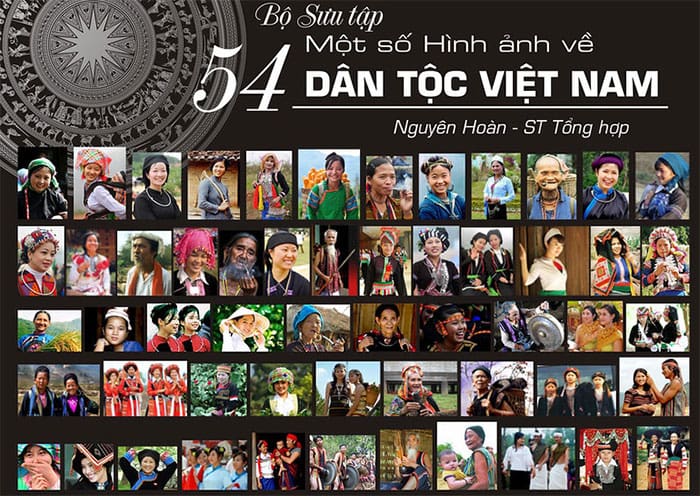
Vietnam is not a single hue. It is an entire palette. And once you recognize that, you will never view this country in the same way again.