The Questions Foreigners Ask Most Frequently About the Vietnamese
And the most brutally honest answers possible for each one
There is no single, absolute answer to any of the questions below—the Vietnamese are 100 million distinct individuals, not a monolithic hive mind. However, the data below reflects the consensus you will likely encounter from the vast majority of the population.
"Do the Vietnamese Still Hold a Grudge Against Americans?"
The short answer: No.
The expanded answer: The Vietnamese population generally harbors zero hostility toward Americans on an interpersonal level. The war concluded in 1975—fifty years ago. The massive majority of the Vietnamese demographic was born after the war or was too young to retain empirical memories of it.
Furthermore, the Vietnamese are highly capable of differentiating between the American government (which authorized the bombing) and the American citizens (who did not universally support the conflict). Massive numbers of Americans protested the war—a data point the Vietnamese are fully aware of and respect.
The operational reality: The US is currently one of the absolute top destinations for Vietnamese citizens seeking international education, corporate employment, and immigration. Current US-Vietnam geopolitics operate as a strategic partnership. That is mathematically not the behavior of two nations harboring mutual hatred.
"Why Do Vietnamese People Ask How Much Money I Make?"
The answer: This is a question indicating social care, not an invasive violation of privacy according to Vietnamese parameters.
Within Vietnamese culture—particularly the older generation—inquiring about your income, career, housing situation, and marital status is the standard protocol for demonstrating interest in your well-being. It is the functional equivalent of asking about your health—it is a line of questioning deployed by family or those desiring a closer relationship, not by strangers with hostile intent.
According to Western parameters, those questions violate the "privacy firewall." According to Vietnamese parameters, erecting a firewall and refusing to answer is perceived as cold and socially distant.
You are not required to provide accurate financial data. A vague, polite response is perfectly sufficient—the person asking rarely requires a precise spreadsheet; they simply want confirmation that you are surviving comfortably.
"How Do the Vietnamese Actually View the War?"
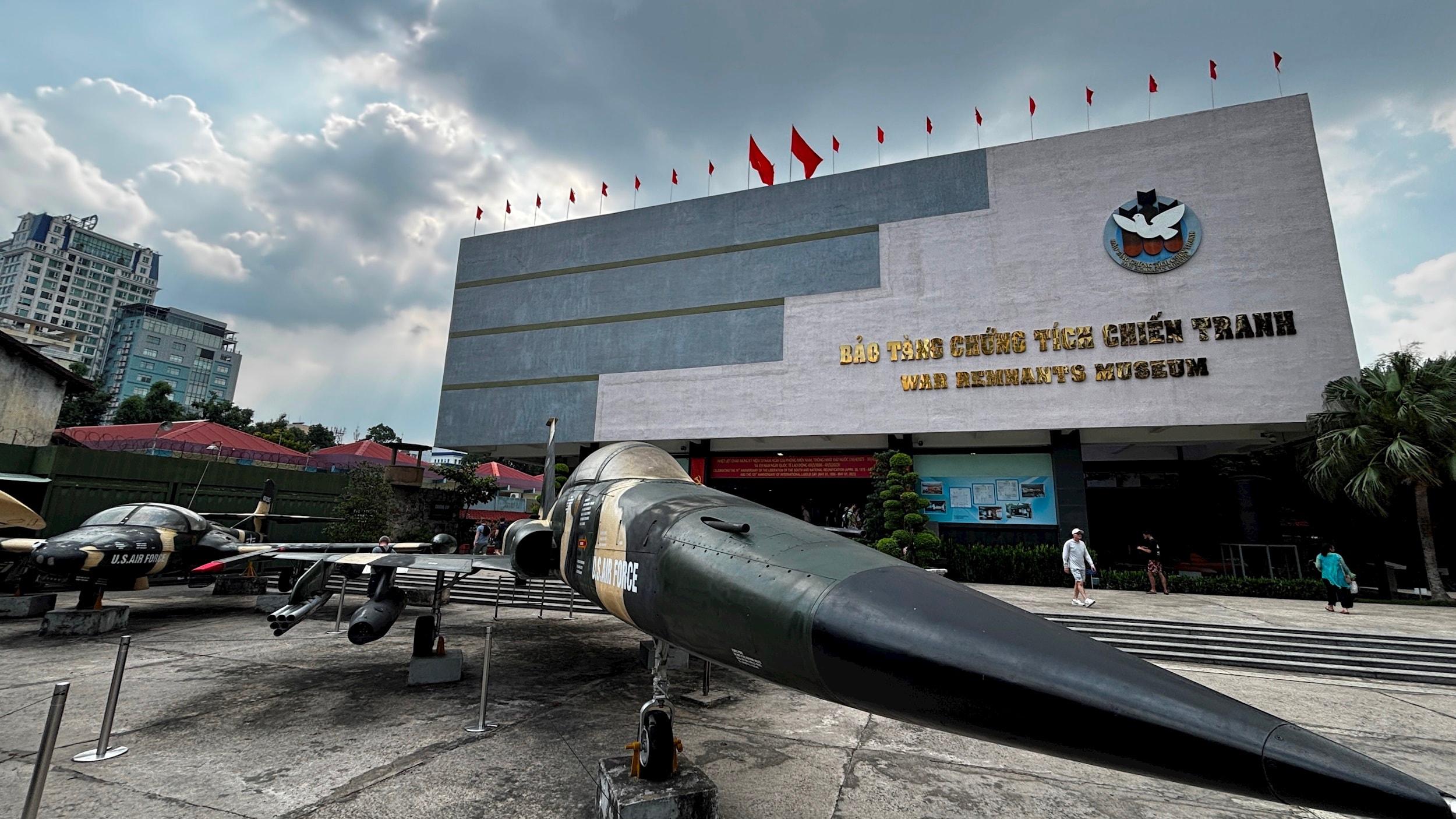
The answer: It is infinitely more complex than "we won" or "Uncle Sam was wrong."
Vietnamese citizens belonging to different generations and different geographic sectors possess radically different memories and perspectives:
Northerners, whose families suffered casualties during the resistance: This was a righteous war of national liberation, and the sacrifice was an absolute necessity.
Southerners, whose families were routed through re-education camps or fled via boats post-1975: This was a catastrophic era of trauma and loss that remains insufficiently addressed.
The younger generation possessing zero direct memory: The war is historical data—important, but it is not the operating system that dictates my decisions today.
And at the deepest psychological level, many Vietnamese—regardless of their historical affiliation—share a universal, quiet sorrow: More Vietnamese humans died in that conflict than any other demographic. And that specific data point is never discussed enough.
"Why Do Vietnamese People Launch Into the Intersection When the Light is Red?"
The answer: Vietnamese traffic operates on "fluid dynamics logic"—it does not adhere to absolute, rigid rules, but rather relies on a continuous, real-time negotiation between every single vehicle in the matrix.
A red light is processed as a strong suggestion rather than an absolute command—particularly if the intersection is empty at 2:00 AM. This is not total anarchy; it is the contextual application of the law.
Newly arrived foreigners find this terrifying. Foreigners who have operated here for years find it hyper-efficient—the actual throughput of traffic frequently moves faster when everyone "negotiates" the crossing rather than waiting for an arbitrary, rigid mechanical cycle.
It is not flawless. But the logic is mathematically sound.
"Can I Haggle at the Market? And How?"
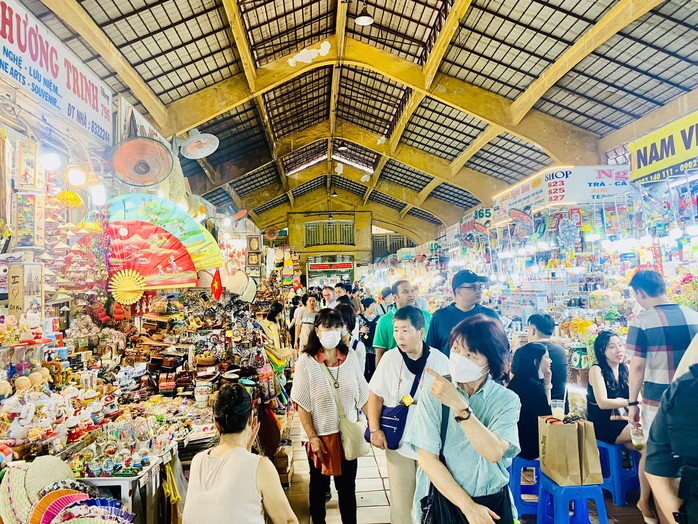
The answer: Yes—at traditional wet markets and with street vendors. No—at supermarkets, chain stores, or restaurants featuring printed menus.
The Vietnamese haggling protocol:
Ask for the initial quote. Counter-offer roughly 50–60% of their stated price. They will counter. You counter back. A successful transaction is typically finalized at 70–80% of the initial quote if you execute the negotiation with patience.
Do not: Haggle the price down to an absurd, insulting metric. Act aggressively or show disrespect. Walk away mid-negotiation if the vendor has already agreed to a price close to your target—that is a severe breach of etiquette and triggers legitimate anger.
Do: Maintain a smile throughout the entire operation. This is a social game with established parameters—both parties are aware of the rules and enjoy the participation.
"Why Do the Vietnamese Stare at Me?"
The answer: Pure curiosity—particularly in rural sectors that receive minimal tourism, a foreigner remains a sufficiently rare data point to warrant visual observation.
This is absolutely not a hostile or impolite action according to Vietnamese standards—they are simply looking at something interesting. If you nod and smile, the vast majority will instantly smile back.
In massive urban hubs like Hanoi and Saigon, foreigners are so ubiquitous that they barely register. But if you push deep into the countryside or smaller provinces—prepare to operate as the center of attention, and process it with a positive mentality.
The Final Checklist — 10 Critical Data Points Before Meeting the Vietnamese
- Asking your age is not rude—it is a functional necessity to establish pronouns.
- "Have you eaten rice yet?" translates to "Are you okay?", not a literal inquiry about hunger.
- Silence following a question does not equal agreement—probe further to verify.
- Always hand over or receive objects utilizing both hands.
- Shoes come off before crossing the threshold—scan the entrance for visual cues.
- Complimenting the food is a flawless, universally correct maneuver.
- Refusing an offer the first time is polite—the second time means you actually don't want it.
- Never gift clocks, handkerchiefs, or sharp blades (they carry highly negative symbolism).
- The initial reserve of a Hanoian is not coldness—be patient and let the firewall drop.
- Learn 5 sentences of Vietnamese—it will completely alter the trajectory of your entire year.