The Áo Dài — The National Dress With a History More Complex Than You Think
It wasn't always universally adored, it wasn't always accepted — and it continues to evolve today
There is no garment on earth that allows you to identify the wearer's nationality within a single second. The Áo Dài is one of the exceptionally rare exceptions.
The cut clings to the body from the shoulders down to the waist, while two flowing panels cascade down the front and back over wide trousers—this garment was engineered to simultaneously conceal the body entirely while flawlessly articulating its curves. It is an aesthetic equilibrium that many cultures spent centuries attempting to discover—and the Áo Dài achieves it with a single seam.
But before we wax poetic about its visual elegance—we must discuss its turbulent history, which is rarely recounted.
The Áo Dài Did Not Always Look Like This
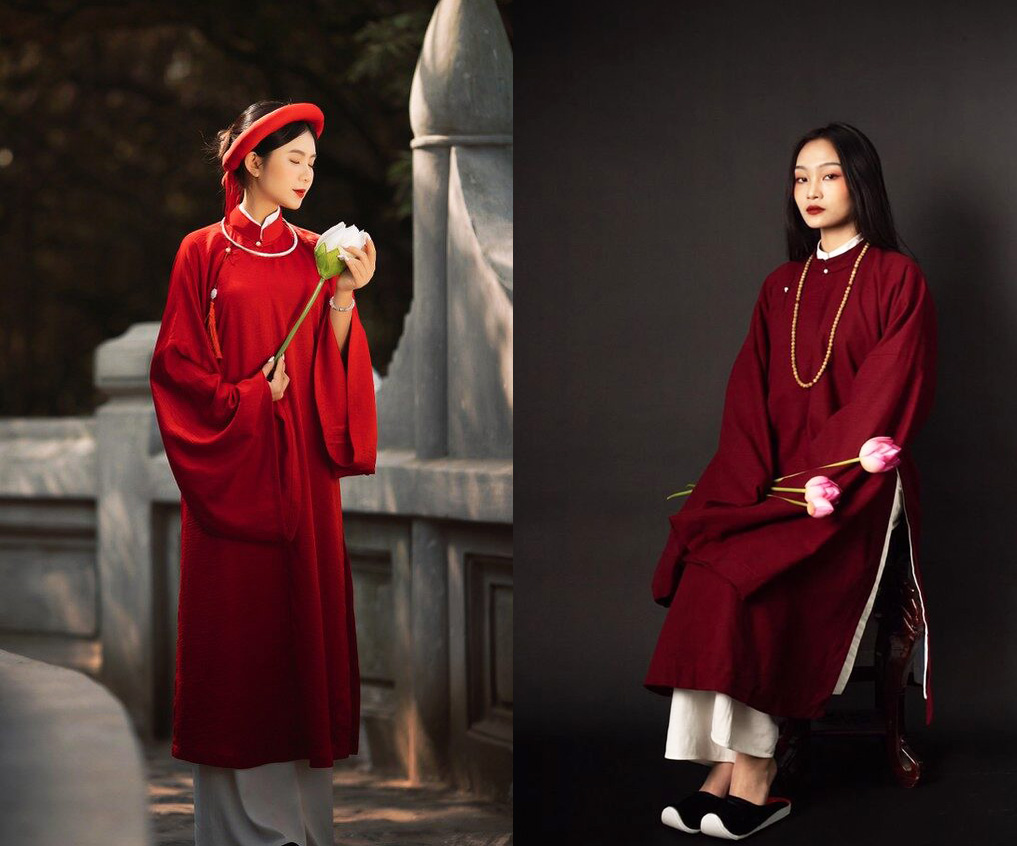
The Áo Dài as it is universally recognized today is not a millennia-old traditional garment. It is a product of the 1930s—a volatile era when Vietnam was modernizing under the immense pressure of French colonial culture, and the urban youth were desperately seeking a synthesis between tradition and modernity.
Prior to this, the ubiquitous attire was the áo ngũ thân (the five-part tunic)—loose-fitting, comprising five panels of fabric, and significantly less form-fitting. Traditional Vietnamese women also wore black headscarves or wrapped their hair, and did not wear white trousers underneath.
In 1934, the designer Cát Tường (frequently referred to by his French moniker, Le Mur) debuted a radical new silhouette: high collar, elongated panels, form-fitting cut, worn over white trousers. It was an Oriental garment injected with unmistakable Western tailoring. And it triggered immediate outrage.
The Hanoi intelligentsia splintered into factions: one side lauded the design as sophisticated, flawlessly expressing the beauty of Vietnamese women. The opposing side condemned it as "aping the West" and destroying public decency. Newspapers dedicated entire issues to the debate. It was remarkably similar to how Generation Z debates traditionalism on social media today.
The Golden Decade of the Áo Dài — And Its Disappearance
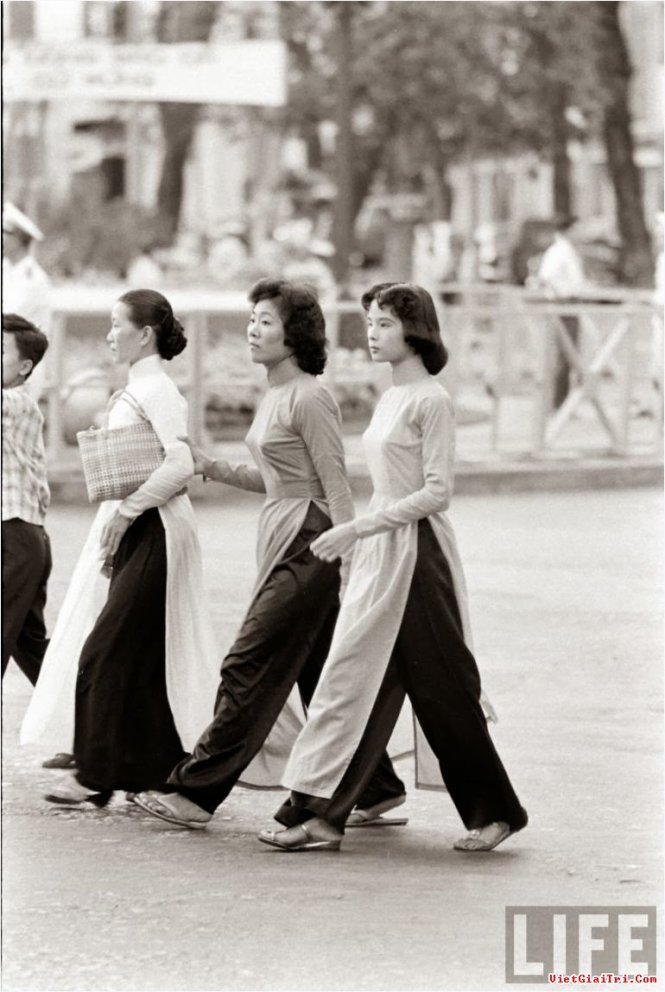
From the 1950s through 1975, the Áo Dài experienced a golden age—particularly in Saigon. Female students wore immaculate white Áo Dài to school. Female civil servants wore them to the office. Flight attendants, bank tellers, women attending formal galas—the Áo Dài was the absolute default.
In the South during the 1960s, the Áo Dài underwent a further evolution: the panels were shortened, the fit became even tighter, and the collars were lowered—heavily influenced by Western fashion trends of the era. Some praised it as "modern." Others decried it as "scandalous." The eternal narrative.
Then came 1975 and the liberation of the South. And alongside countless other remnants of the former era, the Áo Dài gradually evaporated. It was not officially banned, but it was inextricably linked to the image of the old society, to the "petite bourgeoisie," to an aesthetic deemed incompatible with the austere atmosphere of the new era. A woman strolling down the street in an Áo Dài between 1978 and 1985 would invite highly disapproving glares.
The Revival and a New Significance
The Đổi Mới economic reforms of 1986 ushered in a more open societal spirit, precipitating the resurrection of the Áo Dài. From the 1990s onward, the Áo Dài returned—but carrying a different semiotic weight.
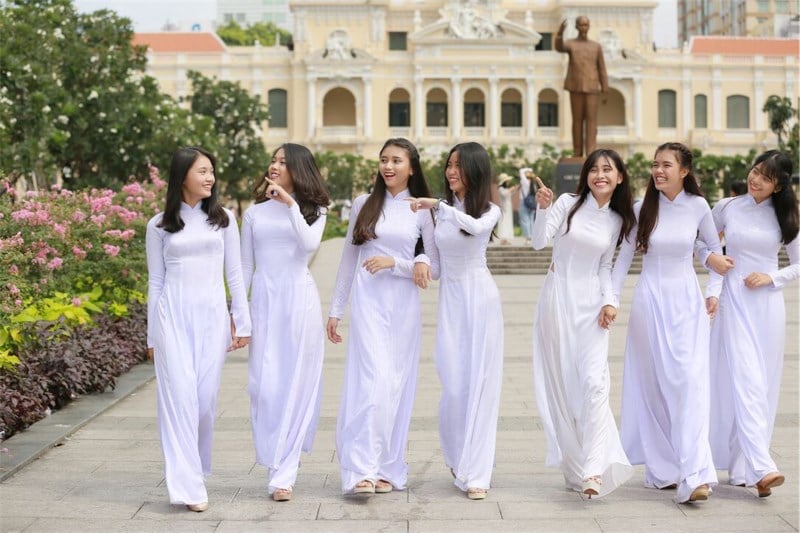
No longer standard daily wear (it is profoundly impractical for navigating modern cities on a motorbike), the Áo Dài transitioned into the attire for special occasions and the ultimate symbol of national identity:
- The uniform for Vietnam Airlines flight attendants
- The uniform for female high school students in many institutions
- The standard attire for graduation ceremonies, weddings, and festivals
- The default representation of Vietnam at international diplomatic and cultural events
- The highly favored outfit for yearbook photography and bridal shoots
But here is the fascinating development: the Áo Dài is currently being revolutionized once more. Young designers are experimenting with radical new materials (deviating from traditional silk or brocade), unconventional patterns (abstract art, pop art, even embroidered cartoon characters), and altered silhouettes (pairing a shortened Áo Dài with denim jeans, short sleeves, or a looser, modernized fit).
Vietnam's Generation Z is wearing the Áo Dài on their own terms—and that is not necessarily "disrespectful to tradition." It is the mechanism by which every generation reclaims its own cultural attire.
The Male Áo Dài — It Exists, But It Is Rare
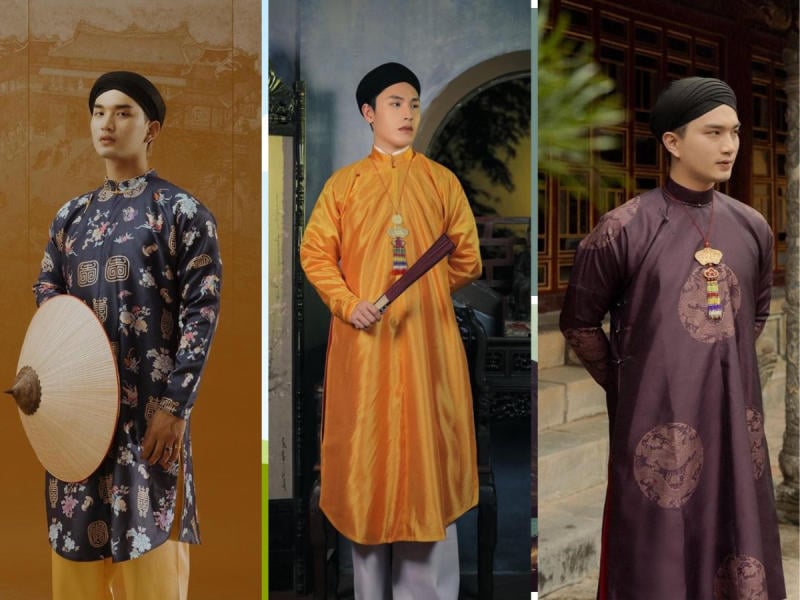
Few foreigners are aware that a male Áo Dài exists. And it is currently experiencing an intriguing minor renaissance.
The traditional male Áo Dài shares a similar structure with the female version but is not form-fitting—it typically features muted, somber colors (black, deep navy blue, brown). It makes appearances at traditional weddings, temple ceremonies, and particularly in Huế—where the legacy of royal court culture remains most potent.
Recently, a subset of young Vietnamese men in major metropolitan centers has begun wearing the male Áo Dài casually on the streets—not for a special occasion, but as a deliberate fashion statement. They pair it with sneakers, don sunglasses, and curate the look for Instagram.
The public reaction: 50% find it stylish. 50% find it... eccentric. But at the very least, society is discussing the male Áo Dài far more than they have in decades.
What the Áo Dài Teaches Us About the Vietnamese
The history of the Áo Dài—sparking controversy at its inception, vanishing due to political currents, and then surging back as a national icon—flawlessly mirrors how the Vietnamese relate to their own cultural identity.
Not so rigidly conservative as to reject change. Not so desperate for change as to sever the roots. The Áo Dài of 2024 does not look like the Áo Dài of 1940. Yet both versions can look at each other and recognize: we are the same entity.

That is exactly how the Vietnamese have survived across centuries: absorbing whatever is advantageous from the outside world, yet perpetually retaining something that is unmistakably, undeniably theirs.
The Áo Dài is the finest sartorial metaphor I have discovered for that phenomenon.