Ghost Month — The Vietnamese Relationship With the Afterlife
The 7th lunar month is the month of ghosts, taboos, and the living remembering the dead — and vice versa
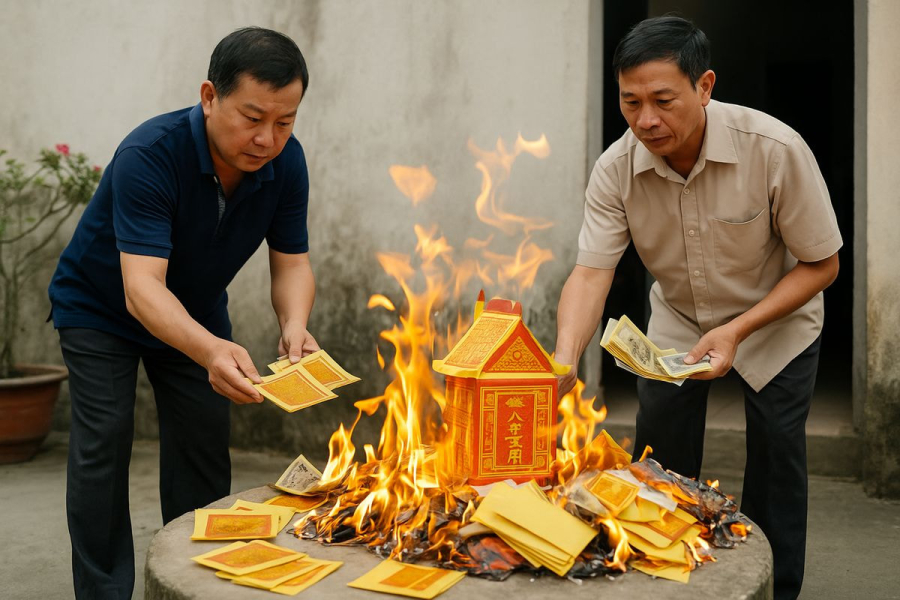
Across the entirety of Vietnam, every 7th lunar month, as the late afternoon bleeds into dusk, you will observe small fires igniting outside front doors, on sidewalks, and in front of corporate office buildings. People are incinerating paper money, paper clothing, paper luxury cars, paper smartphones, and even paper laptops and mansions—dispatching them to the deceased in the afterlife.
If you glance through a car window and witness this spectacle, the immediate reaction is typically: What exactly are they doing?
The answer is not straightforward—because Ghost Month (Tháng Cô Hồn) is deeply complex. It is the intersection of Buddhism, Taoism, indigenous folk beliefs, and a conceptualization of death that diverges violently from Western paradigms.
The Gates of Hell Swing Open
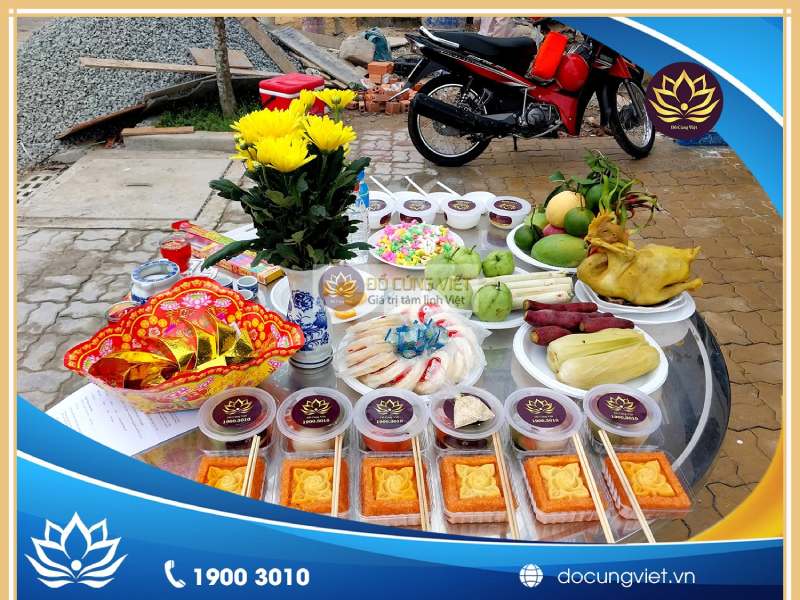
According to Vietnamese folk belief (a syncretic blend of Taoism and animism), during the 7th lunar month, the "Gates of Hell" (or the underworld) are unsealed. Spirits—specifically those who have not achieved salvation or lack living relatives to worship them—are granted a month-long furlough to roam the mortal realm.
There are two primary categories of spirits: - Wandering Spirits (Cô hồn or Oan hồn): Those who died unjustly, died violently on the road, or possess no descendants to maintain their altars—these are the "homeless" ghosts. They are the demographic most prone to causing mischief if they are not appeased with offerings. - Ancestors (Gia tiên): The direct forebears of a family—those who are properly worshipped, adequately fed, and generally far more benevolent.
During this month, the Vietnamese observe a stringent litany of taboos out of fear of accidentally "colliding" with a wandering spirit on vacation—weddings are strictly avoided due to the heavy "yin" (death) energy; initiating house construction courts disaster; even swimming at night is discouraged for fear of "ghosts pulling your legs" (which sounds morbid, but effectively functions as a highly practical safety warning regarding nocturnal swimming).
Vu Lan — The More Beautiful Face of the 7th Month
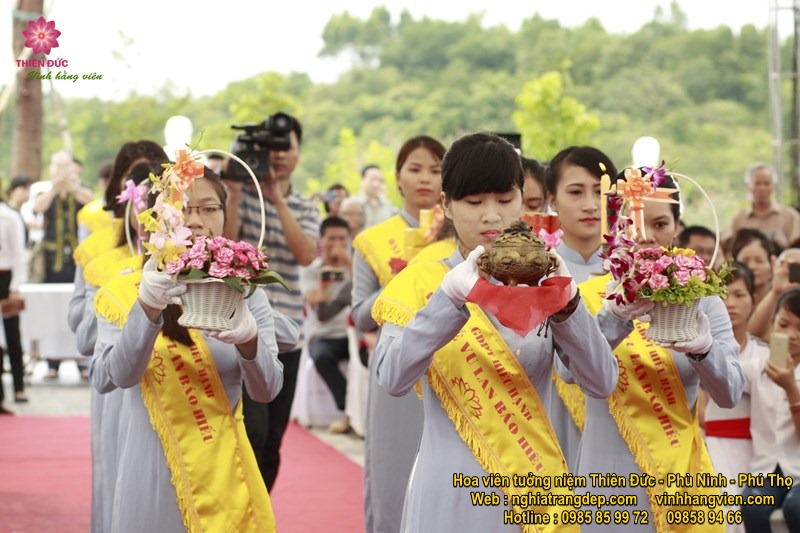
Running parallel to the "ghostly" aspect of the 7th month is the Vu Lan Festival—originating from Buddhism, this is a dedicated season of filial piety honoring one's parents.
Buddhist lore recounts the tale of Maudgalyayana (Mục Kiền Liên)—a chief disciple of the Buddha—who was tormented by visions of his mother suffering in the deepest hells. He begged the Buddha for a method to rescue her. The Buddha instructed that only the combined spiritual merit of the monastic community (the monks), amassed after their summer retreat, was potent enough to liberate her. Thus, the Vu Lan Festival was born—a day for children to express filial piety by making offerings to the temple and praying for the salvation of their parents.
In contemporary Vietnamese practice, Vu Lan is anchored by a profoundly moving ritual: the pinning of the rose (bông hồng cài áo). Those whose parents are still living have a red rose pinned to their chest—symbolizing immense fortune, indicating they still have someone to love. Those who have lost a parent wear a white rose—to remember. Those orphaned of both parents wear a stark white rose.
At major pagodas on the 15th of the 7th month, the Vu Lan ceremony can reduce an entire auditorium of adults to tears—not because the organizers are exceptionally dramatic, but because it forces you into a direct confrontation with a terrifying question: How many more Vu Lan festivals do I have left with my father, with my mother?
Burning Votive Paper — A Custom Sparking Domestic Debate
This is the most contentious element of the month—not merely for baffled foreigners, but increasingly within the Vietnamese population itself.
Votive paper (vàng mã—gold/silver paper, paper effigies) are paper facsimiles incinerated to "transmit" them to the deceased in the underworld. The governing logic is: what is destroyed by fire in the realm of the living materializes intact in the realm of the dead.
In the 1990s, votive offerings were relatively modest: paper currency, paper gold ingots, paper garments. Today, the votive paper market has evolved into an astonishing, hyper-capitalist industry: you can purchase paper iPhones, paper MacBooks, paper BMWs, paper luxury villas, paper Gucci tracksuits, and... paper servants.
It is not that the Vietnamese genuinely, literally believe their great-grandfather requires an Apple laptop in the underworld. But it is how they articulate an emotion: I want you to lack for nothing over there. It is the vernacular of affection, not the vernacular of strict logic.
However: every year, trillions of VND (tens of millions of USD) are quite literally reduced to ash. The smoke from incinerating mountains of dyed paper contributes significantly to urban air pollution. And an expanding coalition of young Vietnamese—alongside numerous Buddhist monks—are actively arguing that this is a custom where the spiritual intent should be preserved, but the physical execution drastically curtailed.
The Feast for Wandering Spirits — The Most Bizarre Offering
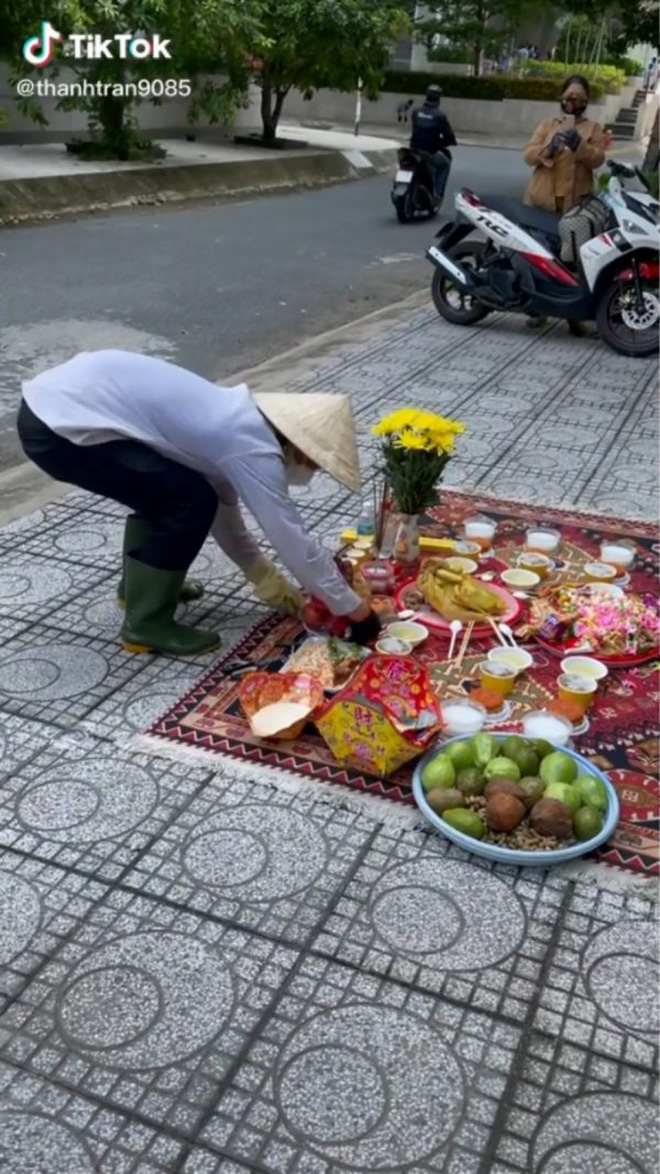
The feast for wandering spirits (cúng cô hồn)—intended for homeless ghosts possessing no family altar—is a fundamentally distinct ritual from ancestor worship.
Instead of being reverently arranged on the indoor ancestral altar, this feast is laid out in the front yard or directly on the sidewalk. The menu is intentionally humble: thin rice porridge (cháo loãng), salt, raw rice, and cheap candies—items that are satisfying but entirely unpretentious. The concept is: these "uninvited guests" have no one caring for them, so even a meager offering ensures they are fed and dissuades them from lingering or causing havoc.
The fascinating part: immediately after the incense burns out, adults will often gleefully scramble to snatch the offered food—particularly the fruit and snacks. Children will sprint to loot the tray even faster. The Vietnamese believe that food offered to wandering spirits has "passed through the hands of ghosts"—and whoever manages to grab a piece absorbs the luck. Therefore, the spectacle of a neighborhood mob enthusiastically looting a ghost offering is entirely commonplace—it is not considered disrespectful in the slightest; it is actually immensely entertaining.
The Profound Current Beneath the Custom
Ghost Month, observed superficially from the exterior, might appear as 30 days of irrational superstition clogged with meaningless taboos. But examined closer, it articulates something profoundly sophisticated regarding how the Vietnamese conceptualize death and the enduring relationship with the departed.
The Vietnamese do not perceive death as an irrevocably sealed door. The dead are still "present," they still require sustenance and care, and they still possess the agency to influence the living. And the living bear an unyielding responsibility not to succumb to amnesia.
Ghost Month expands that familial responsibility outward into the broader universe: you do not merely care for your own ancestors; you are obligated to remember those who have been forgotten by everyone else. Feeding the wandering spirits, in that context, is an act of supreme communal compassion—even if the recipients are entirely invisible.
In an increasingly hyper-urbanized and hyper-individualized society, this serves as an inescapable annual reminder: there are individuals who walked this earth before us, whose names no one remembers, and who possess no altar to return to. And that, fundamentally, is a tragedy that should not be permitted to occur.