The Hidden Ethnic Minorities — H'Mong, Tay, Nung, and Beyond
Life upon peaks that tourist maps never manage to chart
There is a morning in Dong Van that I simply cannot forget. Around 5:30 AM, the sky was still shrouded in darkness and gripped by the arid chill unique to the karst plateau, yet the market was already surging with life. H'Mong people from neighboring villages had been walking down the mountain since 3 or 4 in the morning, carrying woven baskets on their backs and infants strapped to their chests. No one uttered a word of complaint. It was merely the weekly market—every Saturday. Without it, the week remains profoundly incomplete.
That was the moment I first understood that "Vietnam" is not a singular entity. And the fragment of it upon which I stood—this specific fragment—is the one least seen by the outside world.
The Highlands Are Another World Entirely
To comprehend why ethnic minorities in Vietnam live so distinctly, one must understand the geography that forged that distinction.
Roughly three-quarters of Vietnam’s territory is mountainous. The lowland plains—the Red River Delta in the north, the Mekong Delta in the south—are where the Kinh people congregated and built their wet-rice civilization. But the mountainous terrain was never entirely conquered—not by the Chinese, not by the French, not by the central government.
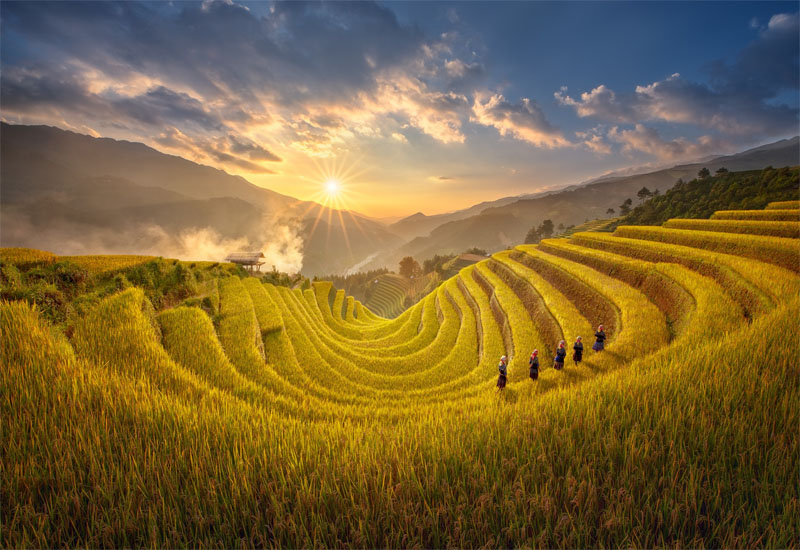
The result: dozens of communities have resided in valleys and clinging to mountainsides for millennia, developing cultures, languages, and worldviews entirely independent of one another and independent of the lowland Kinh.
They were not isolated due to indolence or ignorance. They were isolated because the topography erected natural boundaries that no road could breach for centuries. And within that isolation, they nurtured cultures that, to this day, preserve the most pristine authenticity to be found in the country.
The Market — Not Merely for Commerce
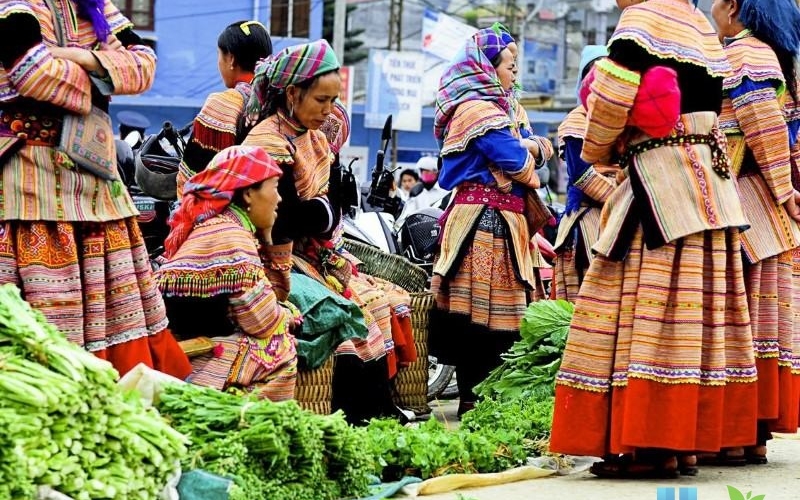
If you wish to comprehend the culture of highland ethnic minorities without opening a single book, go to a weekly market.
A highland market bears no resemblance to lowland commerce. Its primary function is not trade. It is the premier social event of the week—people arrive to meet relatives from distant villages, to seek prospective spouses for their children, to drink corn wine with old companions, to wear their finest garments and present themselves to the community.
A H'Mong woman might walk for three hours just to reach the market. Purchase a few minor necessities. Sit and converse for two hours with a friend from another hamlet. Then walk three hours back. Ask her if she is exhausted, and she will shake her head. This is simply the rhythm of life.
Certain markets hold profound significance in the cultural calendar: the Khau Vai "Love Market" in Ha Giang, convened once a year on the 27th day of the third lunar month—a sanctuary where former lovers who could not marry due to familial obligations are permitted to reunite for a single day, before returning to their separate lives. It is not romantic in the cinematic sense. It is highland romance—melancholic, raw, and undeniably real.
Attire as Language
One of the first phenomena foreigners notice upon reaching the highlands is the attire. The vibrant colors. The intricate motifs. The staggering complexity.
But this is not fashion. This is an information system.
Every ethnic subgroup possesses its own distinct patterns. The Black H'Mong dress differently from the White H'Mong, who dress differently from the Flower H'Mong. The Red Dao attire diverges from that of the Coin Dao. The clothing broadcasts exactly who a person is, which tribe they belong to, which village they hail from, and even their marital status.
A H'Mong woman begins learning to embroider in early childhood. A complete traditional skirt can demand two to three months of painstaking labor. It is the garment they will wear on momentous occasions—the weekly market, festivals, weddings, the Lunar New Year. And when they pass away, it is the garment they will wear for the final time.
Embroidery is not merely a handicraft. It is the mechanism by which communal memory is transmitted from one generation to the next, entirely without written text.
The Nung — The Forgotten Neighbors
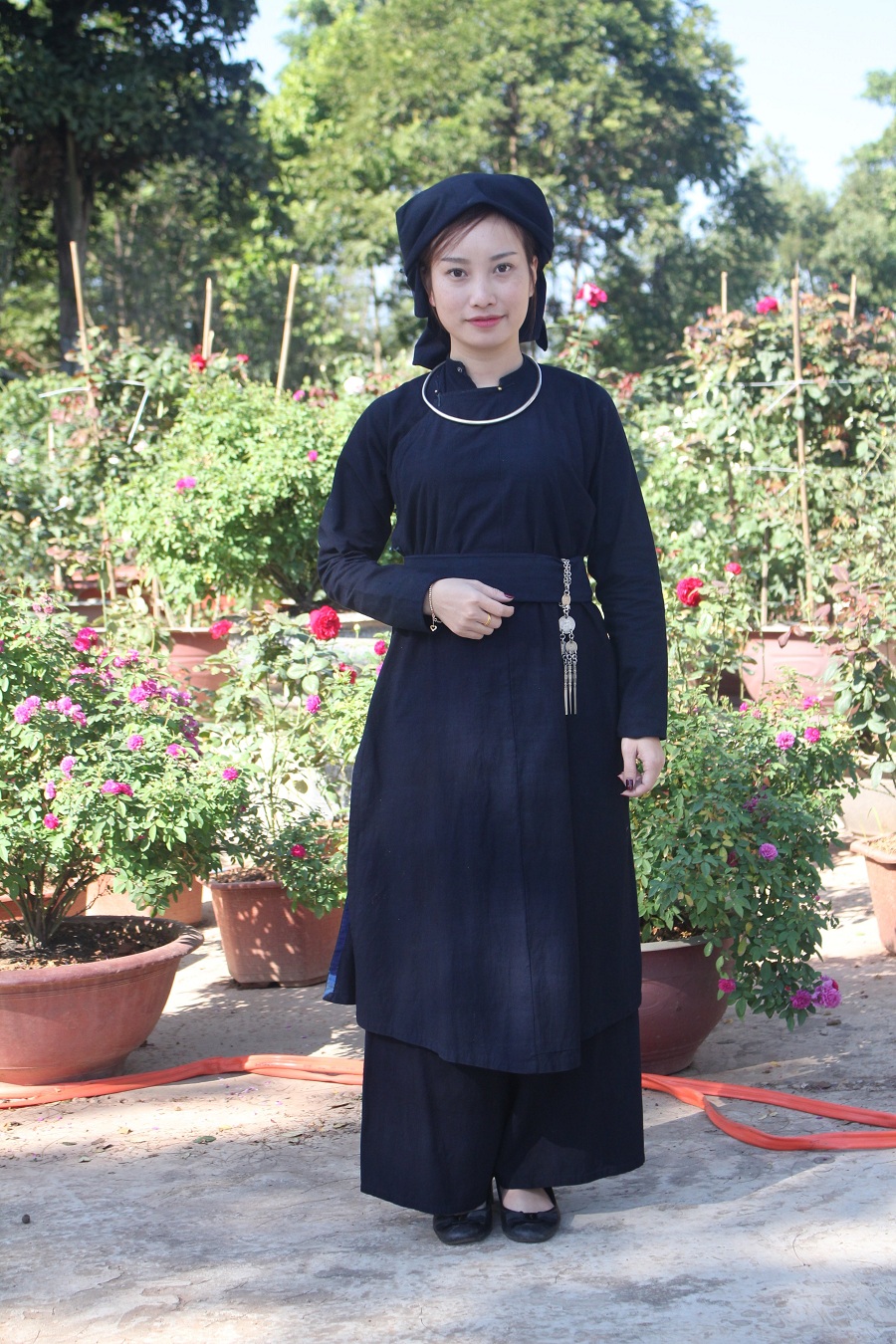
The Nung reside predominantly in Lang Son, Cao Bang, and Bac Kan—straddling the border with China. Numbering nearly one million, their language is much closer to Tay and the Zhuang language of China than it is to Vietnamese.
They are renowned for cultivating star anise—Lang Son star anise is exported globally, utilized as a spice and in pharmaceuticals. They are equally celebrated for bánh ngải—a dark green cake made from mugwort leaves, possessing a sweet, fragrant profile unlike anything you have ever tasted.
The Nung feature less prominently in travel photography because they do not don the vividly colorful attire of the H'Mong or the Dao. Their traditional clothing is typically deep indigo or black—understated, pragmatic. Yet their villages, nestled amidst star anise plantations and bamboo forests, exude the tranquil beauty of a place that never feels the need to boast.
The Pressure of Assimilation
There is an unromantic reality that must be addressed candidly: many minority cultures in Vietnam are eroding.
Not through coerced assimilation. But through the relentless forces of economics and globalization.
Children in H'Mong villages are taught Vietnamese at school. Smartphones have penetrated the most remote hamlets. TikTok and YouTube have usurped the role of storytelling around the hearth. The youth migrate to cities for labor, sending remittances to their parents but never returning to reside permanently. And when the elders pass, they take with them languages and memories that no one is left to inherit.
This is not a uniquely Vietnamese tragedy. But here, the velocity of change is exceptionally rapid. Within twenty or thirty years, certain customs that were never committed to writing will vanish entirely alongside the last soul who remembers them.
There are those endeavoring to document it—anthropologists, cultural researchers, even some indigenous youth recording their grandparents' rituals and uploading them online. But recording a culture and living a culture are two profoundly different things.
To Visit or Not to Visit?
This is a pragmatic dilemma many foreign travelers grapple with when learning of these minority communities: Does visiting them reduce their culture to a mere exhibition?
The answer is: it depends entirely on how you visit.
Booking a commercial tour to Sapa, snapping photographs with H'Mong children, and boarding a bus back—that is sanitized tourism. No one benefits significantly, and the culture is hollowed out.
But traveling to a village, staying in a homestay, eating alongside the host family, sleeping in a stilt house, rising early to accompany them to the fields—that is a different narrative entirely. You are not merely observing. You are participating in a fraction of their lives. And the currency you spend goes directly into the hands of the locals, bypassing corporate tour agencies in Hanoi.
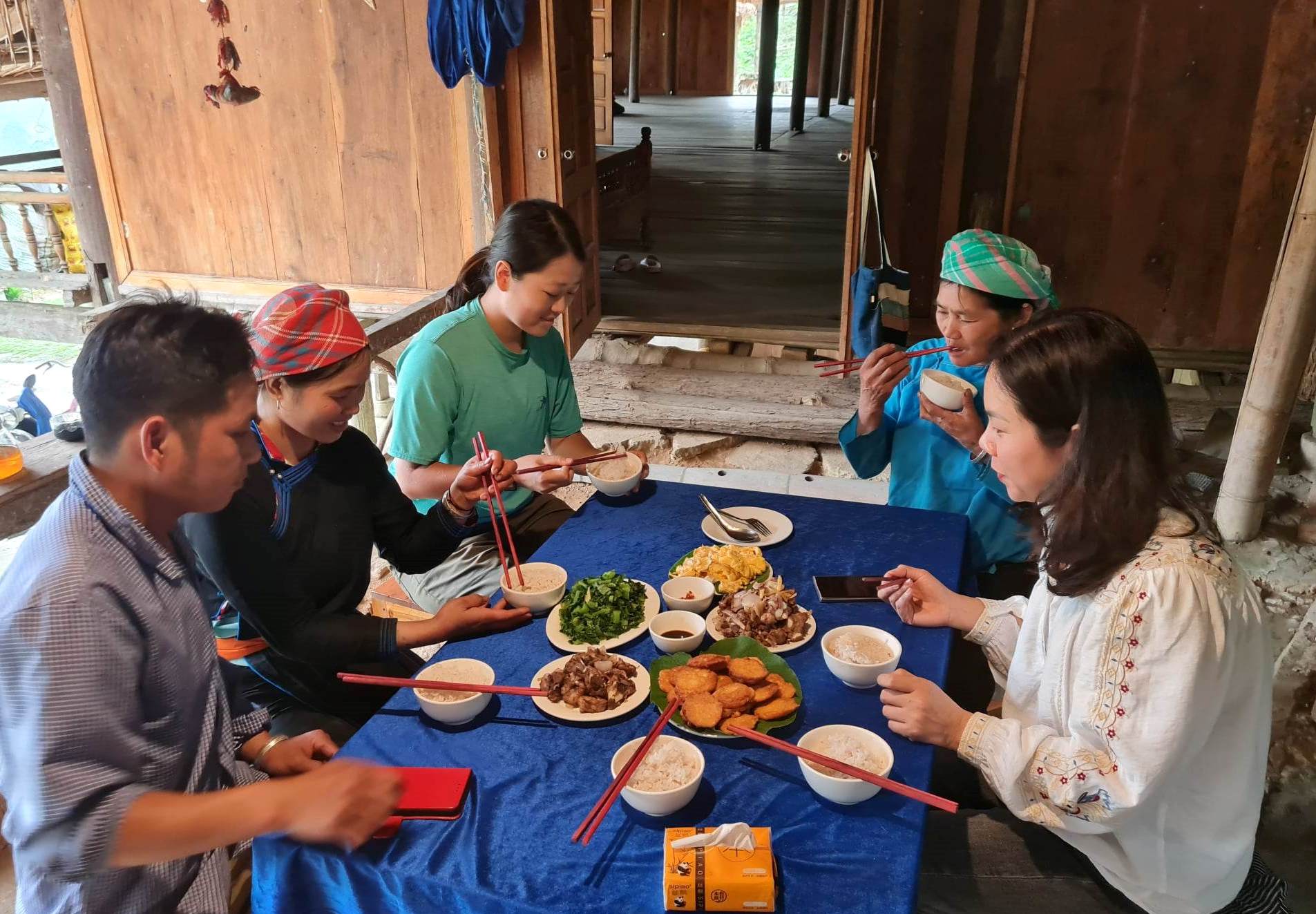
There is no flawless formula. But the correct question to ask oneself is: Following this journey, what have the people I encountered gained?
The ethnic minorities of Vietnam are not living museums. They are extant communities, evolving, transforming, and wrestling with the very same existential dilemmas as any other populace on earth: How much do we preserve? How much do we change? How do we manage to accomplish both?
That question—I possess no answer for it. And I suspect they are still searching for it themselves.